










 About us
 Magazine
 Contact


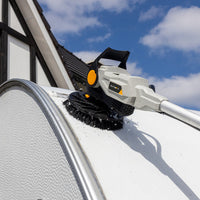
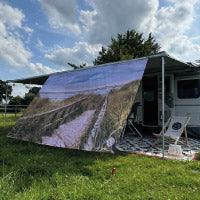

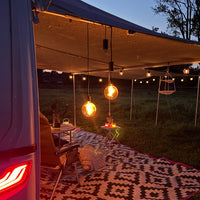


Did you know that a permanently installed awning often adds up to 38 kilograms to your gross vehicle weight before you’ve even packed your first crate of water? That is valuable storage space that you are missing for your hobby or essential supplies. By comparison, a modern camper sun shade usually weighs less than 5 kilograms and gives you exactly the flexibility that makes vanlife so special.
You know the feeling: barely have you found the perfect pitch when a complicated setup or the loud flapping in a nightly breeze robs you of your relaxation. We all want maximum UV protection and a cool retreat without wasting precious vacation time with tools in our hands. Find out in our comprehensive comparison which model really suits your camper and your individual travel style so you can start 2026 without unnecessary ballast. We take a detailed look at the best materials and mounting systems so your next shaded spot is set up within 5 minutes and holds securely in any weather.
Key Takeaways
- Find out why a lightweight shade is often the smarter choice over a heavy awning and how you can save valuable payload for your vehicle.
- Get to know the crucial material differences so your shaded spot can withstand 14 days of continuous rain as well as the intense midday sun in the south without any problems.
- Discover the ideal solution for your vehicle and find out which camper sun shade model best fits your bus, panel van, or caravan.
- Compare various setup systems from the classic keder rail to clever suction cup solutions for maximum flexibility at any pitch.
- Use our practical 5-point checklist to make a sustainable decision that is tailored exactly to your personal needs and travel style.
Awning or sun shade? Why a shade is often the smarter choice
You are faced with a choice: a permanently mounted crank awning or a flexible shade? Many new campers automatically opt for an expensive awning, but experienced van-lifers know that weight is often the biggest enemy. A classic wall-mounted awning weighs between 25 and 45 kilograms. With a 3.5-tonne limit, every gram counts for your payload. A high-quality camper sun shade, on the other hand, often weighs less than 5 kilograms. You save 40 kilograms right away, which you would rather invest in supplies or sports equipment.
Before we delve deeper into the details, a look at the basics helps: What is a sun shade? Essentially, it is a textile surface that offers protection against UV radiation and enables maximum freedom through flexible tension points. While an awning is rigidly fixed to the vehicle, you adapt a shade individually to the position of the sun or the terrain. In terms of price, the advantage is clearly on your side. A professional shade costs you about 200 to 400 euros, while you can quickly plan on 1,200 euros and more for awning systems including installation.
An often underestimated point is the cleaning effort. When it rains, you have to retract an awning while it is wet. The risk of mildew and mold increases massively if you don't crank it out to dry within 24 hours. A wet shade can simply be placed in a waterproof tub and hung up to dry in 10 minutes at your next stop. The advantages at a glance:
- Weight savings of up to 90% compared to fixed systems
- No permanent drilling into the vehicle's outer wall necessary
- Flexible protection even with a low evening sun
- Low acquisition costs with high material quality
Advantages for van-lifers and short-trip fans
Space is a scarce commodity in a panel van. When folded, a camper sun shade takes up hardly more room than two rolled-up yoga mats. This perfectly supports your storage space optimization. Setup is achieved without tools via the keder rail. In addition, the shade provides that unmistakable, airy look that makes every photo look like true freedom. It is the uncomplicated solution for those who like to change locations spontaneously.
When an awning might be superior after all
Are you staying in the same place for three weeks at a time? Then the awning scores with its solid construction. It often withstands strong gusts better, provided it is secured with storm straps. The comfort factor also plays a role. A press of a button or a few turns of the crank are enough for shade. In addition, permanently installed systems often offer integrated LED strips that provide light in the evening without you having to pull extra cables.
Technology in comparison: Materials, UV protection, and water column
Your camper sun shade has to withstand a lot. In Croatia, the sun beats down on the fabric at 40 degrees, while in the Alps, you are surprised by a sudden downpour. To ensure you aren't sitting in the wet during breakfast, we take a close look at the technical details. A high-quality shade differs from cheap goods primarily in its resilience in extreme weather. While simple polyester often gives way after 14 days of continuous rain and lets water through, a specially coated Airtex fabric remains absolutely leakproof. It hardly stretches when wet, so you don't have to constantly retighten it.
A UV protection factor of 50+ is not a luxury when camping in Southern Europe, but a must. It blocks over 98 percent of harmful rays. When buying, pay attention to certified quality, such as UV protection according to UV STANDARD 801. This test also checks the material in a stretched and wet state, which makes the crucial difference for us campers. The water column indicates how much pressure the fabric can withstand. From 1,500 millimeters, a fabric is considered waterproof. For true peace of mind, however, we recommend at least 3,000 millimeters. This way, the water simply beads off even during a heavy thunderstorm without droplets forming on the inside.
Tear resistance is another point that many underestimate. Reinforced eyelets and double-stitched hems are life insurance for your equipment during wind gusts. If the tensile force is evenly distributed, the fabric will not tear out at the corner points.
Material science for beginners
Polyester is the classic among textiles. It is light, cheap, and dries extremely quickly. Airtex, on the other hand, is a real high-tech fabric with a one-sided acrylic coating. It weighs about 200 grams per square meter and is extremely tear-resistant. While pure polyester can become brittle after three to five years in the blazing sun, a UV-stabilized fabric remains supple for significantly longer. This saves you money in the long run and preserves your nerves.
Coatings and their effect
PU coatings make the fabric absolutely leakproof, but can quickly get mildewy if stored incorrectly while damp. Acrylic coatings are easier to maintain in this regard and are usually more breathable. This noticeably reduces the formation of condensation under the shade. If tree sap or bird droppings land on your cloth, a soft sponge and lukewarm water are usually enough to clean these surfaces. Take a look at our thought-out solutions in the shop, which were developed exactly for such challenges in everyday van life. This way, your camper sun shade will remain your loyal companion for many seasons.
Which sun shade fits your camper? (Bus, panel van & caravan)
Your vehicle determines which shade really makes sense in the end. A compact VW bus has completely different requirements than a bulky Ducato or a long caravan. So that your camper sun shade setup fits perfectly, you need to know the geometry of your home on wheels. On a VW T6, the straight keder rail is usually exactly 2.50 meters. A lightweight model is sufficient here, which you have pulled in in less than five minutes. It saves space in the already cramped interior and still offers enough protection for breakfast outdoors.
Panel vans like the Fiat Ducato in the H2 version present you with a different challenge: height. With a vehicle height of about 2.52 meters, you need telescopic poles that can be extended to at least 2.60 to 2.80 meters. Only in this way can you create a sufficient slope so that rainwater drains off cleanly and no dangerous water bags form. In a field test of camper sun shades, it became clear that with these tall vehicles, it is above all the material tension that determines success or failure in the wind.
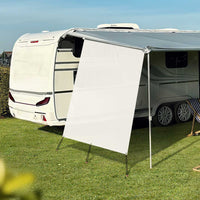
Caravan owners should pay particular attention to aerodynamics. Since caravans often reach a total length of over six meters, enormous leverage forces act on the keder rail. An angled shade breaks the wind much better than a steep wall. There are also special rear shades for the outdoor kitchen at the back. These small spatial wonders protect your cooking area from drizzle and direct sun without you having to set up the large main shade.
Determining the right size
Be sure to measure the purely straight section of your keder rail. Cramming a 3-meter shade into a 2.60-meter rail causes ugly wrinkles and an unstable stance. We advise a maximum overhang of 5 centimeters per side. A standard shade with dimensions of 3 x 2.5 meters provides you with around 7.5 square meters of shade. This is the ideal area for two camping chairs, a table, and a cooler. In wind, a flush finish is important so that the fabric does not flap and tear out the eyelets.
Vehicle-specific recommendations
Bus owners should consistently rely on telescopic poles. Since campsites are rarely perfectly level, you can effortlessly compensate for floor unevenness of 20 to 30 centimeters with them. For caravan fans, additional side walls are a real game-changer. They serve not only as wind protection but also create a private oasis of well-being on partitioned pitches. If you have already mounted a cassette awning, you can pull many camper sun shade models directly into the front rail of the awning. This doubles your shaded area with minimal effort.

Setup systems in comparison: From keder rail to suction cup
A high-quality camper sun shade model stands or falls with the right attachment. The keder connection is considered the gold standard among campers because it creates a gapless and rainproof connection to the vehicle. If your van does not have a rail, you can use a lock pole or high-performance suction cups. These often withstand a tensile force of up to 10 kilograms per suction cup on smooth surfaces. For the setup poles, you decide between weight and maximum rigidity. A telescopic pole made of aluminum weighs about 500 grams, while the steel variant at 1.2 kilograms is significantly heavier but vibrates less in wind speeds of 5 Beaufort and above.
The keder question clarified
Before you order your shade, you need to know the diameter of your rail. Two dimensions dominate in Europe: The 5mm keder fits perfectly into the rails of the VW California or in Brandrup rails. The 7mm keder is the standard for almost all caravans and common multirails. Many of our shades offer a double-keder option so that you remain flexible, regardless of which vehicle you are currently using. A practical trick for setup: Spray the keder rail once a year with a little silicone spray. This way, the cloth glides through the guide without effort, even if you are standing at the pitch alone.
Accessories for a firm stand
The stability of your setup determines your sleep during nightly thunderstorms. Always use tension relief springs on the storm lines to absorb sudden wind gusts. For ground anchoring, the rule is: standard pegs usually fail immediately on rocky soils in regions like Croatia or Southern France. Here, 20-centimeter-long screw-in pegs are the rescue, which you simply sink with a cordless screwdriver. When setting up, also pay attention to the inclination. A height difference of at least 15 to 20 centimeters between the poles ensures that rainwater runs off immediately and no dangerous water bags form that could damage your camper sun shade.
Are you still looking for the right equipment for your next trip? Discover our thought-out solutions for your camper adventure now and turn your pitch into a real place of well-being.
Your perfect Campidoo sun shade: How to make the choice
A high-quality camper sun shade setup is much more than just a shade provider; it is your extended living room under the open sky. So that you make the right decision, we have put together a short checklist for you. Answer these five questions honestly before you commit:
- How much time do you plan on for setup at most? (Our shades are usually up in under 5 minutes).
- Are you traveling alone, as a couple, or with a family of four?
- In which climate zones are you mostly traveling (strong wind or rather blazing sun)?
- How much space do you have left for pack size?
- What diameter does the keder rail on your vehicle have?
Sustainability for us means that you don't have to buy new every season. Our quality "By campers for campers" is based on over 50,000 kilometers of practical experience on dusty tracks and windy coastal roads. We rely on UV-stable materials and reinforced tension points that withstand even a stiff breeze on the North Sea. A Campidoo shade is an investment that will accompany you for many years.
So that this friendship lasts a lifetime, care for your material with common sense. Always dry your shade completely before you pack it away for a longer period. A soft sponge and clear water are usually enough to remove dust or pollen. Definitely refrain from aggressive chemical cleaners so as not to damage the important coating.
The conclusion for your travel type is simple: the compact model wins for solo adventurers due to its minimal weight of often only 2 kg. Families and groups tend to go for the XL variant, which easily offers 12 square meters of shade area and thus becomes the social center of the pitch.
Why Campidoo is your partner for shade
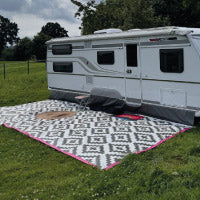
We know the pitfalls of everyday life in a van from our own experience. That's why we offer you not just a product, but real support and a reliable spare parts guarantee for all small parts. If you happen to lose a special peg after three years, we won't leave you out in the rain. For the maximum comfort upgrade, combine your camper sun shade model best with one of our custom-fit awning carpets. This keeps the dirt out of the bus and ensures a barefoot vacation feeling from the very first second.
Your next step to the dream shade
Your new upgrade for more freedom is already waiting for you. In our online shop, you can order safely and easily from the couch or directly while on the go. We process your order as quickly as possible and usually ship within 24 to 48 hours. We deliver reliably to Germany, the entire EU, and of course to Switzerland. Choose your model now and get your camper ready for the next summer.
Your Summer 2026: Time for relaxed hours in the shade
A high-quality camper sun shade is far more than just a simple shade provider. It is your personal retreat that gives you maximum freedom and flexibility at every pitch. You have seen in our comparison that modern materials with a certified UV protection factor of 50+ and a water column of over 3,000 mm make the decisive difference in changing weather. While classic awnings often weigh many kilos, the shade impresses with its minimal pack size and uncomplicated setup in less than 5 minutes.
We at Campidoo rely on solutions developed by campers for campers. Every detail is field-tested so that you can rely on 100% quality and durability. Our team ensures fast shipping of your order within 24 to 48 hours throughout Germany as well as the EU. This way, you start your next adventure perfectly prepared and enjoy every moment under the open sky. Find your ideal sun shade at Campidoo now and treat yourself to the upgrade for your mobile home. See you out there in nature!
Frequently asked questions about your sun shade
How wind-stable is a camper sun shade really?
A high-quality sun shade will securely withstand wind speeds of up to 6 Beaufort, which corresponds to about 50 km/h, provided it is correctly guyed. We recommend taking it down in gusts of 45 km/h or more to minimize stress on your keder rail and the material. For a firm setup, use 30 cm long pegs and attach the guy lines at a 45-degree angle to the ground. A taut fabric offers the wind little surface area and prevents annoying flapping at night.
What keder size do I need for my VW bus?
In 95% of cases, for your VW bus, you will need a keder with a 7 mm diameter that fits exactly into the original Multirails or Brandrup rails. If you are using a keder rail on an already installed awning, a smaller 5 mm keder is often used there. It is best to quickly measure the opening of your rail with a caliper so that your sail sits without play. A perfectly fitting keder ensures that your sun protection does not slip out of the guide even under slight tension.
Can I set up a sun shade alone?
You can set up your sun shade all by yourself within 10 minutes if you first pull the fabric completely into the keder rail. Then, secure the center pole with a line in the ground so that the base tension already holds the sail. With this technique, the structure remains stable while you align the outer poles one after the other. Experienced campers can complete the entire setup in under 8 minutes with a little routine, without relying on outside help.
What do I do with the sun shade in heavy rain?
In heavy rain, lower one of the outer poles by at least 30 cm so that the water can run off immediately and no heavy water pockets form. A single water pocket of 10 liters already weighs 10 kilograms and can permanently overstretch your fabric or damage the seams. Ensure an inclination angle of at least 15 degrees for optimal drainage. This keeps your area under the camper sun shade dry and protects the waterproofing from unnecessary continuous stress due to standing moisture.
How do I best clean tree resin from my camper sun shade?
Resin stains are best removed by shock-freezing them to minus 40 degrees with a cold spray and carefully prying off the hard residue with a blunt knife. Alternatively, a small dab of butter will dissolve the resin in about 15 minutes, as fat effectively breaks down the sticky structure. Wash the area thoroughly afterward with a mild soap solution and lukewarm water. Avoid harsh solvents, as these could destroy the 3000 mm water column of your coating and make the material leak at that spot.
Are there sun shades that also serve as privacy screens?
Many models act as a 100% effective privacy screen against the gazes of neighbors on the campsite by being guyed deep to the ground. A camper sun shade with a variable depth of 250 cm can be positioned at such an angle that your private space is perfectly shielded. This ensures a cozy atmosphere during breakfast, even if the pitches are very close together. You thus combine high UV protection of 50+ with the necessary privacy for your relaxed time out in nature.
How large should the sun shade for my caravan be?
The perfect size depends on the length of the straight keder rail of your caravan, which for most models is between 3 and 5 meters. Measure the horizontal length precisely so that the fabric does not get into the curves of the corners, which would ruin the tension. An overhang of just 10 cm already causes the sail to develop unsightly wrinkles and become unstable. Plan for a depth of at least 240 cm so that a table and four camping chairs can comfortably fit underneath.
Can I attach a sun shade to an existing awning?
You can slide your sun shade directly into the groove of your awning's front profile, for which you generally need a 5 mm keder. This extension increases your shaded living space by an additional 2 to 3 meters to the front and ideally protects you from the low-hanging evening sun. Before purchasing, check whether your awning is from Thule, Fiamma, or Dometic, as the groove sizes can vary minimally. This combination is a brilliant solution for almost doubling the limited space in front of your vehicle without much effort.

