










 About us
 Magazine
 Contact





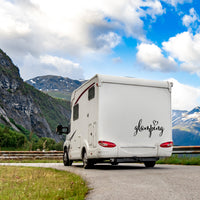




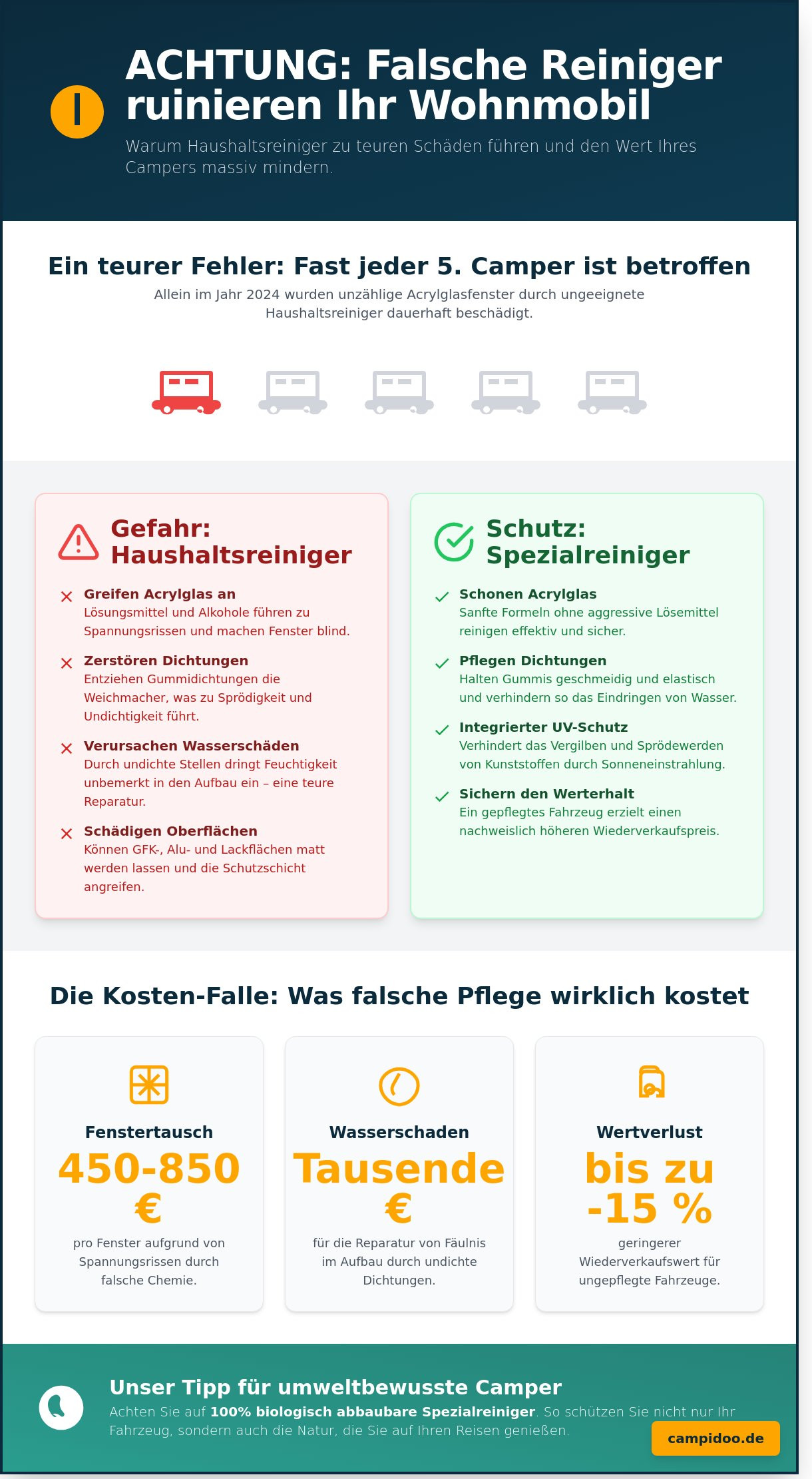
Did you know that in 2024 alone, almost one in five campers permanently damaged their windows using aggressive household cleaners? It is a real nightmare when expensive acrylic glass suddenly turns opaque or the seals become brittle and crack after just one season. The right cleaning agent for camping vehicles often determines whether your motorhome will look like new in five years or lose significant value. We know exactly how frustrating it is to stand in front of those stubborn black rain streaks and they just won't disappear without damaging the paintwork.
You love the freedom on four wheels and want your faithful companion to visually reflect this lifestyle. We share this passion and understand that you are looking for safety in application rather than experimenting with chemicals. In this article, you will learn exactly which products really protect your vehicle and how you can secure your camper's long-term resale value with our ultimate 2026 checklist. We will take you by the hand and show you step by step how to make your vehicle shine without endangering the delicate materials.
Key Takeaways
- Find out why conventional household cleaners can damage your seals and which special cleaning agents for camping vehicles really protect GRP and aluminum surfaces.
- Learn the most effective strategies to remove stubborn rain streaks and moss growth from the roof residue-free without great effort.
- Discover clever tips for interior care, with which you can keep upholstery and delicate furniture surfaces looking permanently like new, even in the tightest of spaces.
- Use our exclusive 2026 cleaning plan to optimally prepare your camper for spring cleaning and summer road trips with seasonal checklists.
- Receive valuable expert tips on choosing the right equipment so that you prevent scratches on the paint and clean high structures ergonomically.
Why special cleaning agents for camping vehicles are indispensable
Spring is finally knocking on the door and your camper is yearning for its first adventure. Before you set off, the mandatory cleaning is due. This is where many make the first mistake: they reach for a bucket of conventional dish soap or an aggressive wheel cleaner for cars. However, your motorhome is not a passenger car. The outer shell usually consists of a delicate mix of GRP (glass-fiber reinforced plastic) or aluminum sandwich panels. These surfaces react completely differently to chemical substances than hard car paint. If you use the wrong cleaning agents for camping vehicles, you risk dull spots or even material damage that will permanently ruin the shine of your mobile home.
Camper materials vs. classic household chemistry
It becomes particularly critical with your windows. While car windows are made of robust safety glass, manufacturers of motorhomes use lightweight acrylic glass or polycarbonate. Conventional glass cleaners often contain alcohols or solvents. These substances strip moisture from the plastic, leading to microscopic stress cracks. After just one season, these cracks can travel so deep that the window becomes opaque or, in the worst case, breaks. A replacement costs on average 450 to 850 euros per window. Specialized cleaners do not contain aggressive solvents and instead offer integrated UV protection. This effectively prevents the sun from making the material yellow and brittle over the years. Professional Recreational vehicle maintenance therefore begins right when you choose the right product from the shelf.
Value retention through the right chemistry
Think long-term about your budget and the value retention of your vehicle. According to current market statistics, a top-maintained motorhome achieves a price up to 15% higher upon resale than neglected models. Aggressive household cleaners like dish soap are true "plasticizer killers." They draw the elastic substances out of your window and door seals. The result: the rubber becomes hard, cracks, and allows moisture to seep into the structure unnoticed. Such water damage is the absolute nightmare of every camper and often costs several thousand euros to repair in the workshop. Professional cleaning agents for camping vehicles also protect against corrosion on aluminum strips and prevent the rapid regrowth of stubborn algae and the typical black rain streaks.
Camping means freedom in nature. That is why sustainability is not a trend for us, but a real commitment. When purchasing, make sure that your products are 100% biodegradable. Since we campers often work outdoors or at wash stations with direct ground contact, residues quickly get into the soil. High-quality camping products meet these strict environmental standards without sacrificing cleaning power. In this way, the nature we love so much on our travels remains clean and untouched for future generations.
Exterior cleaning: The checklist for shine and protection
The roof of your camper is the largest area exposed to environmental influences. In 85% of all vehicles, 2 to 3 liters of standing water often collect here in depressions, which significantly promotes the formation of moss and lichen. Before you start, you should use a stable ladder and never step directly onto the GRP surfaces without using a load-distributing mat. For the black rain streaks, which are usually caused by rubber water running off the window seals, you need a special cleaning agent for camping vehicles that does not attack the polymer layer. It is best to remove insects from the front mask with a special mesh sponge and plenty of water. This way you avoid scratches in the sensitive paint. Your rims will shine like on the first day if you choose an acid-free cleaner that dissolves brake dust in under 5 minutes.
Step by step to a clean outer shell
First, rinse off the coarse dirt with a soft stream of water. Otherwise, sand grains act like sandpaper on your paint. During the main wash, work your way from top to bottom. Use a wash brush with flagged tips to be gentle on the material. A sealant ensures long-lasting protection. A high-quality ceramic coating often lasts up to 24 months, whereas simple spray wax needs to be refreshed after about 3 months. Professional expert cleaning tips advise paying particular attention to the oxidation of aluminum parts in order to maintain the value of your vehicle in the long term.
Special case: Resin and stubborn organic residues
Resin stains are tricky. If you scrape them off with force, you risk expensive paint damage. A soft cloth and a drop of cooking oil or a special resin remover often work wonders here. When it comes to bird droppings, speed is essential. The aggressive acid can eat into the clear coat permanently within just 12 hours. If household remedies fail, a specialized cleaning agent for camping vehicles is indispensable to safely save the surface.
Tar stains in the lower area of the vehicle can usually only be removed with solvent-based special cleaners. Make sure to reseal these areas immediately after cleaning. If you are still looking for the right equipment for your next adventure, take a look at our thought-out organizational systems that also organize your camper perfectly on the inside.
Interior care: How furniture and upholstery stay like new
Your camper is your retreat and should still feel like it did on the first day even after years. However, dust and dirt collect much faster in the average 12 square meters of living space in a van than in a large apartment. The right strategy saves you valuable time and protects the delicate materials of your furnishings. You can clean upholstery most effectively with a high-quality upholstery foam that you only let work for a short time. This prevents moisture from seeping deep into the foam core and causing mold stains there after about 48 hours.
Protection for foil-coated surfaces
Most furniture lines in modern motorhomes consist of foil-coated lightweight panels. These layers are functional but often extremely thin. If you work here with too much pressure, the look is quickly ruined. In our furniture foil guide, you will find detailed professional tips for the long-term care of these special surfaces. Absolutely refrain from using scouring milk or abrasive sponge sides. These leave circular scratches after just 20 seconds, which ruin the entire look, especially when light hits from the side. A soft microfiber cloth and lukewarm water are usually completely sufficient to remove fingerprints.
Hygiene in the camping kitchen
Precision is required in the onboard kitchen, as plastic sinks and stainless steel stoves have completely different care needs. Melamine dishes often get unsightly rims from coffee or tea. You can remove these without scratches by letting a mixture of baking powder and water work for about 10 minutes. For the sink and bathroom, you should only use special cleaning agents for camping vehicles. Conventional household cleaners often contain vinegar or citric acid in too high a concentration, which makes the plastic surfaces brittle and leads to fine hairline cracks after about two seasons.
- Water tank: Rinse the entire system completely at least twice with fresh water after the winter break.
- Waste water tank: Use microbiological additives to effectively neutralize unpleasant odors within 24 hours.
- Gas stove: Carefully remove crumbs in the burner rings with compressed air so that the nozzles do not clog.
The choice of the right cleaning agents for camping vehicles determines whether your seals and surfaces remain supple for years. Musty odors in the interior often do not disappear by mere ventilation. If your camper has absorbed moisture over the winter, air dehumidifier pads with granulate help. These often pull up to 500 ml of water from the ambient air within the first 48 hours. This prevents mold growth behind the cabinets and ensures a healthy indoor climate for your first tour in the spring.
The ultimate cleaning plan: Seasonal checklist for 2026
Your camper is your second home on wheels. So that you start the new travel season in 2026 without any nasty surprises, a fixed rhythm helps you. A well-maintained van means less depreciation and significantly more feel-good moments under the starry sky. We divide the year into four clear phases so that the work remains manageable. In the spring, you wake your vehicle from hibernation. The summer calls for short interim cleanings after dusty road trips. In the autumn, you prepare the protective layer, while the winter is all about safe storage.
- Spring: Complete basic cleaning and technical check of all seals.
- Summer: Insect removal every 500 kilometers and quick interior refreshment.
- Autumn: Paint sealing and thorough inspection of roof drains.
- Winter: Store away all textiles and food to avoid moisture.
The big spring checklist
The first ray of sunshine in March is your starting signal. First, check all rubber seals on doors and windows. A silicone stick prevents the material from becoming brittle and water from entering. You can remove small scratches in the delicate acrylic windows with a special polish. This ensures a crystal-clear view when the sun is low. Your awning now needs special attention. Thoroughly remove mold stains and green growth before setting it up for the first time. Use high-quality cleaning agents for camping vehicles that do not attack the coating but effectively dissolve dirt.
Winter storage made easy
Before the temperatures drop below 0 degrees in November, you must act. Empty the entire water system and blow out the lines with an air pump. A tiny bit of water can burst pipes in freezing temperatures. Inside, place at least two air dehumidifiers to actively prevent mold growth. You should place cushions upright so that the air can circulate. For the outer shell, thorough preservation is crucial. A proper layer of wax protects the paint from aggressive road salt and freezing moisture. This keeps the surface smooth and makes it 40% faster to clean the next year.
To keep an overview during the entire season and have every cleaning utensil ready to hand, take a look at our practical organizational solutions for your motorhome. After all, order is the basis for true freedom on travels.
Campidoo expert tip: The right equipment for cleaning
Hand on heart: a shiny motorhome makes the anticipation for the first tour perfect. So that spring cleaning does not turn into hard work, you need the right tools. Choosing the right cleaning agents for camping vehicles is only the first step. Just as important is the accessory with which you treat the dirt.
Forget the old cotton T-shirt for the windows. Cotton fibers tend to hold dirt particles on the surface. This acts like sandpaper on the delicate acrylic glass windows of your camper. Use high-quality microfiber cloths instead. These pull the dirt deep into their structure. This way, you prevent micro-scratches on the 80 percent of all plastic windows installed in the camping sector.
A telescopic brush is indispensable for the high structure. It protects your back and effortlessly reaches heights of up to 3 meters. Look for soft flagged bristles that clean the paint gently. A real insider tip is the use of a pressure sprayer. Instead of laboriously working with a hand pump, you distribute the cleaners evenly and over a large area. This saves you about 25 percent in material compared to a standard spray bottle and ensures significantly better dwell time.
At Campidoo, we consistently rely on solutions by campers for campers. We know that space in the van is in short supply. Therefore, experience from thousands of kilometers of road trips flows into our recommendations.
The basic equipment for every camper owner
A compact cleaning kit belongs in every rear garage. Concentrates are your best friends here. A 500ml small bottle of an environmentally friendly concentrate often replaces up to five conventional spray bottles. This protects the environment and saves valuable payload, which is often crucial at the critical 3.5-ton limit. It is best to store your products in a flat Euro box. This way everything stays in its place and in case of a leak, nothing is contaminated in the vehicle.
- Microfiber cloths for paint and windows
- Telescopic brush with water connection
- Pressure sprayer for efficient distribution
- Environmentally friendly concentrates for space saving
Why quality makes the difference at Campidoo
Our selection criteria in the shop are tough but fair. Every product must prove itself in everyday camper life before we offer it to you. We check material compatibility on various surfaces such as GRP, aluminum, and plastic. With us, you don't just buy cleaning agents for camping vehicles, but proven solutions. Our experts have spent over 500 nights in a camper in total. We know stubborn rain streaks and stuck insect dirt from our own experience and advise you honestly at eye level.
Discover our selection of cleaning agents now and start perfectly prepared into the new freedom.
Your plan for the 2026 season: Radiant cleanliness on every kilometer
A well-maintained camper is your ticket to a worry-free vacation. You now have all the tools at your fingertips to optimally prepare your vehicle using the 4-step cleaning plan for 2026. Always remember that conventional household cleaners can damage the special fiberglass surfaces and delicate acrylic windows of your vehicle. Instead, use high-quality cleaning agents for camping vehicles that are specifically formulated for these materials. We have developed our products based on the principle "by campers, for campers" so that you receive 100% specialized care without compromise. It’s not just about the appearance, but about maintaining the value of your mobile home for the next 10 years. Your next adventure is already waiting. With our fast shipping, we ensure that your equipment is on your shelf well before your first trip. Take action now and enjoy the incomparable feeling of discovering the world in a perfectly maintained camper. See you on the road!
Get professional cleaners for your camper at Campidoo now!
Frequently Asked Questions About Motorhome Spring Cleaning
Can I clean my motorhome in a regular car wash?
No, conventional car washes are unsuitable for campers, as they are generally designed for vehicle widths of up to 2.10 meters. Your motorhome is often wider than 2.30 meters and has sensitive acrylic windows that will be scratched immediately by hard brushes. Use a specialized truck wash or a self-service wash bay with sufficient space instead. This prevents costly damage to your roof structures and the outer shell.
Which agent works best against black rain streaks?
Special rain streak removers dissolve these stubborn residues most effectively without attacking the delicate paint surface. These cleaning agents for camping vehicles are formulated to consistently protect the 0.5-millimeter-thick gelcoat layer of your vehicle. Apply the agent to the specific spots, let it sit for 2 minutes, and simply wipe away the dirt with a microfiber cloth. Your camper will shine like new afterward, and the surface will remain protected.
May I use a high-pressure cleaner for my camping vehicle?
You may use a high-pressure cleaner provided you maintain a safety distance of at least 50 centimeters from the surface. Never aim the water jet directly at ventilation grilles, rubber seals, or the tires, as a pressure of over 100 bar will damage the material immediately. A jet that is too hard forces water under the seals and causes unsightly moisture damage in the interior. A soft wash brush is often the safer choice for your mobile home.
How often should I maintain the seals on my caravan?
Maintain your rubber seals at least twice a year, ideally right at the start of the season in March and before winter storage in October. Silicone-based or glycerin care sticks keep the rubber supple long-term and prevent it from sticking to the windows. Neglected seals become brittle after 3 to 4 years and allow moisture to seep into the walls. This small routine saves you from expensive repairs due to water damage to the structure in the long run.
Are there environmentally friendly cleaning agents for campsites?
Yes, there are biodegradable cleaning agents for camping vehicles that have been specifically developed for use outdoors. When purchasing, look for certifications that confirm 100 percent biodegradability according to OECD guidelines. Such products are completely free of phosphates and aggressive acids. This allows you to clean your mobile home directly on your pitch without polluting the groundwater or the surrounding nature with unnecessary chemicals.
How do I properly clean the awning of my motorhome?
Clean the awning fabric with a soft brush and lukewarm water that should not exceed a temperature of 30 degrees. Use a mild soapy solution for stubborn stains and allow the fabric to dry completely for at least 24 hours after cleaning. Mildew stains often form after just 48 hours if the awning is rolled up while wet. By air-drying, the fabric remains stable and mold-free for years.
What to do about mold in the interior?
Remove superficial mold immediately with a solution of 70 percent isopropanol to effectively kill the spores. Afterward, air out your camper thoroughly for at least 30 minutes with the windows wide open. To prevent future infestations, you should keep the interior humidity permanently below 60 percent. A small dehumidifier with granules will help you reliably bind excess moisture during the damp winter months.