










 About us
 Magazine
 Contact








Quick Overview
The costs of retrofitting an awning on a motorhome consist of the awning, adapter or mounting rail, installation materials, installation, and possible additional work. A support foot holder costs EUR 99.95, and awnings are available from EUR 115.95. Those who only compare the product price usually significantly underestimate the total costs.
- The total costs consist of five items: awning, adapter, installation materials, installation, and additional work.
- A simple adapter often costs a low three-digit amount, while special solutions for roof shapes cost more.
- The multiAnker 2.0 awning support foot holder costs EUR 99.95 and requires no changes to the vehicle.
- DIY installation saves labor costs but requires tools, time, and careful checking of the mounting points.
- For roof installations involving drilling and sealing, a professional company is usually the safer choice.
Table of Contents
- What it costs to retrofit an awning on a motorhome
- Costs by vehicle type and installation situation
- Motorhome awning installation costs: professional company or DIY installation
- Motorhome awning roof mounting and wall mounting compared
- Motorhome awning adapter and mounting accessories
- Additional costs and typical surprises during retrofitting
- Your next steps: plan the awning and calculate costs
- Frequently asked questions
Overview of costs for retrofitting an awning on a motorhome
Last updated: November 7, 2026
What it costs to retrofit an awning on a motorhome
Anyone who wants to retrofit an awning on a motorhome will quickly come across a question: What are the costs of retrofitting an awning on a motorhome - what does it cost in total? Many campers first compare the price of a single product. However, the total costs are determined by several items, including the awning, adapter, mounting, and installation. A total calculation that brings all these items together helps with planning - that is why it is calculated step by step here.
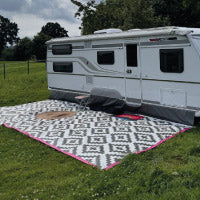
Our awnings are available at Campidoo as a customizable model from EUR 163.95, as well as a solid-color version from EUR 115.95. An awning support foot holder, which helps at paved campsites, costs EUR 99.95. These prices refer to the products themselves, not to a complete retrofit.
The available sources only provide individual details for the retrofit itself. What can be deduced from this, however, is a structure of the total costs that is suitable for your own planning.
A complete cost breakdown consists of several blocks, including the awning itself, adapter or mounting rail, installation materials, installation, and possible additional work. Second, the adapter or mounting rail: It connects the awning and the vehicle body and is model-dependent; a simple adapter often costs a low three-digit amount, more elaborate solutions for special roof shapes cost more. Third, the installation materials: Brackets, sealants, and screws are partly included in the adapter, partly to be obtained separately. Fourth, installation: It is the item with the greatest range, because it depends on the vehicle body and the chosen company. Fifth, possible additional work such as roof or wall reinforcement, sealing, or the removal of an old awning.
Anyone starting without an existing rail and additionally requiring roof reinforcement or sealing must expect significantly higher costs.
Attention: Anyone who only compares the awning and leaves the adapter, rail, and installation out of the calculation will almost always underestimate the total costs - the difference between the product price and the final sum can amount to several hundred euros.
Costs by vehicle type and installation situation
Not every motorhome can be retrofitted just as easily. The construction of the body determines where the awning can be attached and how much effort the installation requires. A box van with a flat roof edge often requires different brackets than an alcove model with a different roof shape.
The installation situation also plays a role. An awning on the side wall needs different mounting points than a roof mounting. Anyone who wants to solve the mounting without drilling should check before purchase whether the vehicle body allows it. One of the typical mistakes is ordering an awning that does not fit the existing adapter.
A simple rule of thumb helps with classification: The more adjustments to the vehicle are necessary, the higher the material and installation effort. How the vehicle's power supply affects the costs is shown in the comparison of gas and electricity in motorhomes. A caravan with existing mounting rails is therefore usually cheaper to retrofit than a vehicle without any preparation.
Motorhome awning installation costs: professional company or DIY installation
The installation costs depend heavily on the decision between a professional company and DIY installation. A professional company calculates labor time and materials, the total sum depends on the effort required on the respective vehicle. Reliable, generally applicable hourly rates cannot be derived from the available sources; however, it is realistic that the installation of an awning on a vehicle with an existing mounting rail costs significantly less time than on a body that first needs to be prepared. Therefore, for the overall calculation, a labor scope is more useful than an hourly rate: simple wall mounting on an existing rail, elaborate roof mounting with drilling and sealing, special cases with reinforcement.
With DIY installation, no labor costs are incurred, but time and the risk of an installation error. Anyone who cannot reliably assess the manufacturer's specifications and the mounting points on the vehicle should leave the installation to a professional company. An incorrectly mounted awning can come loose in the wind and cause damage.
An honest cost comparison of the two methods looks like this. DIY installation costs EUR 0 in labor, but requires tools (drill, sealant, suitable screws), several hours of work time, and the willingness to familiarize yourself with the installation instructions. The risk lies not only in the work time, but in consequential costs: An unsealed hole in the roof or an insufficiently mounted awning can lead to expensive repairs. A professional company calculates labor time and materials and takes on the execution according to the manufacturer's specifications. Bottom line: For simple systems with an existing rail, DIY installation is often the cheaper choice, for roof installations with drilling and sealing, the advantages of a professional company usually outweigh.
Installing an awning yourself: what is realistic
DIY installation is well doable with simple systems with existing rails and suitable accessories. Realistically, this means: The awning is extended according to the manufacturer's specifications, the mounting points are checked, and the tension is controlled. For roof installations that require drilling, the difficulty level increases significantly.
Anyone who installs it themselves should clarify beforehand which mounting sets fit the model. Compatibility depends on the specific model; a look at the manufacturer's installation instructions is therefore indispensable. A look at the manufacturer's installation instructions is therefore indispensable.
Attention: If the awning is mounted without a suitable adapter or with screws that are too short, it can come loose in the wind - check before the first trip whether all mounting points are in place according to the manufacturer's specifications and the seal is complete.
Whether a professional company or DIY installation is worth it depends essentially on the effort and the risk:
| Option | Labor costs | What to pay attention to |
|---|---|---|
| DIY installation | 0 EUR labor cost | Tools, several hours, installation instructions |
| Professional company | According to labor time and materials | Execution according to manufacturer's specifications |
| Simple systems with existing rail | DIY installation often possible | Check manufacturer's specifications and mounting points |
| Roof mounting with drilling | Usually professional company | Sealing, consequential costs in case of leakage |
Motorhome awning roof mounting and wall mounting compared
Roof and wall mounting differ mainly in effort and stability. Roof mounting sits directly on the awning body. However, it often requires drilling or special rails.
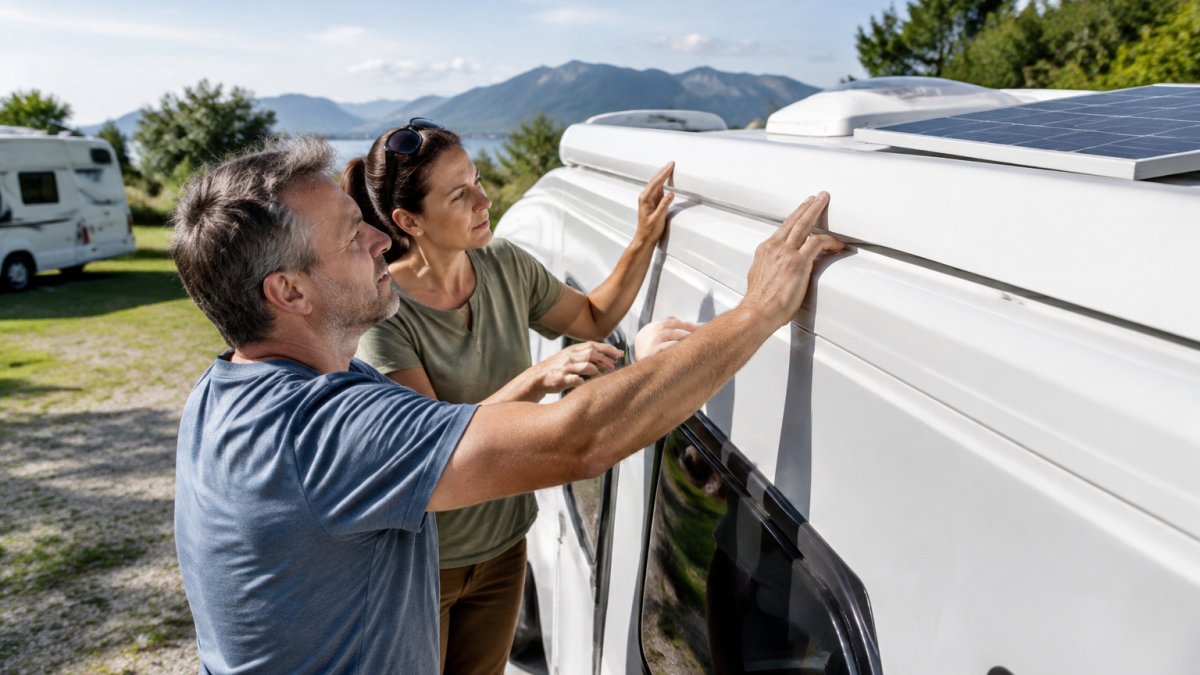
Wall mounting does not require intervention in the roof area, but is more susceptible to wind if the mounting is not properly executed. Anyone who wants to avoid drilling will find information on mounting without drilling in our guide Mounting an awning on a motorhome without drilling.
For roof mounting, we recommend checking the suitable mounting rails beforehand. Anyone who buys a mounting set should compare the dimensions with the manufacturer.
Motorhome awning adapter and mounting accessories
Adapters and mounting accessories often determine whether an awning stays securely. These include mounting rails, mounting rails, support foot holders, and storm tie-downs. Especially in wind, it pays to not skimp on accessories.
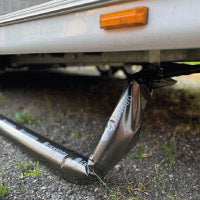
Our multiAnker 2.0 awning support foot holder costs EUR 99.95. It consists of two suction cups with 70 kg pull force each and is mounted without changes to the vehicle. According to the product description, it is compatible with awnings from Thule Omnistor, Fiamma, and Dometic.
There are various solutions for storm tie-downs. Anyone who wants to understand the difference between a storm band and a storm rope will find a comparison under Storm band or storm rope for awning compared.
Additional costs and typical surprises during retrofitting
Most surprises arise not with the product, but with the additional costs. These include additional brackets, an extension of the mounting, or accessories that were not included in the initial offer. Anyone who compares a complete offer should check whether installation and materials are really included.
A heater or comfort equipment can also make the retrofit more expensive. An additional heater such as the Truma Ultraheat is an optional addition, whose costs vary depending on installation. More on equipment can be found here: Truma Ultraheat additional heater.
Another point is the delivery time. Anyone who needs the awning by a certain date should plan this early.
Your next steps: plan the awning and calculate costs
Start with an honest inventory of your vehicle: What mounting points are there, and which awning model fits? Then write down all items, from the awning to the adapter to the installation, and compare offers based on the total sum.
At Campidoo, you will find awnings, support foot holders, and suitable accessories for motorhomes and caravans. Look at our range and plan your retrofit step by step.
Frequently asked questions
What does it cost to retrofit an awning on a motorhome?
The total costs consist of the awning, installation materials, and possibly an adapter, as well as installation. The price of a single awning says little about the actual retrofit costs. Anyone who compares an offer should check whether installation, materials, and mounting are included.
How much does it cost to install an awning on a motorhome?
The installation costs depend heavily on the vehicle type, installation situation, and the chosen company. Crucially, whether the offer includes only the awning or also mounting materials and labor time. Ask specifically for a complete price including installation before commissioning, so that the offers can be compared.
Can you install an awning on a motorhome yourself?
DIY installation is doable with manual skill and suitable mounting materials, but requires exact knowledge of the mounting points and manufacturer's specifications. Anyone who is unsure should leave the installation to a professional company. If in doubt, a professional company is worth it.
Do you need an adapter for installing a motorhome awning?
Whether an adapter is required depends on the awning and the mounting rails installed on the vehicle. For mounting systems such as the multiAnker 2.0, compatible solutions are available from Thule Omnistor, Fiamma and Dometic. Before purchasing, you should check which adapter is suitable for your model.