












 About us
 Magazine
 Contact



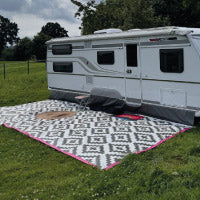
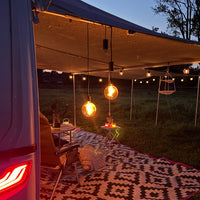


Imagine it’s July at Lake Garda and, according to recent user surveys, you spend an average of 15 minutes a day just sweeping sand and dried grass out of your camper. This constant battle against dirt often ruins your holiday spirit faster than a sudden rain shower. We can all agree: nature is wonderful, but we don't necessarily want to feel it as a constant crunch under our feet, in our beds, or on our upholstery. A high-quality camping awning rug is therefore much more than just a nice accessory; it provides a clean foundation for your mobile living room and determines whether you can relax barefoot or are constantly reaching for the broom.
In this guide, you will learn exactly how to effectively stop dirt at the door and take your living comfort to a new level by choosing the right material. We promise that after reading this, you will know exactly which model doesn't give waterlogging and mold a chance and will remain your faithful companion for many seasons to come. We will look at the most innovative solutions for 2026, compare the durability of various fabrics, and give you practical cleaning tips so that your awning finally becomes a true oasis of well-being.
Key Takeaways
- Understand how to turn your awning into a true relaxation zone and keep dirt and moisture effectively out of your camper.
- Learn in our material check why the right weave structure of your camping awning rug is crucial for sand and water permeability.
- Learn the difference between cheap solutions and quality goods and why high-quality reinforced edges pay for themselves after just two seasons.
- Receive practical professional tips on correct measuring and ground preparation so that your flooring stays like new for years.
- Benefit from the experiences of our 3-week family test and see for yourself how a well-designed rug withstands extreme stress from dogs and weather.
Why the right camping awning rug determines your holiday comfort
Imagine you open your camper's sliding door in the morning and step not onto cold, damp gravel, but onto a pleasantly soft surface. A high-quality camping awning rug is much more than just a visual accessory. It forms the crucial barrier between your clean living area and the rugged outdoors. Without this protection, every trip outside becomes a challenge for keeping your vehicle clean. The rug acts as a dirt trap that effectively catches sand, grass, and moisture before they can get inside.
Besides cleanliness, thermal insulation plays a major role. A good floor covering increases the perceived temperature in the awning by up to 4 degrees Celsius by shielding you from the cold ground. This ensures a true "barefoot feeling" that massively boosts your living comfort. Historically, mobile dwellings have evolved continuously, which these basics of tents and mobile accommodation clarify. Today, a specialized rug is standard equipment for turning an awning into a cozy "mobile living room." Furthermore, the choice of material is crucial for environmental protection. On over 60 percent of European campsites, breathable rugs are now mandatory so that the grass beneath the tent gets enough oxygen and doesn't rot.
The biggest problems without a suitable tent rug
Anyone who goes without a decent underlay brings the dirt right into their bed. Without a rug, up to 80 percent more dust particles enter the caravan due to air circulation in dry weather. When it rains, the floor quickly turns into a slippery mud landscape. This not only poses a risk of injury from slipping but also causes standing water under your furniture. An uneven floor without a leveling layer also makes camping tables and chairs constantly wobble, making every meal a test of patience.
Advantages of specialized outdoor rugs
A modern camping awning rug is designed for the harsh conditions of the outdoors. Cleaning is incredibly simple: a vigorous shake at the end of your holiday removes the majority of the dirt, while stubborn stains can simply be wiped away with water. High-quality synthetic fibers like polypropylene are also extremely UV-resistant. Even after a full season with over 1,000 hours of sunshine, the colors remain fresh and the material does not become brittle. Another plus point is the optimized pack size. Modern fabrics can be folded so flat that they fit easily into even small storage compartments only 10 centimeters high. This saves valuable weight and volume when loading your van.
Material Check: What really makes for a durable tent rug
The ground beneath your feet determines whether you feel at home in your awning or are constantly annoyed by dirt and moisture. A high-quality camping awning rug must withstand enormous stress. We are talking about UV radiation, sharp stones, and dog paws that scramble across the surface hundreds of times a day. Choosing the right material is not a detail, but the foundation for your daily comfort and the cleanliness of your vehicle.
PVC-coated rugs: The classic
These rugs usually consist of a polyester backing fabric coated with a layer of soft PVC. They score points with their extreme tear resistance and can withstand loads of up to 280 kilograms per 5 centimeters of strip width. If you often camp in regions with loamy or muddy soil, PVC is a smart choice. After the trip, you can simply hose off coarse mud with a water hose. However, pay close attention to quality. Cheap imports often off-gas unpleasant plasticizers at temperatures above 32 degrees Celsius. High-quality brand products, on the other hand, are odorless and remain dimensionally stable even after 6 years of hard use.
High-tech fabric (polypropylene): The modern choice
Polypropylene (PP) has changed the camping market in recent years. With a weight of about 380 to 450 grams per square meter, these rugs are significantly lighter than heavy rubber mats. This saves valuable payload, which often prevents overloading, especially for campers with a 3.5-tonne limit.
- Breathability: The open weave structure lets the ground breathe. Many campsite operators in Europe now make this mandatory so that the grass under the rug doesn't die off within 48 hours.
- Feel: The surface feels significantly warmer and softer barefoot than PVC. This is a noticeable advantage for families with small children who spend a lot of time directly on the floor.
- Cleanliness: Fine sand and water trickle through the mesh. This prevents puddles from forming and the living area remains visually cleaner.
The weave structure plays a central role in mechanical durability. A tightly woven but air-permeable fabric prevents small branches or pebbles from getting caught in the fibers and wearing the material down from the inside. If you value a perfectly organized holiday atmosphere, a well-thought-out camping awning rug helps you keep dirt from ever entering your sleeping area.
When it comes to camping, sustainability means one thing above all: durability through quality. A rug that survives 10 or more seasons saves resources much more effectively than a cheap product that crumbles after two summers. When buying, look for integrated UV stabilizers. These protect the fibers from becoming brittle in the blazing sun. While a heavy rug at 600 grams per square meter lies flatter on the ground and wrinkles less, it requires much more effort to fold up. The sweet spot for mobile use is usually around 420 grams, combining stability with a handy pack size.
Practical Comparison: Cheap mat vs. Campidoo quality awning rug
If you buy cheap, you buy twice. This old camper saying proves true especially quickly when it comes to floor coverings. A 30-euro mat from a discount store might look acceptable on your first holiday. But after just the first week of use, the first weaknesses usually appear. The edges begin to fray because they were only heat-cut and not properly hemmed. In contrast, at Campidoo we rely on high-quality hemming that doesn't give way even after years of intensive use. A durable camping awning rug from Campidoo pays for itself after just two seasons because you don't have to invest in a new one every year and you save valuable resources at the same time.
The wheat is separated from the chaff, especially when it comes to attachment points. Cheap products often use simple metal eyelets that can tear right out of the fabric in wind speeds exceeding 40 km/h. Our attachment points are reinforced multiple times at critical areas and can withstand strong gusts. This is the Campidoo promise: we develop our products by campers for campers. Every detail has been tested in practice so that you can concentrate on what is essential: your freedom and relaxation.
- Edge finish: High-quality binding instead of fraying cut edges.
- Tear resistance: Reinforced eyelets hold securely in the ground even in storms.
- Sustainability: A 5-year lifespan beats disposable products by a long shot.
- Expertise: Well-thought-out solutions from our own camping experience.
Durability in long-term testing
What happens to your rug after four weeks of continuous use on the North Sea? Salty air and intense UV radiation take a heavy toll on inferior plastics. While cheap mats often fade or become brittle after just 30 days, the fabric of a Campidoo rug remains flexible and colorfast. Point loads are also not a problem. If you load a camping chair with 90 kg of body weight onto an area of only a few square centimeters, cheap fabrics often give way and form holes. Our structure is so dense and firm that it distributes this pressure without any problems. Furthermore, the high breathability ensures that no waterlogging occurs, which effectively prevents mold growth and protects the grass under the rug.
Design and atmosphere
Your awning is your mobile living room, and the floor provides the foundation for the entire look. A beautiful camping awning rug instantly enhances your entire setup and creates a cozy atmosphere that goes far beyond the usual standard grey. You can set individual accents that harmonize perfectly with our caravan sun awnings. Instead of sitting on an unsightly plastic sheet, you enjoy a barefoot-friendly feeling and a design that reflects your personal style. This aesthetic provides an immediate sense of well-being as soon as you step out of your camper, making your pitch a real eye-catcher on any campsite.

Installation and Care: How to keep your awning floor like new for years
A high-quality camping awning rug is an investment in your comfort. To ensure this investment doesn't end up in the trash after two seasons, the right preparation is key. Before you roll out the rug, precision is required. Measure the floor area of your awning or canopy exactly. Don't rely on general manufacturer specifications; take the tape measure into your own hands. An overhang of 5 to 10 centimeters at the edges is ideal to tuck the rug cleanly under the mud flaps and minimize drafts.
The ground determines the lifespan of your floor covering. Invest 5 minutes to remove sharp stones larger than 1 centimeter, branches, or hard thistle growth. These small nuisances will otherwise press through the fabric and destroy the structure. If you are on very uneven ground, a few shovelfuls of sand or a thin leveling layer will fill in the hollows. This prevents puddles from forming under the rug should water ever penetrate.
When it comes to fastening, the wheat is separated from the chaff. Forget classic tent pegs that you trip over in the dark. Screw pegs are the most modern solution for rug eyelets. They can be countersunk flush with the ground. This protects your rug's eyelets and provides 40 percent more grip in stormy weather. Thanks to the flat head, you also minimize the risk of injury to your feet.
Step-by-step to the perfect installation
Spread out your rug completely upon arrival. Give the material about 15 minutes to "hang out." This way, typical storage creases disappear almost by themselves. When tensioning, always start in the middle of the long sides and work your way to the corners. Use special rug clips if your model does not have fixed eyelets. These clips distribute the tension evenly across the fabric. Be sure to build up tension without overstretching the material. A rug that is pulled too tight tears more easily when temperatures fluctuate.
Professional tips for cleaning and storage
Cleaning starts on the day of departure. Coarse dirt can be easily removed with a stiff broom while dry. For stubborn stains, a mild soapy solution helps. Avoid aggressive chemicals, as these attack the UV coating. The most important point is drying. If you pack the camping awning rug away while damp, mildew stains will form within 48 hours. These mold spores are almost impossible to remove. Fold the rug using a concertina fold (Z-fold). This saves about 30 percent of space in your storage box compared to uncontrolled rolling and prevents permanent creases in the fabric.
Case Study: The Campidoo awning rug in a 3-week family test
Theory is fine, but practice on the pitch is what counts. In August 2025, the Wagner family put our Campidoo camping awning rug to the acid test for three weeks on the French Atlantic coast. The starting situation was challenging: two adults, two children aged six and nine, and two lively Golden Retrievers. The weather was typically changeable with hot days, fine windblown sand, and three heavy rainy days with significant mud potential.
The biggest challenge was the constant change between wet ground and fine sand. In the past, the family used a simple hardware store tarp. The result back then was usually a slippery affair under which the grass rotted within three days. With the new rug, the dynamic changed immediately. Thanks to the open-pore structure, rainwater seeped away directly, while sand was simply trodden down through the mesh or could be removed in seconds with a broom. This kept the interior of the caravan a good 90 percent cleaner than the previous year.
Hardness test: Dogs and children
An awning rug has to endure a lot when claws and toy cars collide. The Wagner dogs tested the scratch resistance daily while romping around. While cheap fabrics quickly pull threads here, the surface remained absolutely stable. Even stains from spilled apple juice or muddy paws could be removed without a trace with a little clear water. Particularly impressive was the drying time: after a heavy downpour in the morning, the material was completely dry and ready for use again after just 15 minutes in the midday sun.
- High mesh density prevents sharp stones from pressing through.
- The soft feel allows for walking barefoot and comfortable playing on the floor.
- No unpleasant odors despite moisture, thanks to the breathable material.
The verdict after the season
After 21 days of continuous use, the moment of truth came during dismantling. Many campers know the problem of eyelets tearing out in wind gusts. The reinforced edges and the 10 solid stainless steel eyelets of our rug, however, showed no signs of wear or stretching. The time required for final cleaning before winter storage was exactly 12 minutes. Just spray it off with a garden hose, let it dry, and fold it up. The family agreed: the switch from a plastic tarp to the high-quality Campidoo model was a real game-changer for their living comfort.
The investment paid for itself after the very first trip, as the stress factor caused by dirt in the camper was significantly reduced. If you would like to optimize your setup for the coming year as well, take a look at our recommendations. Discover our selection now in our Camping Accessories 2026 Guide or directly in our shop to find your ideal camping awning rug.
Ready for your upgrade to feel-good camping?
A high-quality camping awning rug is much more than just simple floor covering; it is the functional centerpiece of your personal outdoor oasis. Our 21-day family test clearly shows that true quality makes the decisive difference between tiresome cleaning and pure relaxation. We consistently rely on extremely durable materials that we have developed 100 percent ourselves based on our own camping experience. While conventional cheap products often tear after the first summer, your Campidoo rug will remain your loyal and robust companion for many years to come. We know the daily challenges at the pitch firsthand and offer you solutions that truly stand the test of everyday life. Your mobile living room benefits from a sophisticated structure that reliably keeps sand and moisture where they belong. Order today and take advantage of our fast shipping within Germany so that your next trip starts with maximum comfort and no compromises.
Find your perfect awning rug at Campidoo now!
Pack your bags and enjoy the boundless freedom; we'll take care of the right foundation for your adventures.
Frequently asked questions about the camping awning rug
What size do I need for my camping awning rug?
The ideal size depends on the exact floor dimensions of your awning or canopy. Measure the width and depth of your setup and add a 5-centimeter buffer on each side if necessary. About 85 percent of all standard awnings have a depth of 250 or 300 centimeters.
A 3 by 5-meter rug fits perfectly for a medium-sized motorhome awning and ensures a clean surface without tripping hazards. Make sure that the rug does not protrude from under the mud flap so that rainwater can drain off optimally.
Am I allowed to use awning rugs on every campsite?
That depends heavily on the respective campsite rules and the ground conditions. On approximately 40 percent of European campsites, only air-permeable fabrics are permitted to protect the lawn under the tent. Waterproof tarps are often completely prohibited there because they cause the grass to die within 48 hours.
A high-quality camping awning rug with an open weave structure, on the other hand, is accepted almost everywhere. If in doubt, ask briefly upon arrival or check the operator's website so that you can enjoy your pitch without any hassle.
What is the best way to clean a heavily soiled tent rug?
The easiest way to remove coarse dirt is with a stiff broom or a brush. For stubborn stains, lukewarm water up to a maximum of 40 degrees and a mild soap solution will help. After the trip, hose down the rug with a garden hose and let it air dry completely for 24 hours.
This prevents mildew and unpleasant odors in the storage area. You should avoid chemical cleaners, as they can attack the coating of the fibers. A clean rug often lasts over 10 years with proper care.
Are awning rugs water-permeable?
Yes, modern models are designed to be 100 percent water-permeable. The open mesh fabric allows rainwater to seep directly into the ground so that no puddles form under your feet. This is particularly important to prevent slippery areas from forming and to ensure that the ground remains ventilated.
Thanks to this special structure, your camping awning rug dries off again within 30 to 60 minutes after a shower. This significantly increases the comfort in your mobile living room and prevents you from tracking moisture into the camper.
What is the difference between a ground sheet and an awning rug?
A ground sheet usually consists of waterproof PE material and lets neither air nor water through the fabric. This causes the ground underneath to be unable to breathe. An awning rug, on the other hand, is a woven textile made of PVC or polypropylene that is breathable and protects the turf.
While the tarp serves more as a pure moisture barrier, the rug provides a pleasant barefoot feeling and true comfort. In many regions, the use of closed tarps on grass pitches is prohibited, which is why the rug is the more flexible choice for campers.
Can I cut the rug to size if it is too big?
That depends on the material, as many modern fabrics made of 100 percent vinyl or polypropylene are cut-resistant. You can adapt them individually to wheel arches or supports using sharp scissors without the edges fraying. Be sure to look for the "cut-resistant" note in the product description when purchasing.
This way, you can design your floor covering exactly according to your needs. If the material tends to fray, you can carefully seal the cut edges with a lighter. A perfectly fitting rug prevents wrinkles and looks much neater at the pitch.
How do I prevent the rug from wrinkling?
The right tension during setup is the key to a smooth surface without waves. Start at one corner and work your way diagonally to the opposite side. Use special rug clips that you attach to the edge every 1.5 meters to distribute the tension evenly.
By applying this firm tension, you prevent dangerous tripping hazards for children and guests. A well-tensioned rug also remains securely in place even during wind gusts of up to 50 km/h. It retains its shape throughout the entire vacation if you fix it tightly as soon as you lay it out.
Which pegs are best for securing the rug?
It is best to use special rug pegs with an extra-flat head. These protrude only about 2 millimeters above the fabric, thus minimizing the risk of injury to your feet. For soft ground, 20-centimeter plastic pegs are ideal, as they offer a large surface area for a good hold.
On hard or stony pitches, you should opt for 15-centimeter ground nails made of robust steel. With a set of 10 to 15 pegs, you are perfectly equipped for almost all ground conditions. The flat design also protects the material of your rug when hammering them in.

