












 About us
 Magazine
 Contact


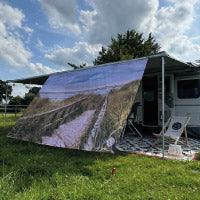
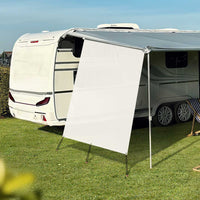

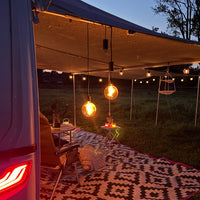


Imagine you have just enjoyed your first coffee of the morning, step barefoot out of your van, and land right in a cold puddle because your old awning groundsheet soaked up the night’s moisture like a sponge. Such moments often cost us valuable vacation time, as current surveys show that campers spend an average of 20 minutes a day just sweeping sand and dried mud out of the interior. A high-quality outdoor camping rug is therefore far more than just a visual accessory; it is your most important shield against the daily chaos in front of the sliding door.
You know better than anyone that freedom in nature is only truly enjoyable when comfort isn't compromised. There is hardly anything more annoying than rugs that lift at the slightest breeze or give off that typical musty smell for days after a short rain shower. We understand the need for a clean vestibule and a durable design that still looks like new after three weeks of continuous use. In this guide, you will learn how to functionally upgrade your setup with the right flooring and finally leave the dirt where it belongs: outside.
We will show you the best materials for the 2026 season, which are not only child's play to clean but also guarantee you a secure and cozy feeling even in wind speeds of force 6.
Key takeaways
- Learn how to effectively keep dirt and sand out of your camper with the right flooring and ensure maximum cleanliness in the interior.
- Discover why modern materials like polypropylene and recycled fabrics offer the perfect balance between UV resistance, sustainability, and longevity.
- Find out which outdoor camping rug best suits your vehicle – whether you are looking for compact dimensions for a camper van or flexible reversible patterns.
- Learn practical professional tricks for windproof fastening and quick on-site cleaning so that your setup remains stress-free even on the day of departure.
- Understand how to create a harmonious outdoor living room that combines design and functionality by cleverly combining a rug and a sun canopy.
Why an outdoor camping rug will revolutionize your setup
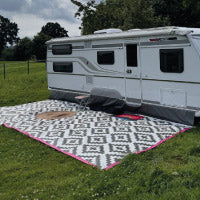
An outdoor camping rug is far more than just a decorative accessory for your awning. These are specialized floor coverings made from robust synthetic fibers like polypropylene or vinyl, developed precisely for the harsh conditions outdoors. Imagine opening your camper's sliding door in the morning and stepping not onto cold gravel or damp grass, but onto a pleasant, clean surface. This small difference immediately changes the entire dynamic of your pitch. A high-quality rug defines your outdoor area as an extended living room and creates a clear boundary between the wild outdoors and your private retreat.
Comfort meets functionality: The psychological impact
A rug immediately creates a homey atmosphere that combines the typical "outdoorsy" feeling with the comfort of your own four walls. Psychologically, rolling out the rug marks your territory. This provides an increased sense of security and privacy, especially on busy campsites. Modern fabrics for 2026 feature an optimized drainage effect. Rainwater drains directly into the ground through the special mesh instead of forming puddles. This prevents the formation of slippery mud zones right in front of your entrance. Furthermore, the tightly woven mesh serves as an effective barrier against crawling creatures. Ants and other insects find significantly fewer hiding places on the smooth, synthetic surface than in tall grass or on bare soil.
Cleanliness in the camper: Less cleaning, more vacation
The most important function in everyday camper life, however, is protection against dirt. Practical tests show that up to 90% of loose dirt, sand, and dust is caught on the outdoor camping rug before it even reaches your vehicle's step. Without this buffer, you carry small particles inside with every trip, which act like sandpaper on your flooring. A direct comparison makes the benefit clear. While campers without flooring often have to sweep or mop the interior three times a day in changeable weather, this effort is reduced to an absolute minimum with a barefoot zone in front of the door. You save about 15 to 20 minutes of cleaning time per day. That is over two hours of gained vacation time per week that you would rather spend by the lake or having a relaxing barbecue.
In summary, the right flooring offers you three essential advantages:
- Hygiene: Dramatic reduction of sand and mud in the living area.
- Well-being: A clean zone where you can relax without shoes.
- Structure: Visual enhancement and clear demarcation of your personal pitch.
Investing in a well-thought-out foundation is therefore not a luxury, but a decision for a better quality of life while traveling. Anyone who has once enjoyed the comfort of a dry, clean surface in front of their van will never want to miss this piece of freedom again. It is the easiest way to turn a simple parking spot into a real home away from home.
Material check: Which fabric will survive the 2026 camping season?
A good outdoor camping rug has to be able to take a lot. In 2026, experienced campers are primarily relying on polypropylene (PP). This material is the gold standard because it absorbs almost no moisture. Water absorption is less than 0.01 percent. For you, that means: even after a heavy thunderstorm at Lake Garda, the fabric dries in record time. You won't be packing up heavy, dripping ballast that turns your storage compartment into a dripstone cave. Cheap versions from the hardware store, on the other hand, often fade massively after just 100 hours of direct sunlight because they are not UV-stabilized.
- Sustainability: In 2026, modern rugs are often made of over 60 percent recycled plastic without sacrificing stability.
- UV resistance: High-quality fibers are solution-dyed and retain their brilliance for at least five seasons.
- Tear resistance: Special PP fabric withstands loads of up to 450 kg per square meter, which is especially important for heavy camping furniture.
Polypropylene vs. polyester: A technical comparison
Why does PP win the race against polyester? While polyester is soft, it tends to trap moisture between its fibers. This often leads to unpleasant odors or mold growth under the rug. Polypropylene, on the other hand, is naturally resistant to microorganisms. Another decisive advantage is the modern hollow fibers. These reduce the net weight by about 25 percent compared to solid fibers. This saves you a good 1.5 kilograms in payload for a 3x4 meter rug. The feel has improved enormously; modern weaves combine the necessary robustness with a surface texture that feels almost like wool under your feet.
Lawn-friendliness: Defeating the guilty conscience
Nobody wants to leave behind a brown, dead patch when packing up. On about 40 percent of European campsites, completely closed PVC tarpaulins are now strictly prohibited. The solution is breathable fabric. The mesh size is optimized so that light and air reach the turf, while dirt is effectively kept out from below. If you pay attention to an open fabric structure, the lawn remains green and healthy even after seven days of staying in one spot. To perfectly organize your gear, our thought-out storage systems help ensure that your clean rug is ready to be stowed away again immediately after the trip. A high-quality outdoor camping rug thus not only protects your comfort but also preserves the nature we enjoy so much while traveling.
A comparison of the different types of camping rugs
Choosing the right underlay determines whether you shuffle to breakfast barefoot or constantly carry dirt into the interior. For your ideal outdoor camping rug look, four main categories are available in 2026, each covering specific needs. While the camper van owner watches every centimeter, the primary concern for a family of five in an awning is the surface area.
- Reversible rugs: These all-rounders offer two designs in one. Thanks to their special weaving technique, they are particularly dimensionally stable and forgiving even with heavy camping chairs.
- Foldable rugs: The rescue for compact vehicles. They can be folded down to a square size and disappear into flat storage compartments instead of blocking long tubes in the rear garage.
- Custom awning rugs: Those who stay on the Adriatic for three weeks at a time need precision. These rugs end flush with the vehicle edge and prevent tripping hazards.
- Style variants: Two extremes dominate in 2026. On one side is the playful boho look with ethnic prints, on the other the clever minimalism in anthracite or sand tones.
You can recognize a high-quality model by a material density of at least 450 grams per square meter. This ensures that the edges do not curl up and the rug retains its shape even after a season in 35-degree heat in the shade.
Reversible designs: Variety at the pitch
The double-sided weave is more than just optics. By crossing the plastic fibers on both sides, tear resistance increases by about 25 percent compared to single-sided prints. You can change the look of your pitch in seconds. In Sweden, you can use the dark side for cozy warmth, while in Spain, the light side reflects the heat. This ensures even wear, which easily extends the life of your rug to over six years.
Pack size and weight: Crucial for payload
The 3.5-ton limit is a real specter for many campers. A conventional 3x4 meter rug can easily weigh 5 kilograms. Modern, foldable variants reduce the pack volume by up to 40 percent compared to rolled goods. A folded package of 40x40 centimeters fits perfectly under the bench seat or in a storage box. When buying, look for integrated carrying bags. They prevent sand and residual moisture from dirtying the rest of your equipment in the storage area. A well-chosen outdoor camping rug companion is light, robust, and can be wiped dry within 20 minutes even after a rain shower.
No matter which model you choose, the quality of the fibers is the key to peace of mind. High-quality polypropylene absorbs no water and remains mold-resistant, which is worth its weight in gold, especially on damp ground in autumn.

Practical tips: Fastening, cleaning, and storage
A high-quality outdoor camping rug is an investment in your well-being under the awning. To ensure the good piece survives the entire 2026 season and beyond, proper handling is key. A flying carpet is only a good idea in fairy tales when camping. In reality, loose edges often lead to material damage or painful tripping hazards.
Storm-proof fixing: When the wind picks up
Wind gusts of over 45 km/h are not uncommon on the North and Baltic Seas. To keep your rug on the ground, you should rely on screw pegs. These offer up to five times higher pull-out resistance compared to smooth tent pegs, especially in sandy or loose soil. Use special plastic clips or eyelet reinforcements when screwing them in. These distribute the tension evenly across the fabric and prevent the material from tearing under heavy load.
An important practical trick: Always tension the rug from the center toward the corners. A slight, even tension minimizes wrinkle formation by about 70 percent. This not only looks neater but also prevents rainwater from collecting in depressions and softening the ground.
Ease of care: Battling mud and resin
Nobody wants to drag the dirt of the last three weeks into their clean motorhome. Cleaning your camping rug begins on the day of departure. Plan about 20 minutes for this. Let damp mud dry completely before sweeping it off with a stiff broom. This is more effective than rubbing the dirt deeper into the fibers with water.
- Step 1: Sweep or shake off coarse dirt while dry.
- Step 2: For stubborn stains like bird droppings or resin, use a special tent cleaner or gall soap. Avoid aggressive bleaches that attack the UV coating.
- Step 3: Fold the rug loosely. Avoid sharp creases in the same position to prevent material breakage.
After the camping season, a deep clean is mandatory. Spray the rug down with a garden hose and let it dry in the open air for at least 48 hours. Moisture is the primary cause of mildew and unpleasant odors in winter storage. Ideally, store the dry rug standing up in a ventilated bag to avoid pressure points.
Still looking for the perfect solution to transport all your equipment safely and cleanly? Discover our thought-out storage systems for campers now and make room for the really important things.
Your upgrade for 2026: Why Campidoo is the first choice
We at Campidoo are passionate campers ourselves. We know the feeling of enjoying that first cup of coffee in the morning on a clean, pleasant surface. That is precisely why an outdoor camping rug from our range is not anonymous mass-produced goods. Every detail has been put through its paces in practice. We have spent hundreds of nights under the open sky to know exactly what haptics and cleaning capabilities a rug really needs. We rely on genuine expertise from the community instead of short-lived trends.
The rug reaches its full potential especially in combination with our sun canopies. You create a protected zone of relaxation that is visually and functionally convincing. Our quality standards are uncompromising. We guarantee high UV resistance with a lightfastness level of 7 to 8. This way, your rug still looks fresh even after intense exposure in the summer of 2026. The tear resistance of our 450g/m² fabric structure is significantly above the market average, which guarantees you enormous durability.
There is no anonymous major corporation behind Campidoo. We are your specialized partner at eye level. If you have questions about the right size for your camper van, you will get support from people who sleep in their own vans regularly. You can feel this connection to the lifestyle in every product.
The Campidoo principle: Thought out to the last fiber
Our designs are created exclusively in our own think tank. We combine modern aesthetics with the tough demands of everyday camping life. Sustainability plays a central role in this. For our current models, we use recyclable plastics that are extremely durable. This rug is not an isolated piece. It fits seamlessly into our entire camping accessories ecosystem. Everything follows a clear logic: maximum organization and the highest comfort for your mobile home.
Conclusion: Investment in a stress-free vacation
A high-quality outdoor camping rug is the foundation for hygiene and coziness in front of your vehicle. When choosing, pay primary attention to material weight, UV protection, and the right size for your awning. You often have to dispose of cheap products after just one season because they fade or tear. Our quality pays off over many years. This saves money in the long run and conserves valuable resources. Do not compromise on your equipment. Transform your pitch into your personal favorite spot and enjoy the freedom of traveling without stress.
Your upgrade for the 2026 camping season
A high-quality outdoor camping rug is much more than just a stylish accessory for your awning. It acts as an effective barrier against dirt and transforms every dusty pitch into your personal outdoor living room. Our experience from over 500 nights in a van shows that the right choice of material determines whether you experience frustration or joy. Campidoo models are 100% UV-resistant and designed to be extremely easy to care for, ensuring they look as good as new even after intensive use in 2026. We have developed every detail based on real-world experience to offer you maximum functionality. Your new companion will be shipped within Germany in just 24 to 48 hours, so you don't lose any time. Rely on quality made by campers for campers, and create the comfort you deserve on your travels. It’s time to take your setup to a new level and fully enjoy the peace of mind that nature provides. See you outside at the next pitch!
Discover the robust & stylish Campidoo outdoor rugs now!
Frequently Asked Questions About Your Camping Rug
Are outdoor rugs allowed on every campsite?
No, not all types of rugs are fully permitted at every site. Today, around 40 percent of premium European campsites require breathable fabrics to protect the delicate turf. Densely woven PVC mats often lead to yellow spots in the grass after just 48 hours, which is why site managers often prohibit them. When buying your outdoor camping rug, look for an open-pore weave that allows air and water to circulate. This way, you avoid unnecessary trouble during site inspections and leave your plot in perfect condition.
What is the best way to clean mud off a camping rug?
Let the mud dry completely before you start the actual cleaning. About 90 percent of the dried dirt can then be easily swept or shaken off with a stiff hand brush. For stubborn residues, use lukewarm water at a maximum of 30 degrees Celsius and a soft brush. Avoid using pressure washers with more than 80 bar of pressure, as they can roughen the fine plastic fibers. A simple garden hose and a biodegradable cleaning agent are usually enough for a clean result.
What size should an outdoor rug for my awning be?
Ideally, your rug should be about 10 centimeters smaller on each side than the actual footprint of your awning. For a standard 4.00 by 2.50-meter awning, it is best to choose a size of approximately 3.90 by 2.40 meters. This small buffer effectively prevents rainwater from pooling at the edges or seeping under the tent walls. Measure the area exactly before purchasing so that your outdoor camping rug lies perfectly and no dangerous tripping hazards are created by unnecessary folds.
Are outdoor rugs water-permeable?
High-quality camping rugs are almost always designed to be water-permeable thanks to their special weave structure. Modern models achieve a permeability of around 1,000 liters per square meter per hour, which allows rainwater to seep into the ground immediately. This prevents annoying puddles from forming in your awning and ensures that the material is completely dry again within 30 to 60 minutes after a shower. When buying, look specifically for terms like "open-pore" or "mesh fabric" to safely avoid standing water under your feet.
What should I do if the rug gets wet in the rain?
The best thing to do is hang the wet rug over a sturdy line or the A-frame of your caravan as soon as the rain stops. A model made of 100 percent polypropylene dries completely in light wind in about 45 minutes. Avoid storing the rug rolled up while damp for more than 12 hours, as this can lead to unpleasant odors or mildew. If you have to depart in the rain, spread it out again immediately once you get home so the remaining moisture can escape completely.
Are there outdoor rugs that don't damage the grass?
Yes, special awning rugs with a honeycomb structure are particularly gentle on the turf and promote growth. These models allow up to 80 percent more light and air to reach the ground than conventional, closed PVC sheets. Many campsite operators in Germany and the Netherlands allow only these certified rugs on their green spaces. With such a model, the grass remains healthy and green even after a 14-day stay, which maintains the quality of the pitch for subsequent campers.
How do I secure the rug on hard or stony ground?
For hard ground, use special screw pegs or ground nails made of galvanized steel with a wide plastic head. These pegs are usually 20 centimeters long and hold the rug securely in place on 95 percent of all soil types, even in strong winds. Always drive the nails into the ground at an angle away from the rug to achieve maximum tensile strength. If the ground is extremely stony, plate-head screws from the hardware store, which you can drive directly into the ground with a cordless drill, are helpful.

