










 Über uns
 Magazin
 Kontakt






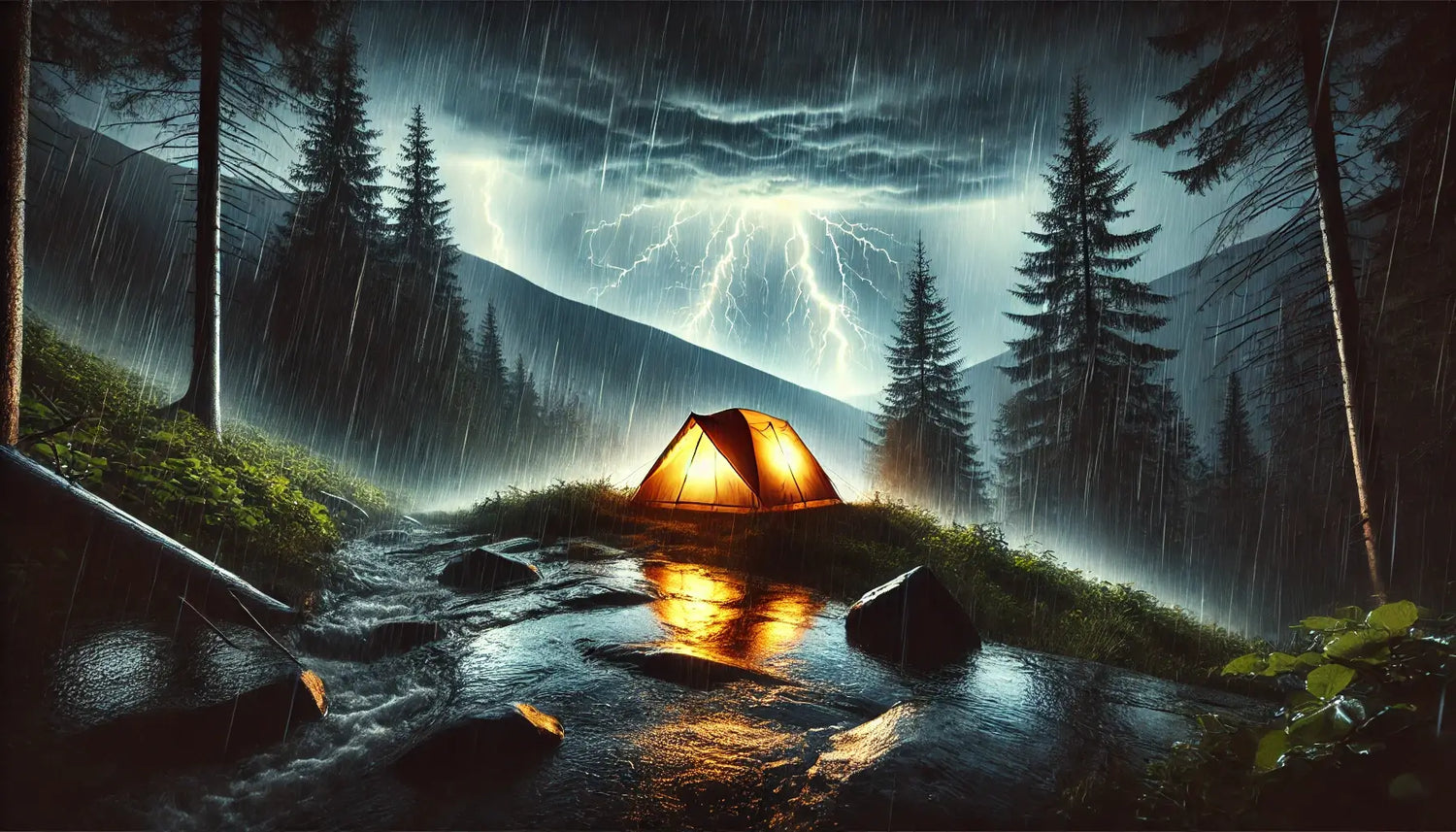

Nature can be unpredictable, and sudden storms pose a real challenge when camping. Especially when camping in the great outdoors, it's crucial to be prepared for unforeseen weather conditions. Camping during a thunderstorm is a situation that makes many campers nervous. But don't panic: with the right safety precautions and careful planning, you can stay safe even in stormy weather.
Find out now how to prepare for a storm, what to do if the weather suddenly changes, and how to properly pitch your tent to protect yourself. Whether you're camping for the first time or are an experienced camper, these tips will help you stay calm and enjoy your adventure safely, even in bad weather.
How do thunderstorms form?
Severe weather arises from complex interactions in the atmosphere, primarily influenced by differences in temperature, air pressure, and humidity. One of the most frequent causes of stormy weather is the formation of cumulonimbus clouds. These enormous clouds develop when warm, moist air rises and cools in higher, colder layers of the atmosphere. This ascent creates an unstable atmosphere, which is necessary for the formation of thunderstorms.
If the rising air is fast enough, strong updrafts form, causing water vapor in the air to condense. This leads to the formation of droplets and ice crystals that collide within the cloud. These collisions generate electrical charges that eventually result in lightning. Thunder is caused by the sudden heating and expansion of the air heated by the lightning strike.

Personalized sunshade for you
Order nowAnother important phenomenon is the interplay of low- and high-pressure systems. A low-pressure system attracts moist air, which, as it moves upwards, creates conditions for heavy rainfall or even storms. In contrast, a high-pressure system leads to stable, calm weather because it pushes the air downwards and prevents cooling. These interactions are the basis for the formation of severe weather.
The right location: How to find your place
Make sure to choose a spot that is not only comfortable but also offers protection from the elements. Avoid pitching your tent directly under trees or near bushes. While these may provide shelter from rain, they pose a danger in strong winds or thunderstorms, as branches can break and fall. Locations directly on hills or in depressions are also problematic, as water can run off quickly and flooding is a risk.
An ideal campsite is located on elevated, level ground that is not prone to waterlogging. If you prefer camping by a lake , choose a safe distance from the shore to avoid flooding, which can occur quickly, especially during heavy rain.
You should definitely make sure to choose a campsite far enough away from potential hazards such as steep slopes or rock crevices. If you're camping near a stream, check how quickly water can accumulate after rain. A safe campsite should always be stable and well-protected so you can sleep soundly even if the weather changes suddenly.
Behavior in heavy rain and storms
When camping, it's important to know how to react if heavy rain or a storm approaches. The right response can be crucial for your safety. Here are some things to avoid and measures you can take to protect yourself.
What you should avoid:
- Proximity to trees: Avoid camping under or in the immediate vicinity of trees, as branches can break off in strong winds.
- Storing valuables in the tent: Valuables should always be stored safely and outside the tent to protect them from water damage.
- Setting up the tent in depressions or on riverbanks: water can quickly accumulate and lead to flooding.
- Use of metal objects: Keep away from metal objects such as poles or equipment, as they pose a danger in the event of a lightning strike.
What you should do:
- Secure your tent well: Make sure your tent is stable and well anchored by driving tent pegs firmly into the ground.
- Seek shelter: In case of a storm, seek refuge in a sturdy building or a safe, wind-protected area.
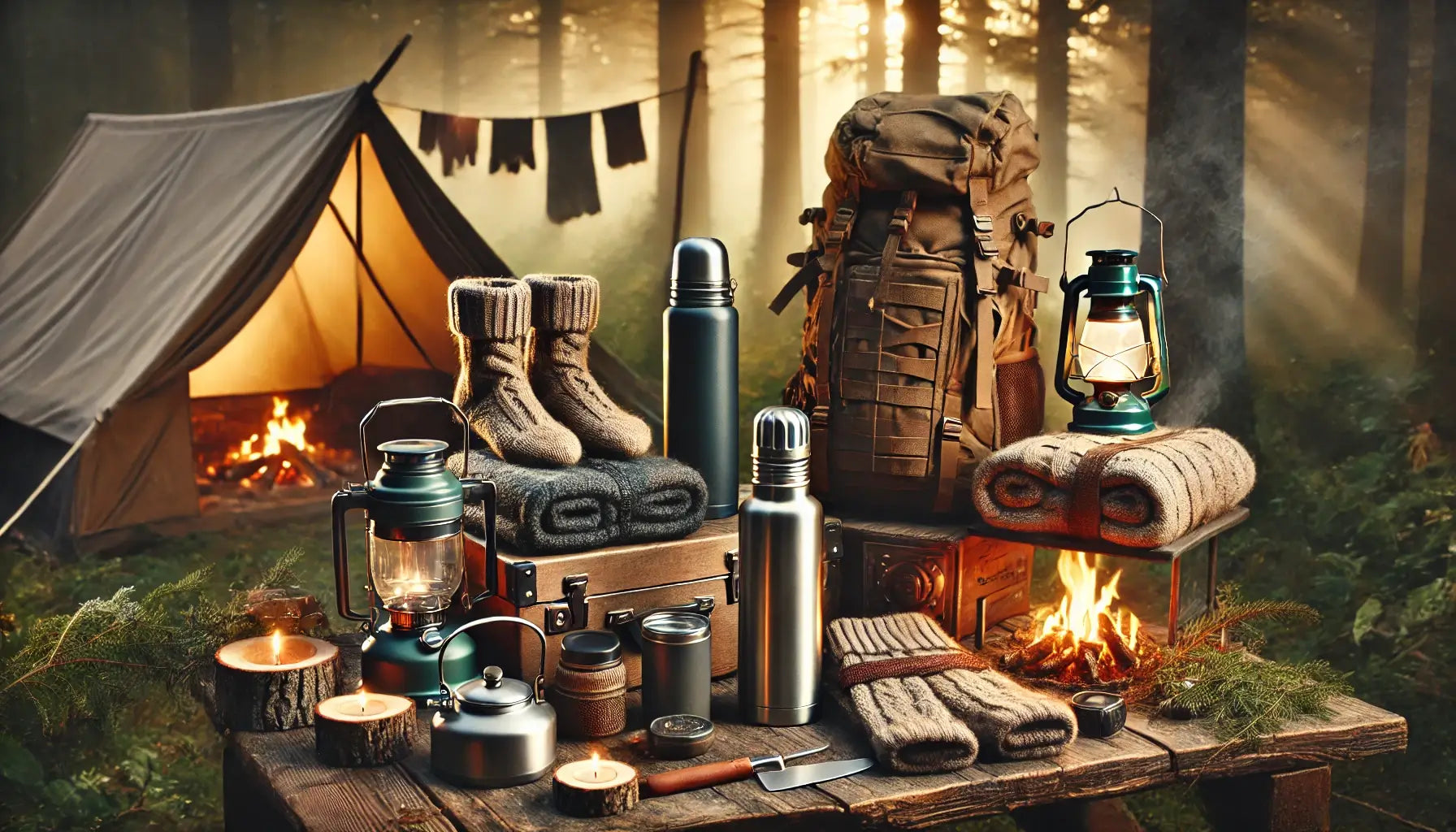
- Keep emergency equipment readily available: Have a flashlight, first aid kit and warm clothing ready in case you have to stay in the tent for an extended period.
The right equipment for every weather condition
Especially in unpredictable weather conditions, such as heavy rain or wind, you should opt for weatherproof equipment. A sturdy, waterproof tent is essential – it protects you from rain and wind. Make sure the tent has robust, reinforced seams and a stable frame to withstand even stormy conditions.
Besides a reliable tent, you should bring weatherproof clothing. Rain jackets, waterproof trousers, and good hiking boots are essential to stay dry and warm. Make sure your clothing is breathable so you don't get too sweaty.
Camping accessories such as a weatherproof flashlight, a power bank for your phone, and a waterproof tarp for added security are also essential. Don't forget practical items like a mosquito net or a sleeping mat for extra comfort.
An emergency kit with first-aid supplies and a warm blanket are essential in case the weather turns bad and you have to stay in your tent longer. The right equipment ensures you're safe and well-prepared in any weather.

Campidoo's practical products for emergencies
In case of unexpected weather changes or emergencies while camping, it's crucial to have the right equipment. Campidoo offers a selection of practical camping products that can help you in such situations. An LED camping lantern is a must-have if you want to stay safe even in the dark. LED technology not only ensures a long battery life but also provides bright illumination, helping you see clearly in and around your tent and campsite.
A camping mug made of robust material is also a useful item. It's not only lightweight and space-saving, but also resistant to the harsh conditions you might encounter in nature. Especially in cold temperatures, you can quickly prepare a warm drink to warm up.
Another practical product is camping tableware . It's usually made of lightweight, shatterproof material and is easy to pack. Whether you're preparing a meal in your tent or eating outdoors in bad weather, this tableware is easy to use and perfect for any camping situation. These practical products make camping more comfortable and safer in all weather conditions.
After the storm: Check for damage and take precautions
Lightning strikes, heavy rain, and wind can severely damage nature and your equipment. First, you should check your tent for damage to the seams, poles, or the fabric. A damaged tent might not only fail to provide the protection you need, but could also lead to water damage if it continues to rain.
Also check the ground to make sure there are no pools or puddles. Especially on uneven terrain, water can quickly seep into your tent and cause unpleasant surprises. Also, check the area around your tent for fallen trees or branches that might pose a hazard.
It is also important to check the equipment – tent poles, sleeping bags and backpacks should be checked for damage to ensure that everything is still intact and can continue to be used.
What you should do after a thunderstorm:
- Check the tent for damage and repair if necessary.
- Check the surrounding area for fallen trees and loose branches.
- Check the soil for water accumulation.
- Check camping equipment (e.g., sleeping bag, backpack) for water damage.
- Maintain a safe distance from unstable structures
Conclusion on camping during thunderstorms
Camping, especially in bad weather, requires careful preparation and the right behavior to get through stormy conditions safely and comfortably. With the right equipment, such as a sturdy tent, weatherproof clothing, and useful camping accessories, you can be well prepared for extreme weather. It's equally important to choose a safe campsite and be aware of natural hazards like fallen trees or flooding.
In the event of a sudden storm, it's crucial to remain calm, follow safety precautions, and seek shelter if necessary. After the storm, check your equipment and surroundings for damage to ensure you can continue camping safely. With these tips and proper preparation, your adventure will be a safe and unforgettable experience, even in unpredictable weather. Camping during a thunderstorm doesn't have to be dangerous if you take the right precautions.