











 Über uns
 Magazin
 Kontakt








A portable toilet is often indispensable when camping, especially for longer trips to remote areas. But just as important as using this practical solution is knowing how to dispose of it properly. Improper disposal can not only be unpleasant but also pollute the environment. It is therefore crucial to familiarize yourself with the correct disposal methods and the best disposal stations.
Learn now how to properly empty your portable toilet and which disposal points are best suited for campers. This way you can enjoy the camping experience while also paying attention to hygiene and protecting nature.
What is a chemical toilet?
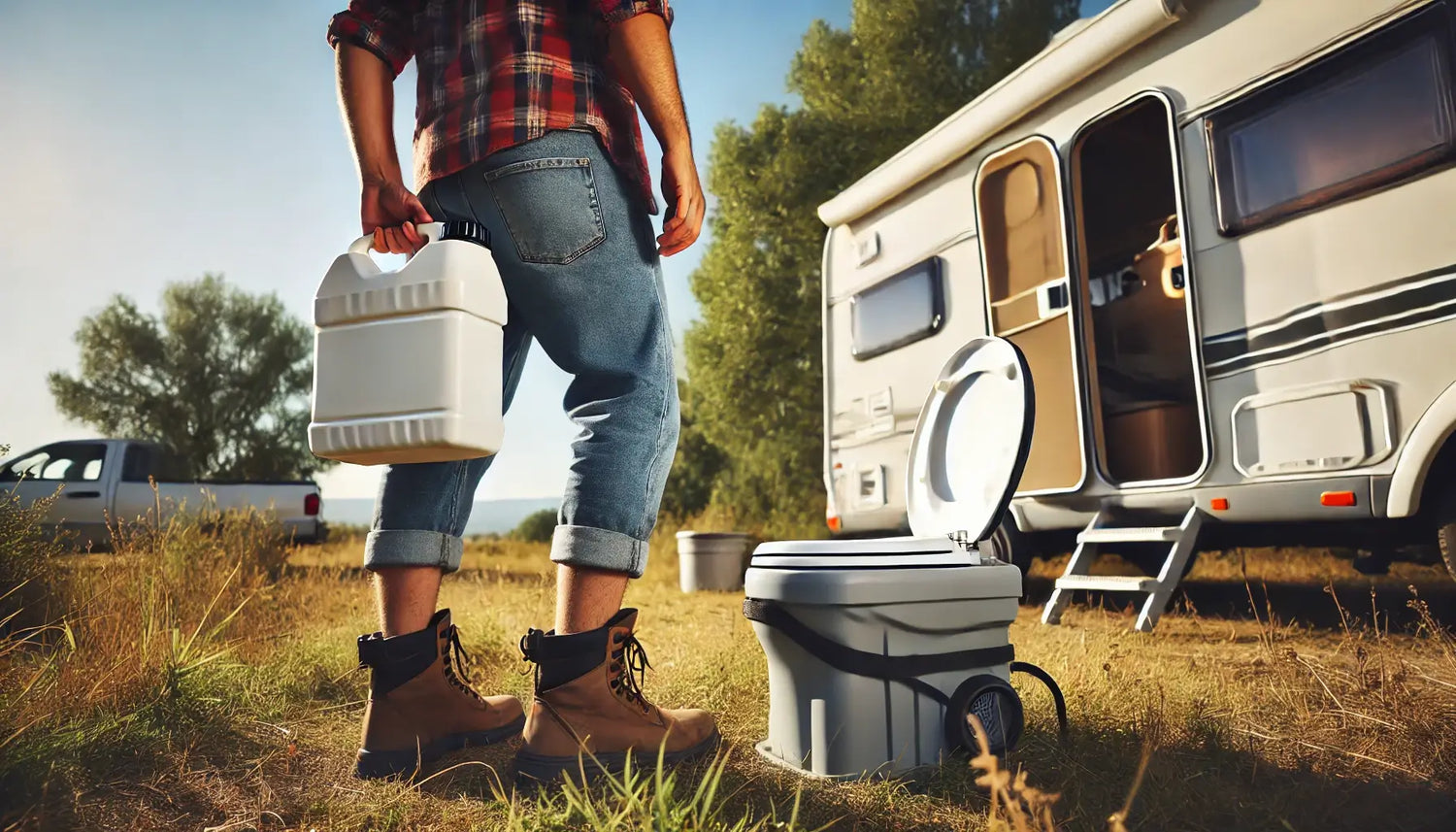
A chemical toilet is a portable toilet often used for camping, in RVs, or on boats to provide a hygienic waste disposal solution when permanent sanitary facilities are unavailable. It typically uses special chemicals that break down feces and urine and neutralize unpleasant odors. These toilets consist of two main parts: an upper seating and collection area for waste and a lower tank for storing the wastewater.
The lower tank often contains a mixture of chemicals that both disinfect and promote the decomposition process. When emptied, the contents of the tank are routed through a disposal station, which can be found at a campsite, rest stop, or designated disposal point. Chemical toilets come in various sizes and models, from simpler, portable versions to more complex systems installed in motorhomes or luxury campervans.
While they represent a convenient and practical solution for campers and travelers, the proper handling and disposal of these chemicals requires careful attention to maintain personal hygiene and protect the environment.
When should you empty the chemical toilet?
The chemical toilet should be emptied regularly to prevent unpleasant odors and health risks. Generally, it's advisable to empty the toilet as soon as the lower tank is full or when the fill level reaches a certain point. It doesn't matter whether you're already traveling or at a campsite – the frequency of emptying depends primarily on usage and the size of the tank.
Another important time to empty a chemical toilet is when the chemicals start to lose their effectiveness. If odors become stronger again or the waste is no longer decomposing properly, the tank should be emptied and refilled with fresh chemicals. It is also important to empty the toilet before extended periods of inactivity to prevent the waste from decomposing and promoting bacterial growth.
A general rule of thumb is that the toilet should be emptied after each use or after one or two days – depending on the number of users and the type of use.
| Fill level | Emptying time |
|---|---|
| 1/4 full | At the next disposal station |
| 1/2 full | After two to three days |
| 3/4 full | At maximum usage |
| Full | Empty immediately |
Where can I dispose of a chemical toilet?
Many campsites, rest areas, and specially designated motorhome pitches have disposal stations where wastewater from portable toilets can be disposed of safely and hygienically. These stations are usually equipped with a connection for draining the wastewater and an area for filling with fresh chemicals.
If there is no disposal station nearby, there are also mobile solutions that allow you to empty your chemical toilet by collecting the wastewater in special barrels or containers and then taking them to a disposal site. In some regions, there are also special collection points that specialize in the disposal of wastewater from portable toilets. Waste disposal companies sometimes offer similar services if you are in a remote location or during a longer trip.
It is important to ensure that waste disposal is always carried out in an environmentally sound manner. Discharging wastewater into natural bodies of water or public spaces is illegal and harmful to the environment. Therefore, an official waste disposal station should always be used.
The appropriate disposal instructions
Proper disposal of chemical toilet waste is crucial for campers living in or traveling in motorhomes to protect the environment and prevent unpleasant odors. Correct emptying and disposal not only ensures hygiene but also prevents pollutants from entering the environment.
Disposal should take place at a designated disposal station, which is usually found at campsites or rest areas. It is important that the toilet is always completely emptied before disposal. First, the lower tank should be removed and the waste emptied into the disposal basin. Take care not to release any chemicals into the environment and refill the tank with fresh chemicals.
Step-by-step instructions:
- Preparation : Make sure the disposal station is available and that you have all the necessary equipment (gloves, disinfectant).
- Emptying the toilet : Remove the lower tank and empty the waste into the designated disposal basin.
- Cleaning : Rinse the tank thoroughly to remove any residue.
- Add fresh chemicals : Fill the tank with fresh, biodegradable chemicals.
- Reinstalling the toilet : Return the tank to its place and close it securely.

Eco-friendly tips
Disposing of your portable toilet in an environmentally friendly way is not only good for the environment, but also an important step in keeping campsites and travel destinations clean. The first tip is to always use biodegradable toilet additives. These products contain no harmful chemicals and support the natural decomposition process in the waste tank.
Secondly, it is important to empty the toilet only at official disposal stations. Discharging wastewater into nature is not only harmful to the environment but also illegal. Thirdly, the tank should be thoroughly rinsed with water after each emptying to remove residue and prevent odors.
Another recommendation is to use reusable products, such as gloves or cleaning supplies. These help reduce waste. Those who travel frequently can find practical aids for environmentally conscious camping at Campidoo. Stickers with important instructions or symbols indicating proper disposal are particularly useful. They can be placed, for example, on the tank or toilet to remind you of the important steps.
Mistakes you should avoid
Disposing of a chemical toilet may seem simple at first glance, but there are some common mistakes that can negatively impact both the environment and hygiene. Especially when camping or sleeping in a car, it's important to empty the waste tank correctly to avoid unpleasant situations.
A common mistake is improper emptying in undesignated locations. Discharging wastewater into nature or ordinary drains can severely pollute the environment and is prohibited in many countries. Another mistake is the use of harsh chemicals, which, while effective in the short term, put a strain on disposal stations and wastewater treatment plants in the long run.
Inadequate cleaning of the tank is also a common problem. Residue can not only cause unpleasant odors but also shorten the toilet's lifespan. Finally, many people forget to pay attention to the fill level indicator. An overfilled tank can leak during transport and cause significant problems.
Mistakes you should avoid:
- Emptying in unauthorized locations
- Use of aggressive chemicals
- Neglecting tank cleaning
- Ignoring the fill level indicator
- Lack of protective clothing
Here's something else you should know about disposing of chemical toilet waste.
Proper disposal of a chemical toilet is an important aspect of an environmentally conscious and hygienic camping experience. Using the right methods and knowing where to find suitable disposal stations allows you to protect the environment without sacrificing comfort. It is crucial to be able to dispose of the chemical toilet without causing harm to nature or other people. This can be achieved by using biodegradable toilet additives and regularly cleaning the tank.
Avoiding common mistakes, such as emptying in inappropriate places or overlooking the fill level indicator, actively contributes to a more sustainable camping culture. At the same time, clean tanks and environmentally friendly products ensure a pleasant experience. These simple measures not only extend the lifespan of your portable toilet but also make your trip significantly more enjoyable. With proper planning, camping remains a carefree adventure in harmony with nature.