










 Über uns
 Magazin
 Kontakt



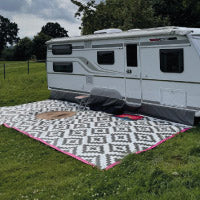
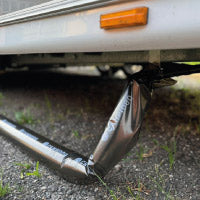
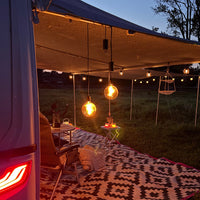
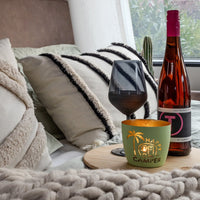
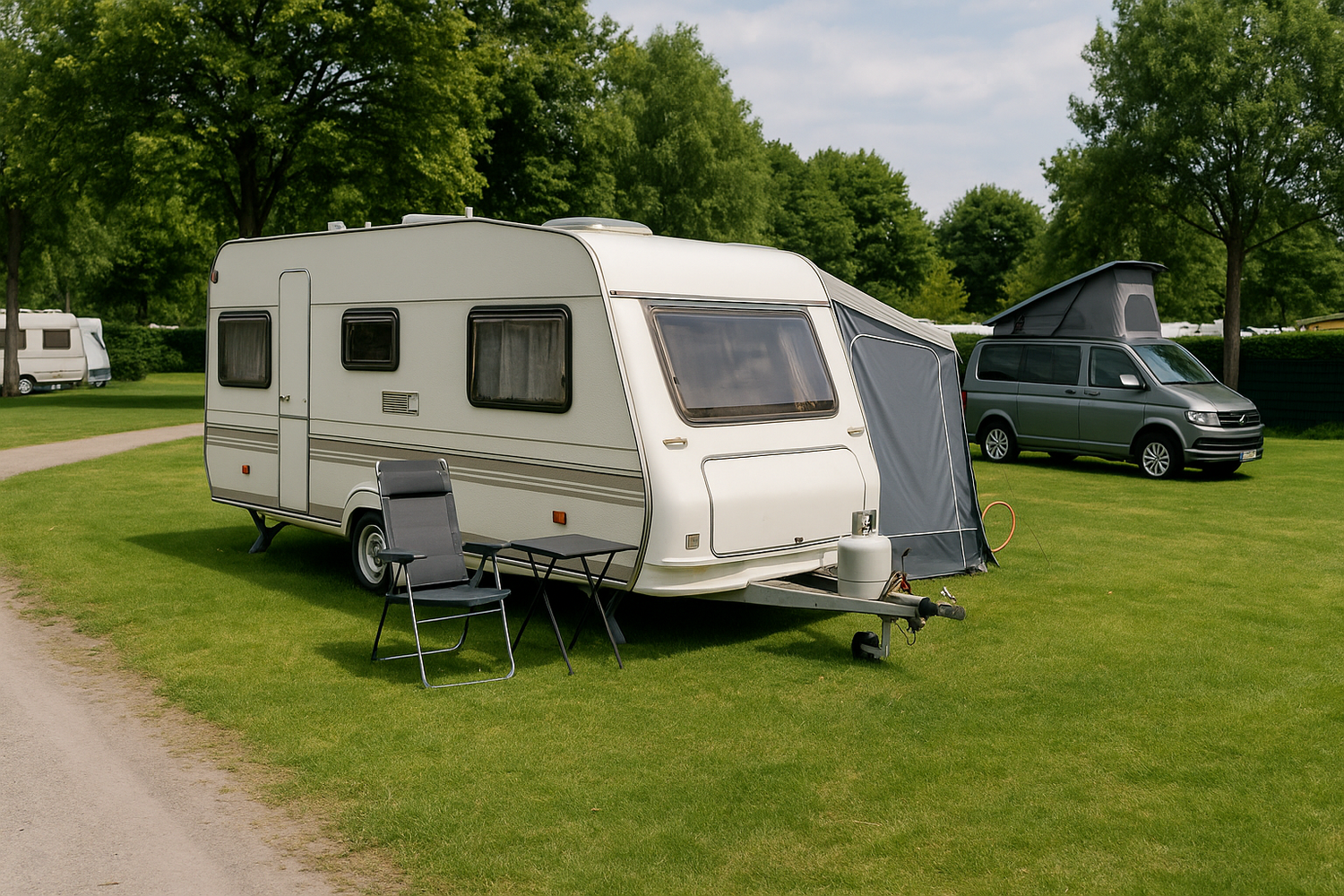

For many , living at a campsite has long since become more than just a holiday trend. A growing number of people are discovering this alternative form of housing as a permanent home, or at least as a long-term solution that combines freedom, a connection with nature, and independence. Whether in a well-equipped caravan, a tiny house, or a stationary mobile home – life at the campsite offers numerous advantages, but also challenges that require careful planning in everyday life.
How do I structure my daily routine if I live permanently at a campsite? What legal requirements do I need to be aware of? And how do I organize electricity, water, internet, or everyday things like shopping and laundry? We'll explore these questions in this article and show you how to manage campsite life in a structured yet relaxed way. Get inspired and find out if camping is right for you.
Legal framework: What is allowed?
Anyone wishing to live permanently at a campsite must familiarize themselves with the legal framework beforehand. In Germany, permanent residence at a campsite is not automatically considered a legally permissible form of housing. Many sites are exclusively licensed for holiday and weekend use – registering it as a primary residence is generally not allowed.
Some municipalities make exceptions or offer so-called "permanent pitches" specifically designed for year-round living. It's important to note that even when living in a caravan or mobile home, building regulations still apply, especially if structural alterations are made. Electricity and water connections must also meet technical requirements.
Anyone wishing to register their primary residence at the campsite should clarify this beforehand with the operator and the relevant residents' registration office. It is also essential to check the availability of postal services, waste disposal, and insurance. The following table provides a quick overview:
| control | What applies? |
|---|---|
| Is permanent residence allowed? | Only in designated permanent parking spaces |
| Register your main residence | Only with the consent of the operator and the municipality |
| Building regulations | This also applies to mobile homes and extensions. |
| Postal delivery | Only possible with a fixed address |
| Electricity & Water | They must be technically securely connected. |
The right equipment for everyday life in a caravan or mobile home
A smooth daily routine at the campsite starts with the right equipment. Those who live permanently in a caravan or mobile home should pay attention to well-thought-out furnishings that are both practical and space-saving. Multifunctional furniture, clever storage solutions, and a well-organized kitchen make everyday life much easier.
Reliable electricity supply, water systems, and a well-functioning heating system are particularly important – especially during the colder months. Suitable camper lighting , suitable for both indoor and outdoor use, is also recommended to create a pleasant atmosphere.
Even smaller details like a sturdy camping table, storage boxes, cooking utensils, or a portable toilet make all the difference. Those who want to make their living space comfortable and personalized will find numerous practical additions in the camper accessories section that make life in a mobile home more pleasant.
Whether for everyday life, work, or relaxing in nature – the right equipment ensures not only comfort but also a feeling of home. With good planning, you can enjoy a flexible and organized camping experience.
Organization of electricity, water and wastewater
For a smooth camping experience , a reliable supply of electricity and water, as well as proper wastewater disposal, is essential. Many permanent pitches now offer fixed connections that function similarly to those in a house. However, there are differences in technology and operation that should be taken into account.
Electrical connections are usually equipped with a CEE plug. Those wishing to be self-sufficient can use solar panels and batteries. For water, a fresh water connection at the campsite is ideal; otherwise, portable water tanks are a good option. Wastewater disposal is usually handled via a separate grey water drain or a collection tank that needs to be emptied regularly.
Especially in winter weather or at remote campsites, supplies can become a challenge. Careful planning and high-quality equipment are therefore crucial to avoid problems.
Personalized sunshade for you
Order now- Electricity: CEE connection, electricity meter, possibly solar panels
- Water: Fixed connection or mobile fresh water tank
- Wastewater: Greywater connection or mobile container
- Winter operation: Insulation, heating cables and frost protection
- Self-sufficiency: batteries, power generator, water filter

Daily life on the campsite: shopping, washing & social contacts
Daily life at a campsite differs in many ways from living in a traditional apartment – but with a little organization, it's just as manageable. Depending on the campsite's location, shopping can be conveniently done in the nearby town. Some campsites even offer small shops or bread delivery services on-site. For larger purchases, a vehicle or using delivery services is recommended.
Washing clothes is also easily manageable: many campsites have washing machines and dryers for shared use. Those who prefer more independence can use a compact camping washing machine. It's important to keep an eye on water consumption and use the appliances efficiently.
An often underestimated aspect is the social interaction. A small community often develops on permanent pitches, with people supporting each other. New contacts, exchanges, and shared activities are an integral part of the lifestyle for many.
To ensure that everyday life runs smoothly, vehicle maintenance should not be neglected – for example, through regular leak tests on the motorhome . This way, your home on wheels remains intact and ready for use.
Work & Internet: How to stay connected
Anyone who wants to combine living at a campsite with working needs a stable internet connection and a suitable work environment. A functioning setup is particularly crucial for freelancers, the self-employed, or digital nomads. Many campsites now offer Wi-Fi access – however, this is not always stable or fast enough for video conferences, large uploads, or cloud applications.
A popular alternative is a mobile LTE or 5G router with an external antenna. This solution enables a stable connection even in more remote areas – provided there is a signal. Prepaid data cards, which can be topped up as needed, also offer true flexibility.
Workspace design also deserves attention: A dedicated table in the mobile home or awning, good lighting, and ergonomic accessories such as a laptop stand or an external monitor noticeably improve workflow. A reliable power supply is also essential – for example, via solar panels and an inverter for off-grid living.
With the right technical equipment and a little preparation, nothing stands in the way of working from the campsite. Those who work online can thus optimally combine the freedom of camping life with the flexibility of digital work.

Overcoming safety, weather & seasonal challenges
When staying at a campsite, the seasons are a crucial factor. While summer usually offers pleasant conditions, winter presents many campers with challenges: cold, frost, and dampness require special equipment and careful planning. Good insulation of the caravan or mobile home, frost protection for water pipes, and a reliable heating source are essential.
Heavy rain and storms can also pose a problem. Therefore, it is advisable to position the vehicle or mobile home in a sheltered spot and secure movable parts such as awnings or porches in case of severe weather. In summer, on the other hand, intense heat can be a burden – sun protection, ventilation, and a shady pitch will help here.
Another important aspect is security. Besides protection from the elements, burglary prevention should also be considered. Alarm systems, door and window locks, or well-placed motion detectors can help. For greater comfort and security in everyday life, there are also clever solutions – many of which you can find in our overview of practical gifts for campers .
Those who play it safe and are prepared for every season can enjoy life at the campsite all year round.
Overcoming safety, weather & seasonal challenges
When staying at a campsite, the seasons are a crucial factor. While summer usually offers pleasant conditions, winter presents many campers with challenges: cold, frost, and dampness require special equipment and careful planning. Good insulation of the caravan or mobile home, frost protection for water pipes, and a reliable heating source are essential.
Heavy rain and storms can also pose a problem. Therefore, it is advisable to position the vehicle or mobile home in a sheltered spot and secure movable parts such as awnings or porches in case of severe weather. In summer, on the other hand, intense heat can be a burden – sun protection, ventilation, and a shady pitch will help here.
Another important aspect is security. Besides protection from the elements, burglary prevention should also be considered. Alarm systems, door and window locks, or well-placed motion detectors can help. For greater comfort and security in everyday life, there are also clever solutions – many of which you can find in our overview of practical gifts for campers .
Those who play it safe and are prepared for every season can enjoy life at the campsite all year round.
Summary of staying at the campsite
For those interested in an alternative lifestyle, camping offers an exciting opportunity to combine everyday life with freedom. With the right preparation, well-thought-out equipment, and a functioning local network, this way of living can be comfortable and sustainable. It offers many advantages, especially for minimalists, nature lovers, or digital nomads – from lower fixed costs to true independence.
Living at a campsite also means actively engaging with issues such as supplies, safety, seasonal challenges, and legal regulations. Those who are open to new approaches and willing to organize themselves can not only live here, but also truly arrive. Whether for a few months or permanently – life on a campsite is more than an adventure: it's a conscious decision for simplicity, flexibility, and community.