










 About us
 Magazine
 Contact


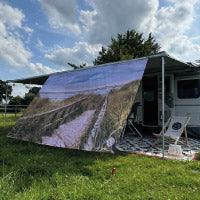
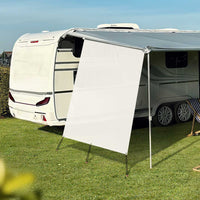

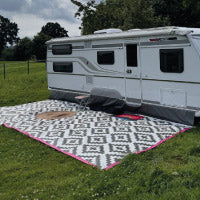
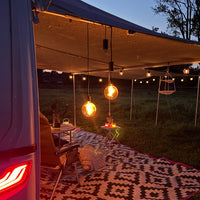


Last summer, many campers experienced the same disaster: a heavy summer rain turned their awnings into slippery mud zones within just 20 minutes. We all know and love the freedom under an awning, but no one needs puddles in their living room or trouble with the campground warden due to a ruined lawn. A musty smell caused by waterlogging can quickly dampen the holiday mood. With the right water-permeable outdoor camping rug, you ensure that your floor area stays dry, clean, and, above all, breathable.
In this article, you will learn exactly how to permanently banish mud and waterlogging from your daily camping life with the right ground sheet. We will show you why the special fabric structure not only treats your feet well, but also makes cleaning up after your holiday a breeze. Look forward to clever tips for a small pack size and the long durability of your equipment. This way, your mobile home remains the sanctuary you want for your trip, without you having to worry about the weather or the terrain.
Key Takeaways
- Find out why an open fabric structure prevents puddle formation and ensures significantly more sure-footedness and cleanliness in your awning.
- Learn about the material advantages of HDPE and polypropylene, and why high-quality UV stabilization is crucial for the longevity of your equipment.
- Discover how a water-permeable outdoor camping rug not only protects the lawn but also optimizes your valuable payload thanks to its low weight.
- Receive practical professional tips for laying it out wrinkle-free on uneven terrain and choosing the right pegs for any surface.
- Understand how you can bring more comfort and genuine freedom into your everyday camping life through the combination of well-thought-out functionality and modern design.
Why a water-permeable outdoor rug is indispensable for camping
Imagine opening your awning in the morning and, instead of stepping into a sticky puddle, you feel a dry, clean floor under your feet. This is exactly where a high-quality water-permeable outdoor camping rug demonstrates its strengths. Technically speaking, such a rug is characterized by its open-pored fabric structure. The mesh is woven so precisely that rainwater or spilled drinks do not remain on the surface but drain away immediately. This prevents dangerous slipping on smooth surfaces, which is a real safety plus, especially in households with children or dogs.
Another decisive factor is the hygiene under your equipment. If water is trapped under an airtight sheet, the humidity inside the awning rises massively. This is the ideal breeding ground for mold on the tent walls and unpleasant mildew stains. Since around 2015, about 75% of professionally managed campsites in Europe have responded and banned impermeable plastic sheets on their pitches. Instead, they opt for breathable solutions to ensure the long-term quality of their sites and to avoid completely suffocating the soil fauna.
Dry feet despite rain showers
The drainage effect of modern materials is impressive. While conventional PVC mats collect water like a basin, the open-pored fabric directs moisture directly into the soil. It is not just about drainage. The fibers themselves absorb almost no moisture, which accelerates the drying time by up to 300% compared to closed tarpaulins. As soon as the rain stops, your barefoot area is ready for use again in no time. This also saves you the tedious task of scrubbing off stagnant mud when packing up, as the dirt is usually washed away downward with the water.
Breathability: A camping lawn's best friend
A healthy lawn is the heart of every beautiful pitch. If you lay down a dense sheet, the grass will begin to rot after just 24 hours because there is no air circulation. A breathable awning rug protects the soil and prevents unpleasant odors caused by decaying vegetation. Due to the special weave, sufficient oxygen reaches the grass roots. Furthermore, many modern models allow about 15 to 20% of sunlight to pass through. This is often enough for the green area under your rug not to die off completely, even after a week of being set up, allowing it to regenerate within a few days after your departure.
- Safety: No puddle formation and thus minimized risk of slipping.
- Durability: Less risk of mold for your tent due to reduced waterlogging.
- Sustainability: Protection of the grass cover ensures permanently green campsites.
- Acceptance: Meets the strict requirements of modern campsite regulations.
A good camping rug is therefore far more than just a visual accessory. It is a functional tool that increases your comfort while protecting the nature that we campers love so much.
Material Science: What makes a camping rug truly weather-resistant?
You are standing in front of your camper in the morning, the sun is rising, and you are enjoying your first coffee. So that this feeling of freedom is not dampened by wet mud or a musty smell, the material of your flooring plays the leading role. A high-quality water-permeable outdoor camping rug must master extreme conditions: scorching midday sun, heavy camping furniture, and sudden downpours on uneven ground.
- HDPE (High-Density Polyethylene): This plastic is extremely tear-resistant, absorbs almost no moisture, and is naturally resistant to mold formation.
- Polypropylene: The fibers are often hollow and therefore very light. It feels significantly warmer and softer under bare feet than pure polyethylene.
- Polyester blends: These are often woven in as additional reinforcement to guarantee dimensional stability over many years.
A crucial factor for longevity is UV stabilization. Without this protection, plastic fibers often disintegrate under constant sunlight after just 12 to 18 months. They become brittle, bleach out, and tear under the slightest strain. High-quality models are treated with UV stabilizers that protect the material from decay for at least 5 years. This keeps your awning area looking appealing even after several seasons.
The weight tells you a lot about the quality and intended use. A lightweight rug under 300 grams per square meter will blow away at the slightest gust of wind and wrinkle easily. We recommend a weight class between 400 and 600 grams per square meter. This is robust enough for sharp chair legs while remaining handy enough to store in the rear garage of your van.
HDPE vs. Polypropylene: Which material wins?
If you often stand on gravelly or rocky ground, HDPE is your favorite. The high density prevents sharp edges from piercing the fabric. Polypropylene, on the other hand, scores points with everyone who likes to walk around without shoes. It is more elastic and kinder to the skin. In terms of cleaning effort, both materials are on par. A strong jet of water removes 90 percent of the dirt. Since the fibers do not store water internally, the rug is completely dry again after about 20 to 30 minutes in the sun.
The importance of the weave for water permeability
Water permeability does not mean the rug has to look like a coarse fishing net. A fine structural weave allows rainwater to drain away quickly while simultaneously preventing fine sand grains or earthworms from penetrating from below. Be sure to look for reinforced edges when buying. A high-quality hemmed edge with double-stitched textile tape is a must. It prevents fraying when you anchor the rug to the ground with special clips or pegs. If you value longevity and organization, you will find clever solutions for your camping setup with us that take exactly these practical details into account.
Choosing the right size and structure for your awning
Your base plays a crucial role in making your mobile living room truly cozy. A high-quality water-permeable outdoor camping rug forms the foundation for your comfort. It prevents moisture from building up under your feet and keeps the inside of your camper clean. However, before you decide on a design, you need to know the exact dimensions.
A common mistake when buying is choosing a model that is too large. If the rug extends beyond the edges of the awning, water will collect during rain and run under the rug. Additionally, flooring that is too large often collides with poles or pegs. The rule of thumb is: the rug should be about 10 cm smaller on each side than the floor space of your awning. This allows it to lie flat and be perfectly tensioned without creating wrinkles.
When it comes to color selection, function comes before aesthetics. Light gray tones may make your awning look modern and airy, but they show every leaf and every crumb. Dark colors like navy or anthracite are significantly less sensitive to visible dirt. However, note that dark surfaces under an awning absorb heat. If you travel a lot in southern regions, a medium gray tone is the best compromise between cleanliness and temperature control.
Planning dimensions correctly: From camper van to luxury caravan
Most manufacturers offer standard sizes such as 250x300 cm for compact camper vans or 250x400 cm for classic caravans. Custom sizes are often expensive and usually unnecessary if you work with buffer zones. A distance of 10 cm from the poles protects your rug's material and prevents unsightly chafing marks. For detailed planning, you can find all the tips in our Awning Rug Guide 2026.
Weight classes in comparison
The weight of your rug affects not only walking comfort but also your valuable payload. A water-permeable outdoor camping rug is usually divided into two main categories:
- Lightweight variants (approx. 300g/m²): Ideal for weekend trips or campers with low payload reserves. They dry extremely quickly and can be folded very compactly.
- Premium models (from 500g/m²): Due to their higher dead weight, these rugs lie much flatter on the ground. They shift less and offer a softer feel, making them the first choice for long-term campers.
Regardless of the weight chosen, you should always ensure you have a suitable carrying bag. It not only protects the rug from damage during transport but also keeps your storage space free of residual dirt after packing up. This extends the service life of your equipment by 3 to 5 years and keeps your rear garage organized.

Pro-tips for securing and caring for your outdoor rug
Wavy flooring in front of a camper is not only visually unappealing but quickly becomes a dangerous tripping hazard. To ensure your water-permeable outdoor camping rug lies flat and secure, the right technique is essential. Always start laying it out from the vehicle side. Spread the material out completely and smooth it from the center toward the edges. A proven trick for uneven ground: let the rug lie in the sun for about 20 minutes after unfolding it for the first time. The fibers will warm up, become more flexible, and adapt much better to ground undulations before you start the final fixation.
Secure hold on any surface
The choice of attachment determines whether your awning rug lifts off during the first gust of wind. While permanently integrated eyelets are stable, rug clips offer the advantage that you can set the tension points individually. This is worth its weight in gold, especially with irregularly shaped pitches. You should make no compromises when choosing pegs. Standard plastic or metal pegs are usually sufficient on classic lawns. However, if the ground becomes stony or extremely hard in regions like Croatia or Southern France, screw-in steel pegs are a real pro tip. These can be sunk in seconds with a cordless screwdriver and hold rock-solid. For sandy soil, however, you need special, wide sand pegs that offer sufficient resistance due to their large surface area.
- Avoiding tripping hazards: Always tension the rug diagonally outwards so that the edges lie flat on the ground.
- Storm security: For large areas, place additional fixing points in the middle of the side edges, not just at the corners.
- Material protection: Use elastic tension cords to cushion the tensile load during wind gusts and relieve pressure on the eyelets.
Cleaning and seasonal storage
A high-quality water-permeable outdoor camping rug is fortunately very easy to care for. During the holiday, it is usually enough to sweep away coarse dirt with a hard broom. Since water drains away easily, you can simply spray down the rug with a garden hose if it becomes heavily soiled. Definitely avoid aggressive chemical cleaners. A mild all-purpose cleaner or a simple soapy solution is perfectly sufficient and protects the coating of the fibers. Moreover, this method is significantly more environmentally friendly for the soil under your pitch.
Before it goes into winter storage, thorough drying is the top priority. This is the most important step to prevent mildew stains and mold formation. Plan for at least 24 hours in a dry, airy place. Even if the material feels dry on the surface, there may still be residual moisture in the core of the fabric. Only when the rug is 100 percent dry should you fold it up and stow it in the carrying bag. You can find more helpful information on maintaining your equipment in our guide on cleaning camping accessories.
Are you looking for more ways to optimize your everyday camping life? Discover our well-thought-out solutions for more order and comfort in the camper.
The Campidoo Awning Rug: Your upgrade for more freedom and comfort
We at Campidoo are passionate campers ourselves. We know the feeling when there is dew on the grass in the morning or the ground becomes muddy after a rain shower. That is exactly why we developed our products. Our philosophy is simple: by campers for campers. We only use what we want to use on our own trips. Our water-permeable outdoor camping rug is the result of years of experience on pitches across Europe. It combines a modern design with functionality that prevents puddles and lets the ground breathe.
We are particularly proud of the extreme water permeability of our collection. While conventional tarpaulins often cause waterlogging and unpleasant odors, rainwater simply drains away with ours. This not only protects the lawn at the campsite but also keeps your feet dry. The well-thought-out fabric ensures that sand and fine dirt simply fall through to the bottom. This keeps your living area in front of your van or caravan clean and inviting at all times.
Longevity is our top priority. A rug must last more than just one season. That is why we use extremely high-quality edge finishing. Nothing frays, even if things get hectic during setup. The integrated UV protection ensures that the colors do not fade even after 300 sunny days a year. This durability saves you money in the long run and conserves valuable resources, as you do not have to buy a new one every year.
Quality you can feel
Camping means freedom, and freedom often means walking barefoot. Our rugs are woven to feel soft and comfortable underfoot while being extremely robust. We have optimized the weight so that handling remains as easy as possible for you. A rug measuring 250 x 400 cm often weighs less than 4 kilograms with us and can be stored compactly. This saves space in the rear garage and protects your payload budget. A long-lasting water-permeable outdoor camping rug is also the most sustainable choice. Anyone who invests in quality produces less waste and protects the nature that we all love so much.
The complete Campidoo experience
A good floor is just the beginning for your perfect camp. Your mobile living room only becomes truly cozy when all components interlock perfectly. Our rugs are color-coordinated and functionally designed to match how you combine them with a caravan sun canopy. This creates a harmonious overall look that will guarantee envy on the pitch. Before you head off, you should do a quick accessory check. Remember the right screw-in pegs and elastic tie-downs so that your rug stays smooth and secure even in a stiff breeze on the coast.
Ready for your next adventure with maximum comfort? Don't compromise on your equipment anymore.
Discover the Campidoo awning rugs in our shop now!Bring the living room feeling right in front of your camper
A well-thought-out awning is the centerpiece of your pitch. For you to really be able to switch off, the nature of the ground plays a crucial role. A high-quality water-permeable outdoor camping rug effectively prevents waterlogging and ensures that your barefoot feeling remains intact even after a rain shower. Since our rugs are extremely durable and UV-resistant, they easily withstand any weather on all your travels. We have developed these solutions by campers for campers because we know that every move in van life has to be right. Cleaning is done in a few minutes, so you can focus fully on your next destination. With our fast shipping within the EU and Switzerland, your upgrade often arrives after just a few days. Rely on quality that noticeably makes your everyday life outside easier and ensures order where others are standing in the mud. We look forward to accompanying you on your next adventure.
Find your perfect water-permeable outdoor rug at Campidoo now!
Frequently asked questions about water-permeable camping rugs
Can you use a water-permeable rug on every campsite?
Yes, in most cases this is explicitly encouraged or even required. Many campsites, such as 85% of nature-oriented sites in Europe, require breathable fabrics so that the grass under the rug does not suffocate and the pitch remains green for the next guest. A high-quality water-permeable outdoor camping rug lets light and air reach the blades of grass, which maintains the soil's ability to regenerate. If in doubt, ask briefly at reception, but with a water-permeable version, you are almost always on the safe side.
What is the best way to clean my outdoor rug of stubborn mud?
Let the mud dry completely before you start cleaning. 90% of dry mud can simply be brushed off with a stiff broom without the dirt penetrating deeper into the fibers. For the remaining spots, use a garden hose and mild soapy water. Thanks to the special weave structure, the water simply flows away along with the dirt. After a drying time of about 30 minutes in direct sunlight, your rug is clean again and ready for the next use.
Is a water-permeable rug also useful on sandy ground?
Absolutely, because on sandy ground, the material shows its greatest strengths for your cleanliness. Since the mesh is open, fine sand simply trickles through the fabric to the bottom instead of forming a slippery and gritty layer on top. This reduces the dirt load in your camper by up to 60%, as you carry significantly fewer particles inside on your feet. You enjoy a clean barefoot zone right outside your door while the beach feeling stays outside and your interior is protected.
Can I cut the rug if it is too big?
That depends on the material, but with most modern polypropylene synthetic fiber fabrics, this is easily possible. You can bring the rug to your desired size with sharp household scissors to match it exactly to your step or awning size. Make sure to briefly seal the cut edges with a lighter afterward to prevent the fibers from fraying. With about 95% of common brand-name rugs, this trick works perfectly and ensures a clean look without tripping hazards.
How do I prevent the rug from bulging in the wind?
Use special rug clips or ground pegs at the corners and along the side edges. A water-permeable outdoor camping rug often has integrated eyelets that you can use for firm anchoring. Place a fixing point at least every 1.5 meters to avoid wrinkling during gusts. At wind speeds of 4 Beaufort or more, this securing measure ensures that everything stays flat on the ground. This prevents dangerous tripping hazards and protects the material from mechanical stress due to constant flapping.
What is the difference between an awning rug and a picnic blanket?
The main difference lies in the material density and the lack of an insulating layer in the camping rug. While a picnic blanket often has a waterproof foil on the underside, the awning rug is openly woven and usually weighs between 300 and 600 grams per square meter. Picnic blankets often soak up water when it rains and dry extremely slowly, which leads to unpleasant odors. The camping rug, on the other hand, drains moisture into the ground immediately and remains walkable within a very short time even after a heavy downpour.
How long does a high-quality water-permeable camping rug last?
With regular care and correct storage, a quality product easily lasts 5 to 10 years in harsh camping everyday life. The high UV resistance of modern synthetic fibers ensures that the colors do not fade and the material does not become brittle even after 300 intense sunny days. It is only important that you pack the rug completely dry before the winter break to avoid mildew and mold. This keeps the structure stable and the tear resistance preserved over many seasons, which saves your wallet and the environment.