












 About us
 Magazine
 Contact







Quick Overview
The five most common causes of musty odors in caravans are moisture and condensation, leaky windows and seals, mold in the structure, musty upholstery and textiles, and stagnant water in the fresh and waste tanks. Almost all of them can be found and addressed by systematically working from the outside in.
- Cross-ventilate two to three times a day for five to ten minutes, even in winter.
- Sustained relative humidity levels above 60 percent are considered critical.
- Inspect and maintain rubber seals at least once a year.
- Empty and clean the fresh water tank before and after every season.
- If mold covers a large area of more than half a square meter, consult a specialist company.
Table of Contents
- Why a caravan smells musty: The basics
- Cause 1: Moisture and condensation inside
- Cause 2: Leaky windows, roof vents, and seals
- Cause 3: Mold in the structure and on walls
- Cause 4: Musty upholstery, mattresses, and textiles
- Cause 5: Stagnant water, waste water, and refrigerators
- Finding and permanently eliminating the odor source: Your next steps
- Frequently asked questions
Fogged-up windows in the morning, a damp awning carpet, and then that musty odor when you open the door: Anyone who owns a caravan knows the problem. The good news is that almost all causes can be found and addressed if you proceed systematically. This guide from Campidoo shows you the five most common causes of musty odors in caravans and what you can do about them.
Important to note upfront: The odor is almost always a sign of moisture or residues located in a specific area. Finding the source saves time and money, as a targeted measure is often sufficient instead of a major deep cleaning. We will go through the five most common causes of musty odors in caravans one by one, from moisture inside the caravan to waste water.
Why a caravan smells musty: The basics
A caravan is a small, enclosed space with many materials that absorb moisture. Even cooking, showering, or breathing releases water vapor into the air. If it cannot escape, it settles on cold surfaces and remains there.
In addition, many caravans stand unused for weeks or months. During this time, there is no ventilation, and moisture can become trapped in upholstery, walls, and textiles. That is exactly where the musty odor begins.
Cause 1: Moisture and condensation inside
Condensation is the most common source of musty air in a caravan. It occurs when warm, moist air meets cold surfaces—typically on window panes, exterior walls, metal frames, and in corners behind cabinets. Unlike in a home, moisture in a caravan cannot escape upwards because the ceiling is usually colder than the interior. It settles there and runs down the walls.
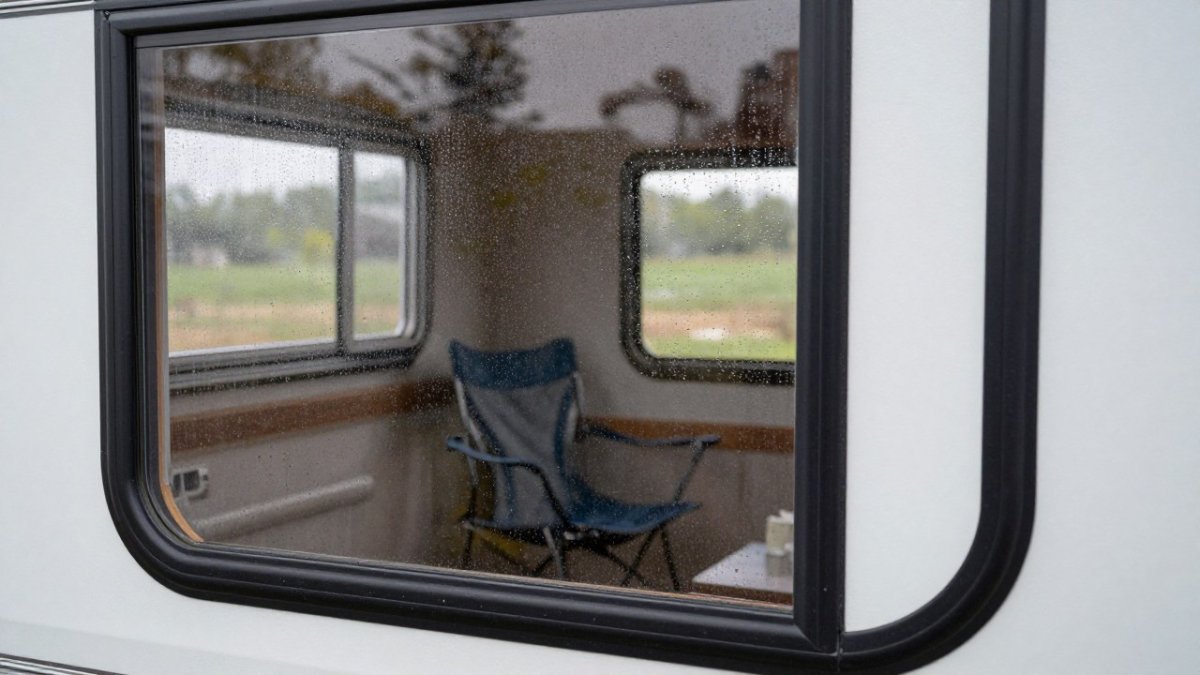
The solution begins with regular cross-ventilation, even in winter. Opening windows and roof vents wide for five to ten minutes two to three times a day makes a big difference. Do not dry wet clothes inside, and cook with the vent open or with an extractor hood, if available.
How to systematically detect condensation
Check the window frames, the corners behind cabinets, the underside of the mattress, and the backs of the upholstery in the morning. Droplets, damp spots, or a light film are clear indicators. A simple test helps: Place a piece of kitchen paper against a suspicious wall and leave it overnight. If it is damp in the morning, you have found the spot.
Measurable moisture assessment: How to proceed
For a reliable assessment, kitchen paper is not enough. A hygrometer shows the relative humidity in the interior. Sustained levels above 60 percent are considered critical because mold begins to grow on surfaces at approximately 70 percent relative humidity. A moisture meter for building materials measures the material moisture directly on walls, floors, and upholstery. Measure at several points: on the wall below the windows, in the corners, on the ceiling, on the floor in the storage area, and on the underside of the mattress. Record the values for several days to identify patterns—for example, whether the moisture increases in the morning after sleeping or after showering.
A common pattern: The values rise sharply after cooking or showering and only slowly drop again. This indicates a lack of cross-ventilation or that the forced ventilation in the roof is clogged. Check whether the ventilation slots in the roof and walls are clear—leaves, dust, and insect nests often block them unnoticed.
Note: A hygrometer only measures the humidity in the air, not the moisture in the material. If the device shows low values even though the wall is damp, the moisture is already in the structure—then ventilation alone is no longer sufficient.
Hidden moisture and consequential damage
Not all moisture shows on the surface. The floor structure, wall paneling, the backs of furniture, and cavities behind cabinets are particularly critical. Warning signs include a musty odor that persists after ventilating, peeling wallpaper or adhesive films, wavy wall paneling, and soft spots in the wood. Anyone who notices such signs should specifically check the moisture with a moisture meter and consult a specialist company for caravan leak testing if the high values persist. A professional leak test provides information about the condition of the structure and is generally useful for regular checks on older models anyway.
Cause 2: Leaky windows, roof vents, and seals
Rubber seals become brittle, crack, or come loose over the years. Then rain penetrates, often unnoticed, and the moisture spreads through the structure. The odor then usually comes from the inside, even though the cause is on the outside.
Inspect the seals at least once a year, preferably before the season. Maintain them with a suitable rubber care product so they remain supple. Anyone who wants to proceed systematically can find suitable tips in the guide on cleaning products for older caravans: How to properly maintain seals.
Cause 3: Mold in the structure and on walls
Mold is probably the best-known odor source in caravans—and the one most commonly underestimated. How to avoid mold growth on textiles such as the awning carpet is shown in this guide on mold in awnings. It often grows invisibly behind paneling, in corners, under the floor, or in cavities, and spreads an earthy, musty odor that intensifies when it is warm and damp. Unlike superficial mold in the bathroom, mold in caravans often penetrates wood, insulation, and adhesives. There, it forms metabolic products that are responsible for the typical musty odor as MVOCs (microbial volatile organic compounds).
Distinguishing mold odor from other odor sources
Before you begin cleaning, it is worth briefly classifying the odor. Mold smells earthy and musty, often with a note of a damp basement. Waste water smells foul and sulfurous, toilet additives and cleaning products smell perfumed or chemical, and a defective refrigerator smells sweet and spoiled. This distinction is important because mold removers do not help with waste water problems—and vice versa. If the odor persists after ventilating and coincides with moisture spikes, it points to mold. If it only occurs after opening the waste water tank or toilet, the source is in the sanitary area.
Detecting and assessing visible mold
Look for dark spots, discoloration, white or greenish coatings, and areas that feel soft or spongy. The backs of cabinets, the underside of the mattress, the floor in the storage area, and the wall behind the bed are particularly suspicious. You can treat small areas on smooth surfaces with a suitable mold remover solution. Ventilate well, wear gloves and a respirator mask (at least FFP2), and then let the area dry completely.
When to consult a specialist company
If there is widespread infestation (more than approximately half a square meter), if the wood is softened, if the mold keeps returning, or if the odor persists despite cleaning, a specialist company should inspect the structure. This also applies if you notice health problems such as respiratory irritation, headaches, or allergy symptoms. A professional inspection usually includes a moisture measurement in the structure, an inspection of the seals, and an assessment of whether remediation or only drying is necessary. Anyone who wants to sell the caravan should obtain such a report anyway to clearly regulate the warranty.
Note: Never just paint over mold or cover it with a fragrance spray—this hides the problem but does not combat the moisture source, and the infestation continues to grow behind the paint.
Prevention instead of remediation
The most effective prevention is to prevent moisture from entering the structure in the first place. Inspect the seals annually, ventilate even in cold weather, and keep upholstery and mattresses dry. Anyone who keeps causes 1 and 2 in mind prevents mold infestation.
Cause 4: Musty upholstery, mattresses, and textiles
Upholstery, mattresses, curtains, and carpets absorb moisture and odors particularly well. If they have not been aired out for a long time, they retain the odor.
Air out upholstery and mattresses regularly by propping them up and leaving the storage area open. Washable textiles should be dried thoroughly before being stored again. There are cleaners for upholstery that bind odors. How to do this best is explained in the article Cleaning caravan upholstery: Tips and home remedies.
Cause 5: Stagnant water, waste water, and refrigerators
Water that stands in the fresh water tank for weeks can lead to biofilm and algae. Waste water tanks, drains, and refrigerators are also typical sources if they are not cleaned regularly.
Empty and clean the fresh water tank before and after every season. A suitable product is the Certinox Tank Cleaner, which dissolves algae and bacterial coatings with active oxygen, without chlorine or surfactants. According to the product description, it is sufficient for a 250-liter tank capacity and costs €17.95. You can find the dosing instructions in the article Cleaning the water tank with citric acid: Dosing & Instructions.
You should empty the refrigerator during every storage period, let it defrost, dry it, and store it with the door open.
Finding and permanently eliminating the odor source: Your next steps
When searching for the source, proceed from the outside in: first seals, then walls and upholstery, and finally water and waste water. This way, you will usually find the culprit quickly. Anyone who wants to protect the caravan additionally from moisture can find suitable solutions in the comparison of breathable protective covers.
When preparing the caravan for the season, keep the five causes in mind, and the air will stay fresh. For questions about care and cleaning, you will find suitable products and information at Campidoo.
Frequently asked questions
Where does the musty odor in the caravan come from? It usually comes from moisture, condensation, mold, or stagnant water. The source can often be found with a moisture test and an inspection of seals and tanks.
How do I prevent odors during winter storage? Ventilate regularly, remove food and textiles, empty water tanks, and ensure a dry storage area.
Does ventilating alone help against the odor? Ventilation helps against condensation but does not replace cleaning. In the case of mold or residues in the water system, the cause must be addressed directly.
The five most common causes at a glance:
| Cause | Typical indicator | Measure |
|---|---|---|
| Moisture and condensation | Fogged-up windows, damp corners behind cabinets | Cross-ventilate regularly, two to three times a day |
| Leaky windows and seals | Rain penetrates, moisture spreads through the structure | Inspect and maintain seals annually |
| Mold in the structure | Earthy-musty odor, dark spots | Eliminate the moisture source, consult a specialist company for widespread infestation |
| Musty upholstery and textiles | Odor remains in mattresses and upholstery | Air out upholstery and mattresses regularly |
| Stagnant water and waste water | Algae and biofilm in the fresh water tank | Empty and clean the tank before and after every season |
Frequently Asked Questions
Why does my caravan smell musty?
A musty smell is usually caused by moisture that cannot escape the interior. Typical causes are condensation on cold walls, wet clothing, leaky windows or roof vents, and stagnant water in the fresh water or waste water systems. It is best to first check where the smell is strongest, as the location often reveals the cause. If the smell persists despite airing out, it is worth conducting a targeted search for sources of moisture.
How can I detect mold in my caravan?
Mold often appears as dark spots on window frames, corners, storage compartment floors, or behind furniture. An earthy, musty smell that gets stronger when you close the vehicle is another warning sign. Also check wood and insulation for soft, swollen areas. In cases of larger infestations, you should examine the affected areas more closely and remove the source of moisture before cleaning.
How can I remove a musty smell from caravan upholstery?
First, thoroughly air out the upholstery and textiles on a dry day and remove loose dirt particles with a vacuum cleaner. Then, cleaning with a suitable cleaner and allowing it to dry completely will help. Make sure that upholstery is never stored damp, as new odors can quickly develop. If the smell is persistent, you should first address the source of moisture.
How can I permanently prevent a musty smell in my caravan?
Long-term prevention is based primarily on three points: regular cross-ventilation, even in winter, sufficient heating to prevent condensation, and keeping textiles dry. Check seals and roof vents at regular intervals and clean the fresh water system during long periods of storage. When storing, you should thoroughly dry all upholstery and place moisture absorbers.


