










 About us
 Magazine
 Contact



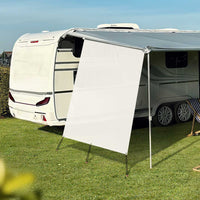



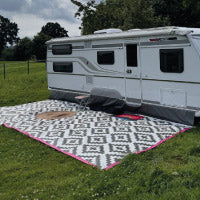




PVC rugs dry the fastest, but are heavier and can become brittle in the cold. Polypropylene is lighter, dries well, and is durable on stony ground. Textile fabrics are comfortable to walk on, but take the longest to dry - this is where the risk of mildew is greatest.
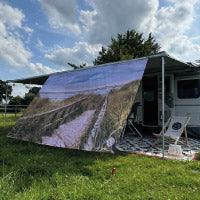
Our Premium Awning Rugs are made of woven textile mesh material. The material is washable at 40 °C, PVC-free, and odor-neutral. For larger rugs, you may need the help of a laundry service, because household machines do not rinse through with enough water. Textile fabric remains wrinkle-free and does not form crease marks. Plastic rugs are more stable on stony ground. Both have their place.
Measuring drying: Hygrometer and residual moisture
Instead of relying on your gut feeling, a simple hygrometer helps. It shows the relative humidity in the awning or storage room. If it is continuously above 65%, moisture cannot escape from the fabric.
This is how you check the drying:
- Place the hygrometer in the awning or storage room
- Read the humidity - below 60% is ideal
- Press the rug together at its thickest point - if it feels cold and damp, it is not yet dry
- Only store it when the humidity is stably below 60% and the rug feels dry
A dry rug smells neutral. If a musty smell remains, there is still residual moisture inside - then it is better to let it dry for another day.
Cleaning and limits of household remedies
Vinegar water is popular, but not suitable for every tent fabric. The acid can damage tent coatings and fungicidal equipment. Caution is advised with treated textile fabrics.
A mild cleaner made for tent fabric and textile fabrics is safer. If in doubt: test on a hidden area first. After cleaning, always rinse with clear water and let dry completely.
German Environment Agency on mold in indoor spaces
Proper storage: how to overwinter your awning rug mold-free
Proper storage determines whether your rug survives the winter mold-free. The rug must lie dry, loose, and open.
This is how you store it correctly:
- Store the rug and wind skirt separately
- Fold loosely, do not press
- Dry, ventilated room
- Not directly on concrete or soil
- Vent briefly before the new season
Anyone who folds the rug up damp will find mildew in the spring. Anyone who stores it open and dry will have no surprises during setup.
Consumer advice on mold prevention
Conclusion: avoid mold on the awning rug with a few simple steps
Mold on the awning rug rarely appears suddenly. It is caused by moisture that no one has removed.
The solution is simple: check the base, clean the rug, dry it properly, store it dry. Anyone who follows these four steps will permanently reduce moisture in the awning.
This is exactly what our Premium Awning Rugs with removable wind skirt are ideal for. The wind skirt detaches via Velcro fastener, both parts are washable at 40°C, and the PVC-free textile fabric remains odor-neutral. In addition, free shipping from 99€ and purchase on account with Klarna.
German Federal Ministry for the Environment on pollutants and moisture
Frequently Asked Questions
What should be placed under the awning rug?
A water-permeable, breathable base belongs under the awning rug, so that moisture can drain from the ground and water does not collect. For lawn areas, a fine-mesh fleece or a special camping base is suitable, which does not suffocate the grass. On gravel or rocky ground, a thin tarp additionally protects against dust and stones. Important: The base should not be completely sealed, otherwise condensation will collect between the rug and the ground and promote mold formation on the tent fabric.
How do you dry an awning rug properly?
To dry the awning rug, the rug should be completely spread out after camping, preferably in an airy, shaded place with good air circulation. The removable wind skirt can be detached via the Velcro connection and both parts should be hung up separately, so that warm air can pass through the layers. Direct sunlight and hot air should be avoided, as they can make the tent fabric and tent coating brittle. Only fold it up and store it when the rug is dry in all places, including the eyelets, Velcro fasteners, and clips.
How do you remove mildew from an awning rug?
Mildew on an awning rug should be treated as early as possible, as long as it is superficial. Mix vinegar water in a 1:4 ratio with lukewarm water and carefully dab the affected areas without rubbing the tent fabric too hard. For stubborn stains, a special camping cleaner suitable for textile and tent fabric helps. Then rinse thoroughly with clear water and let dry completely. If the stains have already penetrated deep into the material or the fabric is brittle, professional cleaning is advisable.
How often should an awning rug be cleaned?
A thorough cleaning of the awning rug is advisable at the end of every camping season before you store it. During use, it is often enough to regularly shake out the rug, sweep away dust, and immediately wipe off dirt while dry. For longer stays on damp grass, an intermediate check every two weeks is worth it. Anyone who briefly checks the rug after every vacation will detect moisture in the awning early and can avoid mold formation before it damages the material.
Moisture in the awning cannot always be completely prevented. But with the right equipment, it becomes manageable. Start with a Campidoo Premium Awning Rug with removable wind skirt, which is easy to clean, dries quickly, and can be stored cleanly. Get started with Campidoo and enjoy a season without mildew.