









 About us
 Magazine
 Contact


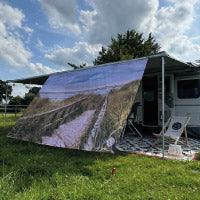

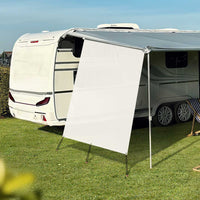


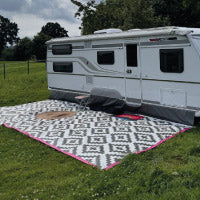


Table of Contents
- Camping Accessories 2026: The trends shaping the season
- Caravan Must-Haves 2026: What’s really essential in 2026
- Camping Gadgets for Caravans: Useful or just gimmicks?
- Off-Grid Camping with a Caravan: Planning electricity and water independently
- Sustainable Camping Accessories: Built to last, not disposable
- Payload, tongue weight, and compatibility: What matters before you buy
- Conclusion: Choosing camping accessories wisely in 2026
- Frequently Asked Questions
Last updated: October 6, 2026
Camping Accessories 2026: The trends shaping the season
Camping accessories in 2026 show a clear shift: away from disposable equipment toward long-lasting, personalized, and energy-independent solutions for caravans and motorhomes. Anyone upgrading today is looking for quality, compatibility, and real-world utility rather than short-term bargains. At Campidoo, we clearly see this shift in our product range: customizable sun sails and sophisticated cleaners for GRP roofs are more in demand than ever. This guide summarizes the most important trends and shows what really matters when making a purchase.
The camping trend for 2026 can be summarized in three movements: individualization, self-sufficiency, and sustainability. All three are linked, because those who use their vehicle long-term prefer to invest in good equipment once rather than buying anew every year. The following sections explain what this means in concrete terms for caravan owners.
Caravan Must-Haves 2026: What’s really essential in 2026
Caravan must-haves for 2026 differ significantly from those of previous years. The focus is on products that perform multiple tasks simultaneously and can be adjusted flexibly. This includes sun sails with piping for awnings, space-saving camping furniture, non-slip camping rugs, and a well-thought-out water drainage system.
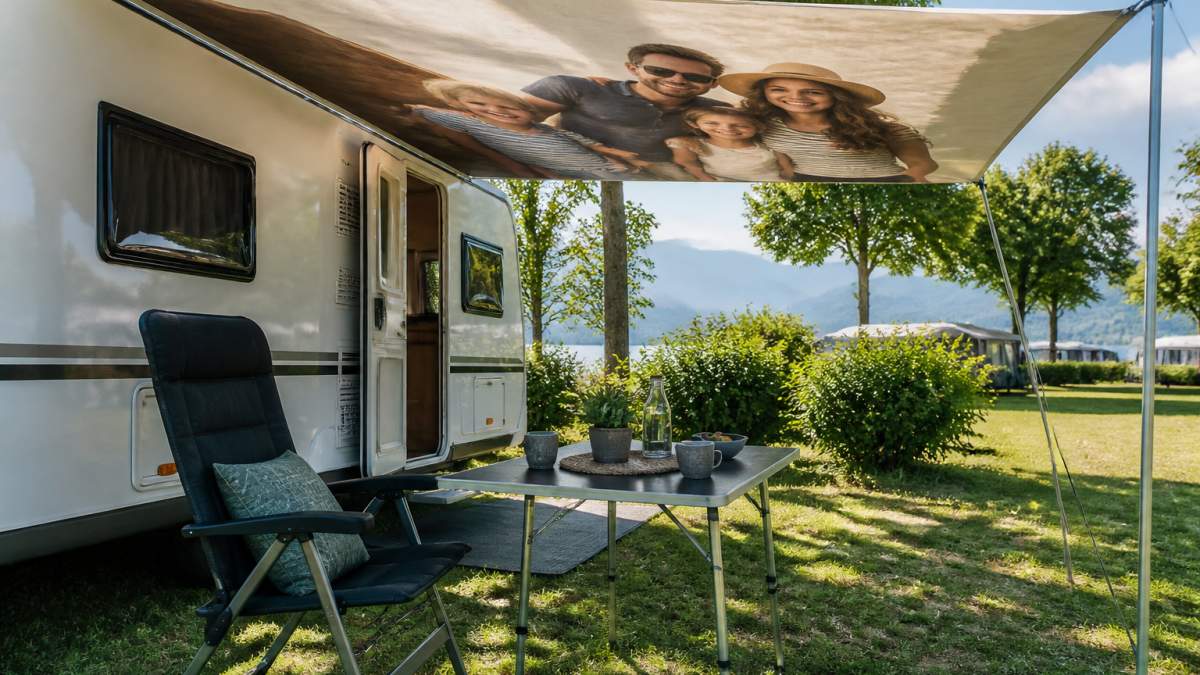
A common mistake: campers buy accessories based on looks without checking compatibility. Always check the piping diameter, tongue weight, and payload before buying. A sun sail that doesn't fit the piping rail is a waste of money.
Sun Sails and Privacy Screens: Customization as a trend
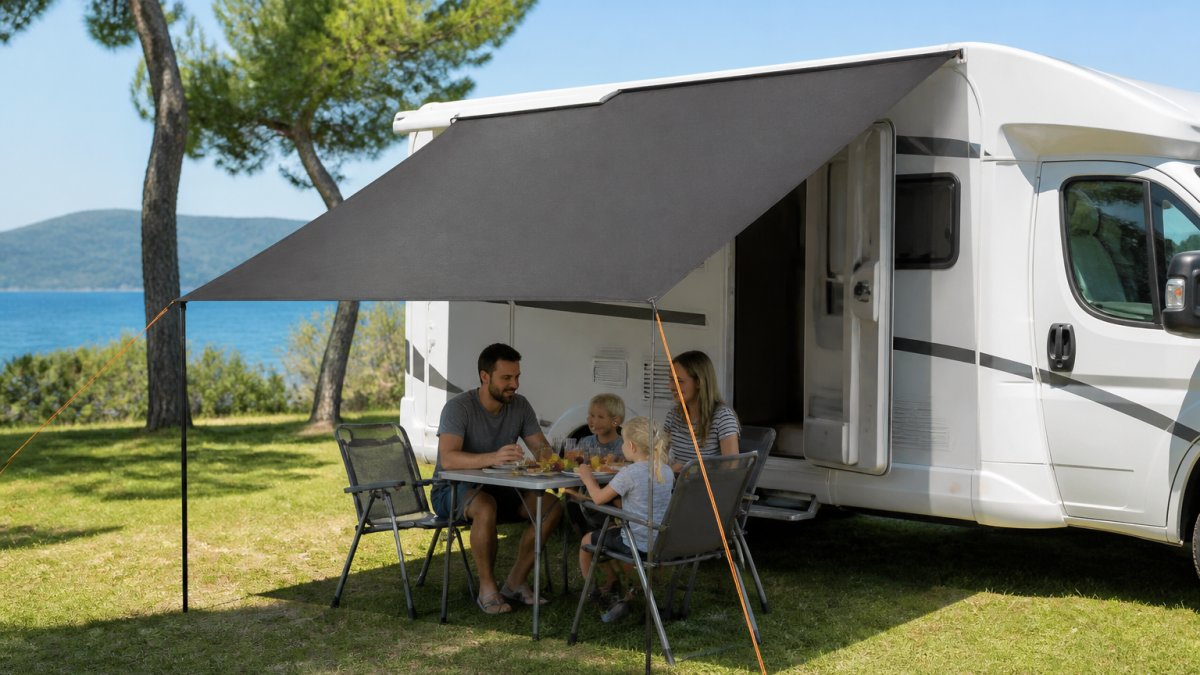
Personalized sun sails are one of the strongest trends in camping accessories for 2026. Instead of anonymous tarps, campers are putting their own designs on the sail: vacation photos, family pictures, or company logos. At Campidoo, we print your design on robust polyester fabric that remains semi-transparent, keeps out light rain, and can be packed compactly.
The personalized sun sail is simply pulled into the piping rail: 5 mm for Thule, Fiamma, Dometic, and 7 mm for WIGO. With eyelets and tension bands on the bottom edge, it can be tightened securely. Those who prefer a simple version can also find solid-colored sun sails with 5 mm or 7 mm piping in our shop. UV-stable EPDM tension band sets ensure secure fastening.
Camping Gadgets for Caravans: Useful or just gimmicks?
Camping gadgets for caravans are useful if they solve a real problem: saving electricity, keeping water clean, distributing weight, or gaining space. Purely decorative gadgets, on the other hand, end up in a corner after one season. The acid test is: Do you use the gadget on every trip, or just once?
What most trend lists overlook: in a caravan, it's not just the function that matters, but also the weight and installation effort. A gadget that weighs 3 kg and requires drilling is a different calculation for a vehicle with limited payload and a leased vehicle than it is in a self-converted van. That is why we evaluate the following helpers based on utility, weight, and ease of retrofitting.
Proven helpers with clear functions
- Tension rafter for roof awnings: keeps the awning stable even in wind, usually weighs under 1 kg, no drilling required. Useful for awning widths of about 3 meters or more.
- Drainage set: prevents frost damage and stagnant water in the system. Fits into every seasonal preparation, weighs under 1 kg.
- LED lights with low consumption: save the onboard battery. A good LED lamp draws 2-5 W instead of 15-25 W for a standard bulb—for four hours of use, that’s about 40 Wh saved per evening.
- Multifunctional storage solutions: create order in storage compartments. Foldable boxes often weigh only 500 g and can be folded flat when not in use.
- Tire pressure monitoring system with solar display: weighs only a few grams on the valve, but eliminates the need for regular pressure checks and reduces consumption through correct tire pressure.
- Water filter for the fresh water tank: keeps water fresh longer, especially in summer temperatures and during longer periods of inactivity.
Gadgets that often disappoint in caravans
Not every gadget lives up to the promises of trend lists. Frequent disappointments:
- High-performance electric compressor coolers: cool well, but draw 40-60 W and put a heavy strain on the onboard battery if sufficient solar power is not available.
- So-called mini washing machines: require a lot of water and electricity; the benefit is not worth the weight.
- Solar chargers for on the go with small surfaces: often only deliver 5-10 W and hardly charge a smartphone noticeably.
- Inflatable furniture without a repair kit: often leak at the seams and are useless after one season without patch material.
The weight and power check before you buy
Every gram counts regarding payload, and every appliance drains the battery. Check two numbers before purchasing:
- Weight: How much payload is left after the basic equipment? A 3 kg gadget reduces this reserve permanently.
- Power consumption: How many Wh does the device consume per day, and can your existing solar or battery capacity handle that?
A gadget that draws 20 W and runs for four hours a day needs 80 Wh—on an overcast autumn day, that is more than a 100 W panel produces.
Off-Grid Camping with a Caravan: Planning electricity and water independently
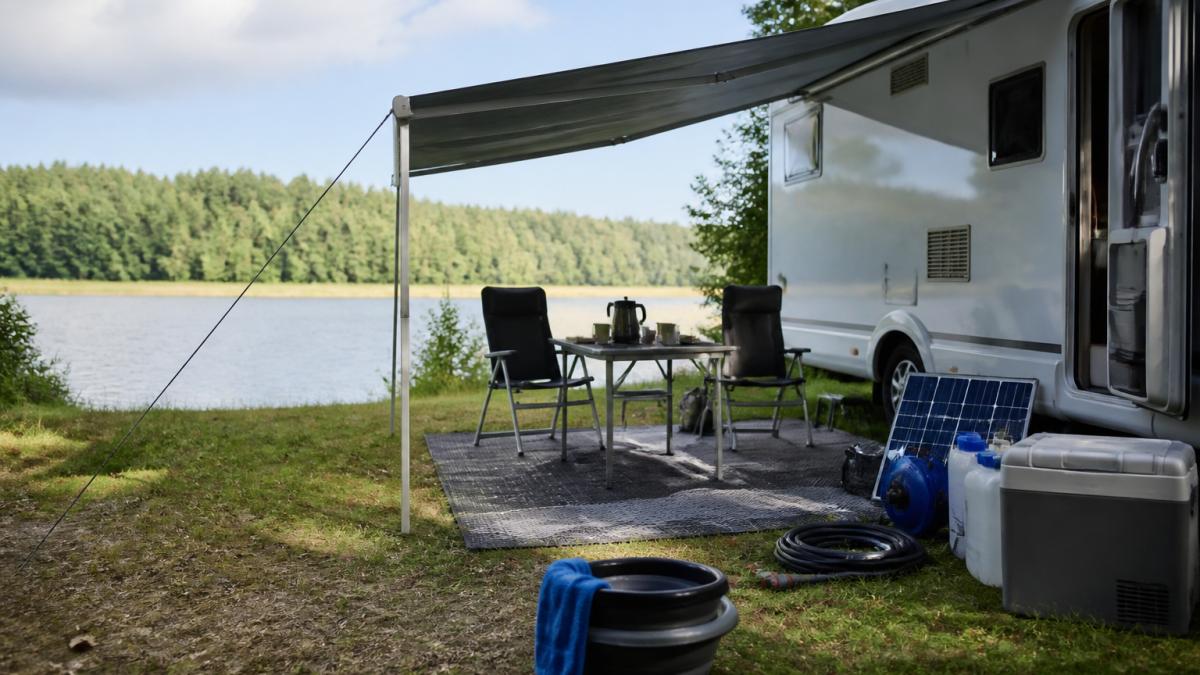
Off-grid camping with a caravan means managing without shore power and without a fresh water connection for several days. Unlike a motorhome, which has a running engine as a charging source, the caravan lacks this reserve—all energy must come from solar, the onboard battery, or a power station. This is exactly why sizing is more critical here than in self-propelled vehicles.
Determine power needs first, then size accordingly
The most common mistake is buying a power station based on gut feeling. First, add up your daily consumption. Typical appliances in a caravan and their scales:
- Compressor cooler: 40-60 Wh per day in moderate temperatures, significantly more in heat
- LED interior lighting: 5-15 Wh per day
- Water pump: 2-5 Wh per day
- Charging phones and laptops: 30-80 Wh per day
- Fan or small heater: 100-400 Wh per day depending on output
A realistic daily demand for a caravan with a cooler, light, and some electronics is 100-200 Wh. Anyone brewing coffee, using a hair dryer, or heating electrically quickly reaches 500 Wh and more—this is where a pure power station solution reaches its limits.
Combining solar panels, batteries, and power stations correctly
A solar panel only delivers full power in the sun. In Central Europe, a 100-watt panel realistically yields 300-400 Wh on a good summer day, but only 30-80 Wh on an overcast autumn day. Therefore: The panel covers ongoing needs, while the battery stores energy for low-sun phases.
Proven combinations for caravans:
- Beginners: foldable 100 W solar panel plus power station with 500-700 Wh for weekend trips
- Multi-day trips: 200-300 W solar fixed on the roof plus a lithium onboard battery with 100 Ah (approx. 1,280 Wh usable)
- Year-round users: 400 W solar, 200 Ah lithium, and a charge controller with MPPT technology for better yield in diffuse light
Important for the caravan: Pay attention to the weight of the components. A 100 Ah lithium battery weighs about 12-14 kg, whereas a comparable AGM battery weighs 25-30 kg. With tight payload, lithium is often the only practical option despite the higher purchase price.
Overview of charge controllers and MPPT technology
Water: Draining is the critical point
When it comes to water, draining is the decisive factor. If water remains in the lines, there is a risk of frost damage and bacterial growth. The floë drainage set uses air from a compressor or foot pump to empty the system completely. This way, the caravan remains ready for use even in winter.
For off-grid camping in summer, storage counts: A fresh water tank with 40-50 liters is sufficient for two people for about two to three days with economical consumption. An additional 20-liter canister extends the range but costs storage space and about 20 kg of payload when fully filled.
Sustainable Camping Accessories: Built to last, not disposable
Sustainable camping accessories rely on materials that last for several seasons and production with short delivery routes. The most sustainable purchase is the one you don't have to repeat. That is why looking at workmanship and repairability is worthwhile.
How to recognize long-lasting equipment:
- Double-stitched edges and nickel-plated metal eyelets instead of simple plastic rings
- UV-resistant and tear-resistant fabrics instead of thin films
- Products that can be cleaned and re-tensioned instead of disposable goods
- Manufacturing with short transport distances that can be repaired
A camping rug that frays after one season is more expensive than a high-quality one that lasts five years. Calculate the price per year of use, not just the purchase price.
Payload, tongue weight, and compatibility: What matters before you buy
Payload, tongue weight, and compatibility determine whether new camping accessories can be operated legally and safely. Many purchases fail not because of quality, but because of missing reserves or incorrect dimensions. Check these points before every order.
Overview of the most important inspection steps:
| Inspection point | What to watch for | Typical mistake |
|---|---|---|
| Payload | Remaining payload after base equipment | Buying accessories without checking weight |
| Nose weight | Permissible drawbar load of the towing vehicle | Overloading the front axle |
| Keder (piping) size | 5 mm or 7 mm depending on the awning | Ordered the wrong size |
| Installation | Existing brackets and mounts | Drilling without authorization |
| Cleaning | Material compatibility, e.g., GRP roof | Used aggressive cleaners |
A common mistake is underestimating the weight of accessories. Sun sails, furniture, and water kits add up quickly. Weigh what is still permissible before making a purchase.
Conclusion: Choosing camping accessories wisely in 2026
Selecting the right camping accessories in 2026 determines how relaxed your vacation will be. Those who pay attention to durable materials, correct dimensions, and genuine everyday utility will save money and hassle in the long run. At Campidoo, you will find customizable sun sails, UV-stable fastening sets, and well-thought-out solutions like the floë drainage set, plus free shipping on orders over €99 and payment on account with Klarna. More than 10,000 satisfied campers are already enjoying a stress-free holiday.
Frequently asked questions
Which camping accessories are particularly in demand for caravans in 2026?
For 2026, the focus is on personalized sun sails, self-sufficient power solutions, and sustainable equipment. A sun sail with your own design protects against the sun and curious onlookers and can be pulled into the keder rail in just a few minutes. This is complemented by energy management for longer stays and durable materials that last for several seasons.
What is included in the basic equipment of a caravan?
Basic equipment includes a sun sail or awning, a fastening set with tensioning rubbers, camping furniture, and a drainage set for the water system. A 200 cm high sun sail can be pulled into the keder rail and tensioned using eyelets and tensioning rubbers. For winter storage, a drainage set empties the lines and prevents frost damage.
Which accessories make a caravan more self-sufficient?
Self-sufficient camping with a caravan means using electricity and water independently of campsite connections. This includes solar panels, a power station, and a drainage set for the water system. This allows you to stay flexible for longer without constantly having to refill electricity or water. Make sure the accessories fit your caravan's weight budget.
Which camping gadgets are actually useful for caravans?
Useful camping gadgets for caravans solve specific everyday problems: a fastening set with UV-stable EPDM tensioning rubbers for the sun sail, a tensioning pole for roof awnings, or a drainage set for the water system. Before purchasing, check whether the gadget fits your vehicle and floor plan, and whether it is worth the space and weight.
How can you save space and weight in a caravan?
You can save space and weight with multifunctional accessories that fulfill several tasks. A sun sail made of lightweight polyester fabric weighs around 720 g at 2x3 m and can be stowed away compactly. Before every purchase, check your caravan's payload and nose weight so you stay within the permissible limits.
Which sustainable camping accessories are worth it?
Sustainable camping accessories are worth it if they last a long time and are repairable. Sun sails made of tear-resistant, UV-resistant polyester fabric with double-stitched edges and nickel-plated metal eyelets last for several seasons. Sun sails manufactured in Germany with short supply chains and a 2-year warranty reduce the need for replacements and conserve resources.
What should you look for when buying camping accessories for a caravan?
Pay attention to compatibility, weight, and workmanship. Check the keder size of your awning: 5 mm fits many Thule and Fiamma models, 7 mm for WIGO and Dometic. Choose a sun sail slightly shorter than the awning to allow space for the support legs. Check the payload and nose weight before planning heavy accessories.
How do you install a sun sail on a caravan?
Installation is straightforward: pull the sun sail into the keder rail of your awning. For Thule, Fiamma, and Dometic, use a 5 mm keder, for WIGO use a 7 mm keder. Secure the sail at the bottom edge using eyelets and tensioning rubbers. A fastening set with pegs and tensioning rubbers is included in the scope of delivery, so the sail can be tensioned quickly.
Choosing the right accessories for your caravan takes time and effort, especially when dimensions and payload must be precise. That is exactly why we have put together our range at Campidoo: customizable sun sails with matching keder, UV-stable fastening sets, and cleaners that are tuned to materials like GRP. Start the season with Campidoo and equip your caravan with gear that lasts.