







 Über uns
 Magazin
 Kontakt







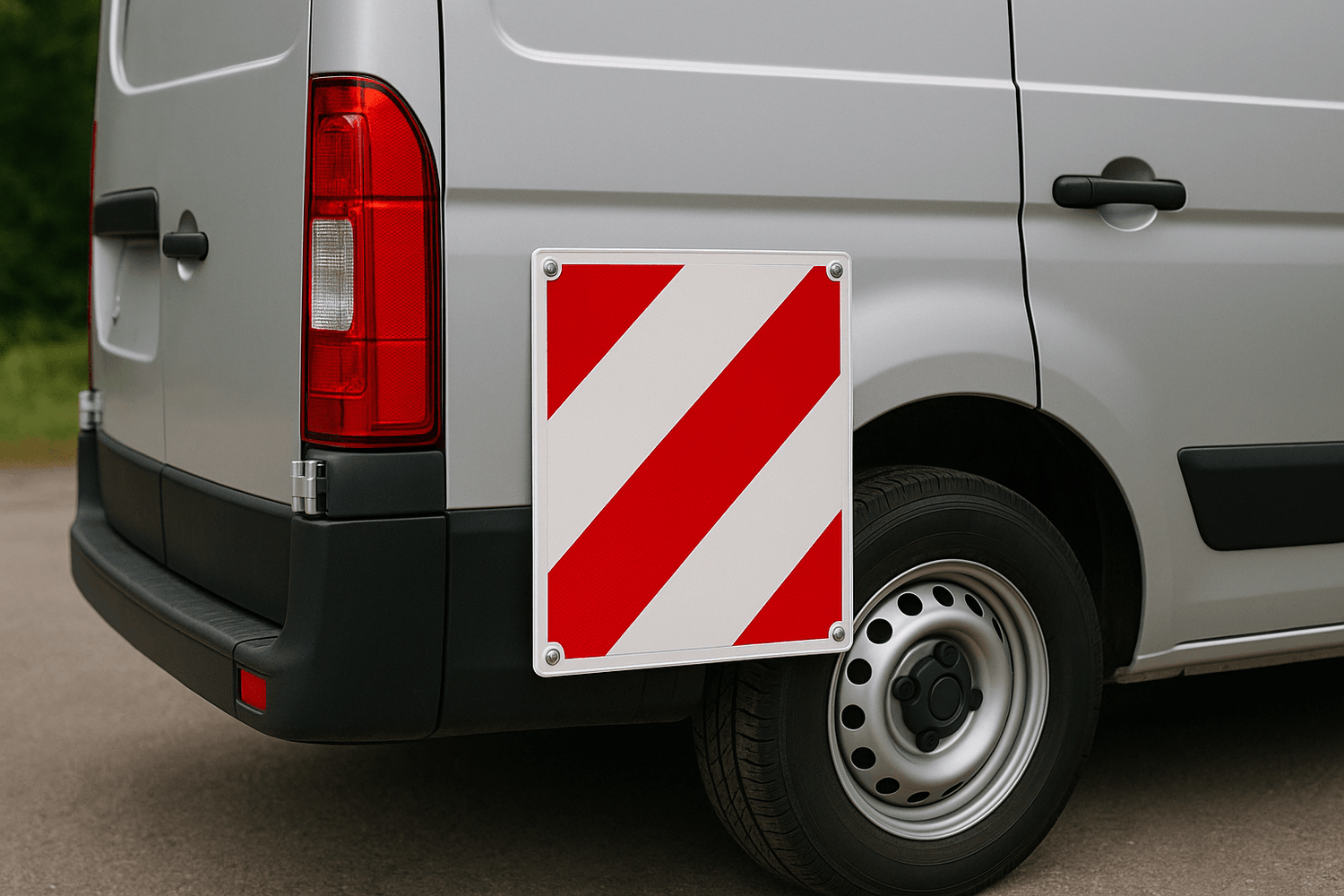

As an experienced camper and motorhome enthusiast, I encounter a wide variety of vehicles on the roads of Europe every day during my travels. I frequently notice the characteristic red and white warning signs attached to various vehicles. But what do these red and white warning signs indicate ? This question concerns not only camping novices but also experienced travelers who take their road safety seriously.
The red and white warning signs are far more than just colorful signs – they are vital safety indicators that warn us of various dangers and help prevent accidents. In this comprehensive guide, I, as a camping expert, explain everything you need to know about these important warning signals.
The basics of red and white warning signs
What do red and white warning signs on vehicles indicate ? This question is best answered by looking at the various applications of these markings. The primary purpose of red and white warning signs is to alert other road users to special circumstances or hazards.
These warning signs are made of reflective materials and are designed to remain highly visible even in poor lighting conditions. Their striking red and white color combination is internationally recognized and used in various countries for similar purposes.
Detecting vehicles that are too wide and too long
One of the most common uses of red and white warning signs on vehicles concerns vehicles that are too wide or too long. As a motorhome driver, I know how important it is to heed these warning signals:
- Oversized vehicles: Vehicles that are wider than 2.55 meters
- Extra-long vehicles: Vehicles that are longer than 12 meters (16.50 meters for articulated lorries)
- Heavy transport: Particularly large or heavy loads
- Agricultural machinery: Tractors with wide implements

Personalized sunshade for you
Order nowThis marking helps other road users maintain sufficient distance and plan safe overtaking maneuvers. You'll frequently encounter such vehicles, especially on the scenic routes to our insider tip for camping on Lake Constance .
Slow-moving vehicles and their markings
Another important aspect is slow-moving vehicles. These warning signs warn of vehicles that cannot or are not allowed to reach the usual speed:
Typical slow-moving vehicles:
- Agricultural tractors
- Construction vehicles and work machines
- heavy transporter
- Garbage trucks in residential areas
- street cleaning vehicles
The marking is particularly important because these vehicles often travel significantly slower than the normal flow of traffic and can therefore pose an obstacle.
Safely identify hazardous goods transports
The meaning of red and white warning signs on vehicles becomes particularly critical when it comes to the transport of hazardous materials. Here, the warning signs have a vital function:
The orange-red warning signs on hazardous goods transports contain important information:
- Hazard number (upper half)
- UN number of the substance (lower half)
- Additional warning symbols and pictograms
As a camper, you should keep a particularly large distance from such vehicles. This applies both on the motorway and on the smaller roads that lead to some of the most beautiful motorhome tours .

Construction vehicles and work machines
In everyday camping life, we frequently encounter construction vehicles, and the question of what red and white warning signs on vehicles can indicate is particularly relevant for our safety:
Characteristic features:
- Yellow flashing beacons
- Red and white warning markings
- Often very slow driving speeds
- Unpredictable driving movements
- Frequent stops
These vehicles can suddenly stop, reverse, or make unexpected changes of direction. Extra caution is advised when driving your motorhome through construction zones.
Agricultural vehicles in road traffic
On the country roads leading to idyllic campsites, we regularly encounter agricultural vehicles. What red and white warning signs on these vehicles might indicate is a question of practical road safety:
Special features of agricultural vehicles:
- Very low maximum speeds (often only 25-40 km/h)
- Extreme dimensions due to attached equipment
- Dirt and clumps of earth on the road
- Seasonal increase around harvest time
Especially in rural areas, where the most beautiful campsites are located, patience is required. Plan extra time for such encounters.
Rescue and emergency vehicles
The question also includes rescue and emergency vehicles, even though these usually have additional blue signal lights:
- fire engines
- ambulance
- Police vehicles in use
- Federal Agency for Technical Relief (THW)
These vehicles have special privileges when in use and may deviate from normal traffic rules. As a responsible camper, you should always give way to these vehicles.
Practical tips for campers and motorhome drivers
After years of experience on the roads of Europe, I can give you the following recommendations if you encounter vehicles with red and white warning signs:
Safety rules at a glance:
- Significantly increase the safety distance.
- Plan your overtaking maneuvers carefully.
- Expect unexpected maneuvers.
- Reduce your speed in good time
- Keep an eye on other road users.
Especially when camping, it's important to drive calmly and with foresight. Use the time to enjoy the scenery instead of getting annoyed by slower vehicles.
Additional practical safety tips:
- Keep your headlights on even during the day.
- Use your hazard warning lights when driving very slowly.
- Make sure you have enough fuel in case of traffic jams.
- Find out about alternative routes
- Always be patient and respectful towards other road users.
Encountering vehicles marked with warning signs should never lead to stress or aggressive driving. As a camping community, we all depend on everyone driving considerately and safely.

Special situations and challenges
What can red and white warning signs on vehicles indicate? This is particularly relevant in specific traffic situations that every camper knows:
Highway situations:
On highways, marked vehicles can pose particular challenges. Heavy transport vehicles often block the right lane, forcing other vehicles to change lanes. Anticipatory driving is especially important here. Observe the traffic well ahead and change lanes in good time.
Mountain roads and passes:
In the Alps or other mountainous regions, we frequently encounter slow-moving vehicles with red and white warning signs. Patience is required here, as overtaking opportunities are scarce. Use designated overtaking bays and never stop in areas with poor visibility.
Urban traffic and city centers:
In historic city centers, extra-wide vehicles can cause traffic congestion. Plan alternative routes and allow for longer travel times. City centers, especially in Italy and Spain, are often very narrow.
Night journeys:
Reflective warning signs are especially important in the dark. Reduce your speed and increase your following distance. Visibility is limited, and reaction times increase.
International differences and special features
The meaning of red and white warning signs on vehicles can vary depending on the country. If you are traveling through Europe in a motorhome, you should familiarize yourself with the specific regulations of each country.
Country-specific differences:
- Germany: Strict rules for excesses
- Austria: Special regulations in tunnels
- Switzerland: Maximum weight restrictions
- France: Special regulations for dangerous goods
- Italy: Extra caution in historic city centers
Before you travel, please check the applicable regulations. By the way, you'll also find practical accessories for a safe trip in our camper shop – feel free to stop by!
European harmonization:
Although national differences exist, the EU is continuously working to harmonize traffic regulations. The red and white warning signs are part of these efforts to improve road safety. Nevertheless, you should check the current regulations before every journey.
Special regulations in popular camping countries:
- Scandinavia: Very strict rules for the transport of dangerous goods
- Eastern Europe: Often less standardized labeling
- Southern Europe: Extra caution in tourist areas during peak season
- Benelux countries: Very dense transport networks require increased attention
Legal consequences and fines
Ignoring warning signs can lead to serious legal consequences. Understanding what red and white warning signs on vehicles might indicate is not just a matter of curiosity, but also of legal responsibility.
Possible sanctions:
- Fines between 20 and 200 euros
- Points in Flensburg
- In some other countries, the penalties are even harsher.
- In case of accidents: Contributory negligence and insurance problems
Conclusion: Safety first
The question of what red and white warning signs on vehicles indicate is of great importance to every road user, but especially to us campers. These warning signs are important safety tools that warn us of various hazards and help to avoid accidents.
Whether it's oversized vehicles, hazardous materials transports, construction vehicles, or agricultural machinery – the red and white warning signs all serve the same purpose: to ensure our safety on the roads. As an experienced camper, I advise you: Take these warning signals seriously and adjust your driving accordingly.
Summary of key points:
- Red and white warning signs identify different vehicle types with special characteristics.
- Oversized, overlong, and slow-moving vehicles are the most common carriers.
- Transporting hazardous materials requires special respect and a large safety distance.
- Construction vehicles can perform unpredictable driving maneuvers.
- International differences require preparation before traveling abroad.
- Patience and foresight are the best strategies when dealing with marked vehicles.
My personal recommendations:
After thousands of kilometers traveled through Europe in my campervan, I can say that paying attention to warning signs has often helped me avoid dangerous situations. Be attentive, stay calm, and remember that we're all on this journey together.
Remember that relaxed travel is key to a great camping experience. Plan plenty of time, drive with foresight, and enjoy the journey to your next dream campsite. For the perfect camping equipment, from awning carpets to practical travel accessories, feel free to browse our camper shop – we have everything you need for your next adventure!
I wish you a good trip and safe travels on all your camping adventures!