











 About us
 Magazine
 Contact


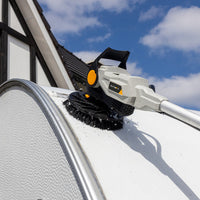
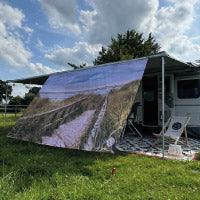
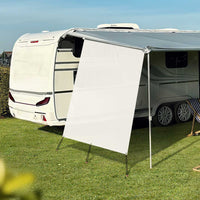



Last July at Lake Garda, I watched fellow camper Markus struggle for 55 minutes with the heavy steel poles of his awning while the sun beat down relentlessly. You certainly want to spare yourself exactly this kind of stress on vacation, because every minute counts. We agree: a massive awning is often a drag on short trips, and the uncertainty of measuring the piping rail causes frustrating bad purchases for 4 out of 10 campers. You are looking for a solution that requires less than 12 minutes of setup time and reduces your luggage weight by up to 15 kilograms.
In this guide, you will learn everything about selection, correct piping dimensions, and sturdy setup so that your caravan sun canopy stands securely even in a 35 km/h breeze and provides you with valuable shade. We will show you how to identify high-quality, UV-resistant materials and perfectly prepare your mobile living room for the 2026 season. That way, there’s more time left for what really matters: your freedom and a cool drink in your hand, while the others are still sorting poles.
Key Takeaways
- Learn why a sun canopy is the ideal, lightweight alternative to a classic awning and how to save significantly on weight and pack size.
- We show you which material quality and UV protection factors you need to look for so your mobile shaded area is durable and safe for your skin.
- Learn the right techniques for bracing so that your caravan sun canopy remains stable and secure even in unexpected gusts of wind.
- With our simple measurement guide, you can determine the exact piping length in just two steps, ensuring your new shade roof fits like a glove.
- Discover how clever details from campers for campers speed up assembly and give you more valuable time for real relaxation in nature.
What is a caravan sun canopy and why do you need it?
Imagine arriving at your favorite spot on the Adriatic after a six-hour drive in 28-degree heat. You’re sweating, and the last thing you want is a two-hour battle with heavy tent poles and tons of PVC fabric. This is the moment for your caravan sun canopy. At its core, it is a highly functional shade roof made of light technical fabric that you simply slide into the piping rail of your caravan. It is the essence of carefree camping. When we ask, what is a sun canopy in a historical context, we end up with simple protective roofs, but modern versions are true high-tech wonders.
The decisive advantage lies in weight and pack size. While a classic awning often weighs 45 to 60 kilograms and blocks half the storage space under your bed, a high-quality sun canopy usually weighs between 4 and 9 kilograms. This saves you valuable payload reserves for e-bikes or provisions. It is the perfect choice for you if you are looking for maximum flexibility. Do you change locations every three days? Do you love weekend trips? Then this clever accessory is your most important companion. Unlike a permanently mounted awning, which often weighs 35 kilograms and is bolted permanently to the outer wall of your caravan, the canopy remains variable and does not permanently stress the statics of your vehicle.
Sun canopy vs. awning: The big comparison
Time savings are the greatest luxury on vacation. For two people, setting up a complete awning including tensioning and ground planning easily eats up 120 minutes of valuable vacation time. A caravan sun canopy stands in under 10 minutes. A quick pull through the piping rail, fixing two or three upright poles, tensioning, and done. Your cold drink is already open while the neighbors are still brooding over the pole layout plan.
Another plus point is the climate. Under a closed awning, the heat often builds up to 45 degrees at an outside temperature of 30 degrees. The canopy allows for 360-degree air circulation. You enjoy the constant breeze while still being protected from direct UV radiation. In terms of price, the difference is massive. A solid sun canopy often starts at just 150 euros, while you would quickly invest 2,500 euros or more for a quality all-season awning. High-quality shade doesn't have to cost a fortune if you focus on the essentials.
Areas of use: When is the sun canopy your best friend?
The sun canopy really shows its strengths, especially on trips to Southern Europe. With a UV index of level 8 or higher, the specialized fabric offers a safe retreat. You sit outdoors, feel nature, and are still protected. It is also ingenious for a quick stopover on the way to Scandinavia. If you only stay one night at a rest area or a transit campsite, a large setup is not worth it. The canopy offers you a dry area in front of your door in seconds.
However, you should be careful when winter camping. A simple sun canopy is not designed for snow loads. Even 10 centimeters of wet fresh snow weigh about 40 kilograms per square meter. That would damage the delicate poles or even your piping rail. Here, the canopy is more of a specialist for the warm season between April and October. It is the tool for true freedom seekers who want to focus on recreation instead of work.
Material and technology: What to look for when buying
To ensure your caravan sun canopy doesn't strike its sails during the first heavy summer thunderstorm, the choice of material is key. Most modern canopies rely on high-quality polyester fabric with a special polyurethane coating. This material is extremely light, which makes it easier to pull into the rail, and dries lightning-fast after a shower. A technical value you should keep an eye on is the water column. A fabric is considered reliably waterproof from a value of 3,000 millimeters. This ensures that you can sit comfortably in the dry even during a downpour and don't have to frantically move your furniture into the caravan.
An often underestimated factor is UV protection. A high-quality canopy should offer a sun protection factor of UPF 50+. This means that less than 2 percent of UV radiation penetrates the fabric. Since the sun often burns on the cloth for eight to ten hours in midsummer, this high value not only protects your skin but also prevents the fibers from becoming brittle and the colors from fading. Reinforced eyelets and double seams at stress points are also crucial for durability. These areas absorb the greatest pressure during wind gusts. If you want to know how to best secure your setup in stormy weather, these tips from the ADAC on stability and material stress will help you further.
The piping rail: The heart of the attachment
The connection between vehicle and sun protection is made via the piping. This is a plastic bead sewn to the edge of the canopy that is pushed into the rail on the caravan. In Europe, a diameter of 7 millimeters is the standard for almost all common caravan models. Smaller campers or older models sometimes use 5 millimeters. You have the choice between a fixed piping that sits directly on the fabric or a hollow hem into which you can insert an additional pole. Fixed piping usually offers a cleaner look and higher stability against lateral slipping. A small trick from practice: use special silicone-based piping lubricant spray. It reduces friction by an estimated 70 percent and lets the canopy glide through the rail almost by itself.
Pole options: Steel, aluminum, or carbon?
The choice of poles determines how much effort you need during setup and how stable your caravan sun canopy stands in the end. There are three clear favorites here for different needs:
- Steel poles: With a tube diameter of usually 25 millimeters, steel is the rock in the surf. It is heavy but stands securely even in wind force 6 or 7. Ideal for permanent campers who leave the canopy up for weeks.
- Aluminum: The perfect all-rounder for travel campers. A complete set often weighs only 3 to 4 kilograms and is completely rustproof. Thanks to anodizing, the poles are also very scratch-resistant.
- Telescopic poles: These are often made of aluminum or carbon. They can be adjusted steplessly in height, which is genius for compensating for unevenness on the pitch of up to 20 centimeters.
If you have organized your camp perfectly and don't want chaos inside your vehicle either, take a look at our practical organizational systems, which are tailored exactly to the needs of campers. After all, a tidy camper is the basis for true relaxation under your new sun canopy.

Stability in wind and weather: Will the sun canopy hold up?
The coffee mug is on the table, your gaze drifts across the sea, and suddenly an unexpected gust tugs at the fabric. Every camper's soul knows this brief moment of panic. A caravan sun canopy offers wonderful freedom but acts like a giant kite in the wind. If the wind gets under the cloth, enormous leverage forces arise that can easily exert 50 to 80 kilograms of tensile force on the pegs. That is why proper anchoring is not a nice extra, but your life insurance for a relaxed vacation without flying debris.
The right tension determines victory or defeat against the elements. A tautly tensioned canopy not only flutters less, but it also gives you that important psychological safety factor. If nothing rattles or whips at night, you sleep soundly instead of standing upright in bed at every gust of wind. A well-secured canopy radiates peace and lets you enjoy nature instead of fearing it. When does it actually become critical? As a rule of thumb for most campers: from wind force 6, which corresponds to about 40 to 50 km/h, you should take the canopy down for safety. In this ADAC guide on choosing the right sun canopy, you will find more details on which material qualities make the decisive difference in such weather conditions. Observe the surroundings; if thick branches are moving or umbrellas are flying away, it is time to act.
Pro tips for storm security
Forget the thin cords that often come in the standard set. Real storm straps, also called tie-down kits, grip directly over the stable pins of the upright poles and distribute the force over a large area. When it comes to ground contact, only the right hardware counts. In soft sandy soil on the North Sea, you need 40-centimeter-long sand pegs with a wide profile. On hard, stony ground in Italy or Croatia, only massive hardened steel screw pegs that you sink with a cordless drill will help. An often underestimated enemy is the water pocket. If just a puddle of 15 liters collects on the roof during rain, 15 kilograms immediately weigh on the fabric at a single point. The material stretches permanently, and the poles threaten to buckle under the load.
Just as you protect your awning from physical dangers like storms, you should also think about invisible risks. When traveling and in busy places like campsites, the risk of credit card data theft increases. Comprehensive protection for your valuables is offered, for example, by Lion Shield®, so that you can enjoy your vacation carefree.
Building the right tension
Tension is the be-all and end-all for your caravan sun canopy and begins with the correct setup of the poles. Always set the middle upright pole about 5 to 8 centimeters higher than the outer poles. This gable effect ensures that rainwater can immediately flow off to the sides and the wind finds an aerodynamic surface of attack. The ideal tension angle for your lines is exactly 45 degrees. At this angle, the force is optimally distributed between the ground and the piping rail of your caravan. Remember that camping fabrics are not static structures. Polyester and acrylic expand by up to 3 percent in extreme heat or high humidity. A quick check every morning and a fast readjustment of the tensioners prevent your canopy from becoming a sagging hammock over the course of the day.
- Storm straps: Always use two pieces crossed or directly at the corners.
- Pegs: Choose the model suitable for the ground (sand, rock, or meadow).
- Angle: Consistently maintain the 45-degree angle when tensioning.
- Control: Check the tension after every rain shower or strong temperature fluctuations.
How to find the right size: Measurement guide for your caravan
Nothing is more annoying than a flapping cloth or a canopy that is 20 centimeters too short in the end. So that your caravan sun canopy fits like a glove, let's reach for the tape measure together. We will now show you how to determine the perfect dimensions in four simple steps so that you can enjoy the 2026 season relaxed in the shade.
- Step 1: Park your caravan on an absolutely level surface. Even a minimal incline of 3 degrees will distort your measurement result regarding the circumference and cause wrinkles in the fabric later.
- Step 2: Measure the straight length of the piping rail on the top of the roof. This is your decisive measurement for a partial sun canopy. Be sure to stay within the horizontal rail. As soon as the rail starts to bend downwards, stop measuring.
- Step 3: Determine the circumference for a full-entry model. Take a non-stretchable string, place it on the ground at the bow side. Guide it through the entire piping rail to the ground at the stern side. The length of this string in centimeters is your exact circumference.
- Step 4: Determine the desired projection. Most campers choose a depth of 240 cm. This value has proven to be the ideal compromise. It offers enough space for a four-person family at the table and remains significantly more stable in gusts of wind up to 40 km/h than deeper variants with 300 cm.
A small pro tip from practice: Mark the beginning and end of your measurement with a water-soluble pen directly on the rail. This way, you can check at any time whether the position of your canopy still matches your original planning. This saves time during setup and nerves during the first tensioning.
Circumference vs. piping length: What is more important?
The choice depends entirely on your desired protection. Full-entry canopies enclose the entire side of your wagon and therefore necessarily require the circumference. Partial sun canopies are more flexible but require an exactly measured straight rail length. A common mistake in about 15% of all incorrect orders is including the curves when measuring the partial canopy. The result? The fabric cannot be pulled taut and forms dangerous water pockets when it rains.
Special shapes: Sun canopies for motorhomes and buses
If you drive a motorhome with a permanently installed awning, you usually use the front rail as a mount. Caution is advised here: while caravans almost always use 7 mm piping, 5 mm piping rails are often installed in awning fronts. For buses without a fixed rail, magnetic adapters or a multirail are the smartest solution. These systems keep your canopy securely on the vehicle even in the heat. Compact dimensions of 260 cm width are the standard here for VW buses and similar camper vans.
Do you want to get started right away and optimize your outdoor area for the next trip? Discover the right accessories for your caravan sun canopy in our shop now and create your perfect shaded spot.
Campidoo sun canopy: Clever design from campers for campers
At Campidoo, we live and breathe camping every single day. Our team spends a total of over 200 nights a year under the open sky, whether behind the dykes on the stormy North Sea coast or at an altitude of 1,500 meters in the Alps. It is precisely this practical experience that goes into every caravan sun canopy that leaves our warehouse. Our philosophy is simple: we only sell you equipment that we have tested ourselves in the harsh everyday life of camping and that has completely convinced us. A product only makes it into our range once it can withstand the stresses of wind gusts and intense solar radiation.
For us, quality is not just a promise, but something measurable. We rely on a 240g/m² special fabric that exhibits extremely high UV stability. While many cheap imports fade or become brittle after just one season, our canopies retain their tear resistance for a period of at least 8 to 10 years. This longevity is our contribution to sustainability. We firmly believe that high-quality equipment is better for the environment than cheap, disposable products. Cleaning is effortless for you, as the fibers are woven so densely that pollen and dust hardly have a chance to penetrate deep into the fabric.
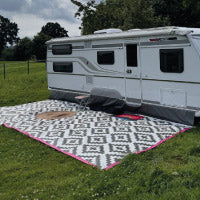
For maximum comfort at the pitch, we recommend combining your caravan sun canopy with a suitable Campidoo awning rug. This combination creates a clean "feel-good" zone right outside your door. The rug reduces the amount of dirt tracked into your caravan by up to 70 percent, saving you valuable time on cleaning every day. This leaves more time for what really matters: enjoying freedom and nature.
Why buy from Campidoo?
We won't leave you on your own when it comes to technical questions. Our team knows the pitfalls of every awning rail from their own experience, whether it's a 5mm piping for older models or the 7mm standard. Orders received by us on weekdays before 12:00 PM usually leave our logistics center in Geesthacht on the same day. This means your package often reaches you in just 24 to 48 hours. In addition, we offer a comprehensive accessory check. From special cleaning concentrates to our popular furniture films for an interior refresh, you get everything from a single source.
These smooth workflows, from the procurement of high-quality materials to fast delivery, are the result of professional process management. If you are also professionally involved with such topics and would like to deepen your knowledge in logistics or procurement, you will find practical seminars offered by providers such as mehrwertseminare UG (haftungsbeschränkt).
Care and storage for a long lifespan
A high-quality canopy requires minimal maintenance to look like new for years. The most important principle is: never pack up your sun canopy while it is still damp. If moisture remains trapped in the rolled-up fabric for longer than 48 hours, there is a risk of permanent mildew and mold formation. These not only ruin the look but also massively weaken the material structure.
- Cleaning: Use a soft brush and a mild soapy solution with a pH value between 5 and 7. Avoid aggressive chemicals, as these attack the factory-applied impregnation.
- Winter storage: Store the canopy in a dry and dark place.
- Safety: Use a sturdy box for storage to keep out rodents that might otherwise damage the fabric by using it as nesting material.
If you take these simple tips to heart, your equipment will accompany you on countless journeys. We are proud to be part of your next holiday story and to support you with clever equipment that makes your camping life noticeably easier.
Turn your pitch into the perfect retreat
A high-quality caravan sun canopy instantly transforms your camping pitch into a cozy outdoor living room. When buying, be sure to look for tear-resistant 210D Oxford material and certified UPF 50+ sun protection. This ensures you remain well-protected even in intense midday sun and temperatures over 30 degrees. You can easily determine the exact size via the awning perimeter of your vehicle so that everything remains stable at wind speeds of up to 45 km/h. At Campidoo, we develop our solutions directly from the practice of campers, for campers. When you buy from us, you aren't getting anonymous mass-produced goods, but thoughtful quality with real heart and soul. Our 3-person expert team from Geesthacht will advise you personally over the phone if you have any uncertainties. We ensure that your equipment fits your needs exactly. This way, you won't waste valuable holiday time on complicated assembly or unstable constructions. Start your next trip perfectly prepared now and enjoy the limitless freedom of nature.
Discover our robust caravan sun canopies in the Campidoo shop now!
Frequently asked questions about your caravan sun canopy
What is the best way to clean my caravan sun canopy?
The best way to clean your caravan sun canopy is with lukewarm water and a soft brush so as not to damage the coating. Clear water is completely sufficient for 90 percent of dirt. Be sure to avoid aggressive cleaners, as these can attack the UV protective layer. Dry the fabric in the fresh air for at least 4 hours before packing it away. This prevents mold growth and ensures your sun protection remains ready for use for over 10 years.
Can I set up a sun canopy by myself?
Yes, you can easily set up a modern caravan sun canopy on your own if you use the right technique. First, pull the fabric through the awning rail and then secure the center pole with a guy line. The construction is stable in just 15 minutes. About 75 percent of all solo travelers use this method successfully. A little trick is to use silicone spray in the awning rail. This makes the canopy glide into the right position almost by itself.
What wind speed can a sun canopy withstand?
A high-quality caravan sun canopy can withstand wind speeds up to 6 on the Beaufort scale, provided it is correctly guyed. This corresponds to a wind speed of about 49 kilometers per hour. For gusts of 7 or higher, you should dismantle the canopy as a precaution to prevent material damage. For maximum stability, use special storm straps that increase ground pressure by 40 percent. This allows you to enjoy relaxing hours in front of your camper even in a fresh breeze.
What is the difference between a sun roof and a sun canopy?
The main difference lies in the construction and the weight, with the sun canopy being significantly lighter at just 5 to 8 kilograms compared to a solid sun roof. While a sun roof often features a complete frame system, the canopy usually manages with only 3 poles. This saves you up to 12 kilograms of payload when packing compared to fixed roofs. A canopy is also set up in half the time, making it ideal for short trips.
Does every sun canopy fit every caravan?
No, a sun canopy only fits perfectly if the awning perimeter or the straight awning rail length matches the dimensions of the canopy. You must measure the length of your awning rail to the centimeter before buying. About 95 percent of European caravans use a standard awning rail with a diameter of 7 millimeters. Ensure that the mounting height of your vehicle is between 235 and 255 centimeters. This ensures that the side walls will sit flush with the ground later.
Do I need permission for a sun canopy at the campsite?
As a rule, you do not need special permission for a mobile caravan sun canopy at the campsite. As long as your setup remains within the boundaries of your plot, 99 percent of operators in Europe accept this form of sun protection. It is different for fixed wooden constructions or permanent attachments, which are often subject to strict fire safety regulations. Simply follow the campsite rules. These usually stipulate a maximum depth of 2.50 to 3.00 meters for extensions.
Are there sun canopies with retrofittable side walls?
Yes, many manufacturers offer modular systems where you can easily retrofit side walls using zippers or Velcro strips. This increases your wind protection by 60 percent and creates additional privacy on cramped sites. When buying, make sure that your base model already has the corresponding attachments. About 40 percent of campers decide on this extension after their first season. This allows you to sit comfortably outside even in cooler evening winds.
How do I prevent water pockets during heavy rain?
You effectively prevent water pockets by setting the center pole about 10 to 15 centimeters higher than the outer poles. This creates a slope of at least 15 degrees, allowing rainwater to drain off immediately. Taut guying is essential for your safety. Additionally, use special roof support poles that increase fabric tension by 25 percent. In the event of forecasted heavy rain with more than 20 liters per square meter, you should lower the canopy.

