











 About us
 Magazine
 Contact







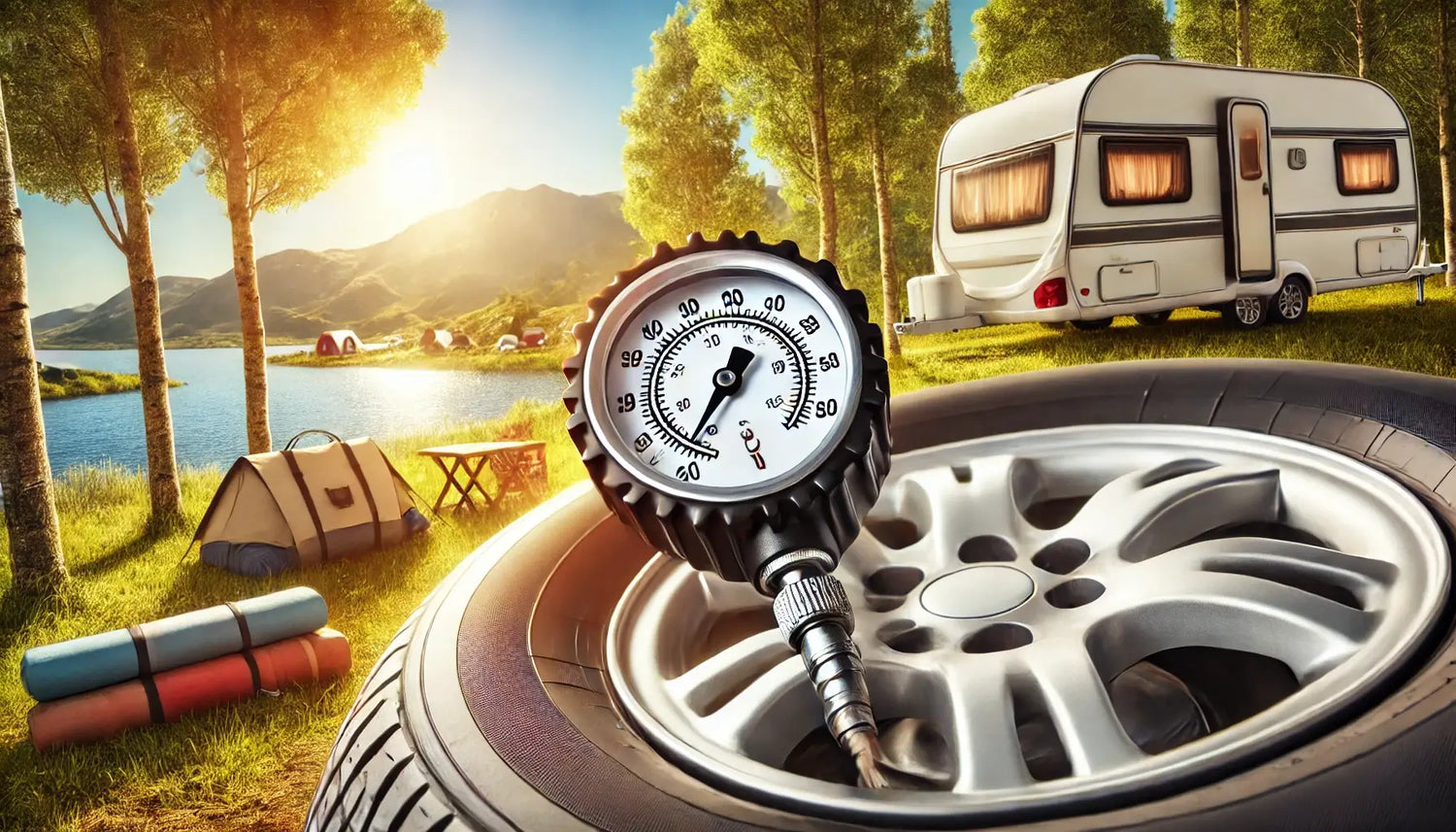

Tire pressure on your caravan is an often underestimated but crucial factor for your safety and driving comfort. Driving with too little or too much air in your tires can negatively affect handling and increase fuel consumption. Correct tire pressure ensures your caravan remains stable on the road, you arrive at your destination with peace of mind, and your tires last longer.
If the tire pressure is incorrect, it can lead to uneven wear or even flat tires – and you certainly want to avoid that! In this article, I'll show you how to correctly determine the tire pressure on your caravan, what you need to pay attention to, and why it's so important to check your tires regularly. Because it's often the little things that have a big impact.
How tire pressure affects driving comfort
The tire pressure on your caravan directly impacts the driving comfort you experience on your camping trips. If the tire pressure is too low, the caravan's stability decreases. The caravan can feel unstable when cornering or in gusts of wind, leading to unpleasant swaying. The overall driving experience becomes less smooth, and you feel every bump in the road much more intensely. Furthermore, low tire pressure increases rolling resistance, which raises fuel consumption and causes the tires to wear out faster.
On the other hand, excessively high tire pressure can also be problematic. The caravan will then feel rather stiff on the road, as the tires "work" less and offer less flexibility. This can lead to a jerky ride, especially on uneven or bumpy roads. Braking performance can also be impaired, as the tires no longer have optimal contact with the road surface.
Optimal tire pressure ensures a balanced compromise: the caravan remains stable, driving comfort is maintained, and the tires operate efficiently. With correct tire pressure, you'll also experience less unpleasant vibrations or unwanted swaying while driving. This makes every road trip more comfortable and safer.
The best recommendation for caravans
The optimal tire pressure recommendation for your caravan depends on several factors, such as the caravan's weight, tire size, and the manufacturer's specific requirements. Knowing the correct tire pressure is important to ensure even tire wear, increase safety, and optimize fuel consumption.
The ideal tire pressure varies depending on the load. A light, empty caravan requires less pressure than a heavily loaded one. You can find the exact recommendation in your caravan's owner's manual or on a sticker located near the door frame or inside the door. Generally, the recommended tire pressure for caravans is between 3.0 and 4.0 bar, but this can vary depending on the model.
It's especially important to check the pressure regularly – always when the caravan is cold. After longer journeys or in hot weather, the pressure can increase due to heat, which can lead to an inaccurate reading. Make sure you check the pressure not only when starting your journey, but also during your trip, especially on long stretches.
Here is a table for reference:
| Loading the caravan | Tire pressure (in bar) |
|---|---|
| Lightly loaded | 2.8 – 3.0 |
| Normal load | 3.2 – 3.4 |
| heavily loaded | 3.5 – 4.0 |
Factors that influence pressure
One of the biggest influencing factors is temperature . When outside temperatures rise, the pressure in the tires also increases. This happens because the air inside the tire warms up, which can increase the pressure by about 0.1 bar per 10 degrees Celsius. Conversely, the pressure drops in cold weather, which can lead to improper tire pressure.
Another important factor is the caravan's load . The more weight you put on the tires, the more pressure is needed to support the load. This means that the tire pressure should be higher when the caravan is fully loaded than when it's empty. Regular checks under different load conditions are therefore essential.
Driving style also plays a role. Fast driving, frequent braking, or sharp turns can affect tire pressure. Furthermore, road conditions such as uneven or bumpy surfaces can alter the pressure through constant impacts. Therefore, be sure to check the pressure not only before your trip but also while driving.
Finally, the lighting in your vehicle should also be checked regularly, as any short circuits could also affect other electrical systems connected to tire pressure monitoring.

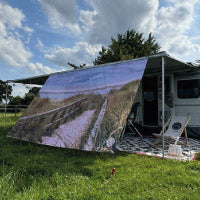
Personalized sunshade sail from Campidoo
Discover the innovative textile awning sunshade with photo print – a brilliant combination of aesthetics and functionality, and a top gift idea all in one. There are times when we want to protect our privacy, and sometimes we simply want a little shade where we need it. This sunshade provides both privacy and shade. It's easily inserted into the awning's keder rail, ensuring a secure hold. The eyeleted bottom edge makes tensioning it simple.
Order nowHow to measure tire pressure correctly
First, you'll need a tire pressure gauge , which can be either digital or analog. Digital models are accurate and easy to read, while analog ones are a bit cheaper but also reliable. You can also use an air pump with a built-in tire pressure gauge, which displays the pressure immediately as you inflate the tires.
Here's how to measure tire pressure:
- Make sure the caravan is cold, as the pressure changes with increased temperature.
- Remove the valve cap from the tire.
- Place the tire pressure gauge firmly onto the valve and make sure that no air escapes.
- Read the displayed value. If the pressure is too low or too high, you can adjust the tire pressure with an air pump .
- Check the pressure of all four tires, including the spare tire if there is one.
It is recommended to check your tire pressure regularly, at least once a month, and before long journeys. This ensures that your tires are in perfect condition and that you drive safely.
Checklist:
- Have a tire pressure gauge ready.
- Measure tire pressure when tires are cold
- Check all tires
- Reinflate or deflate as needed

Tips for inflating caravan tires
Properly inflating your caravan tires is crucial for your safety and driving comfort. Here are some valuable tips to help you get your tires to the optimal pressure:
-
Choose the right time: It's best to inflate your tires early in the morning when the outside temperature is still low and the tires are cold. This way, you'll get a more accurate pressure reading.
-
Use the right equipment: To adjust tire pressure correctly, you need a reliable tire pressure gauge and an air pump . Make sure the pump is suitable for the required pressure. At Campidoo, you'll find a wide selection of camping products , including practical air compressors that are perfect for inflating tires on the go.
-
Check the pressure regularly: Remember to measure and adjust your tire pressure before long journeys. Pressure can also change quickly when traveling to different climate zones.
-
Don't let the pressure get too high: Excessive pressure can impair driving comfort and lead to rapid tire wear. Always check the manufacturer's recommended values.
At Campidoo, we offer many useful camping products to help make your trips safe and comfortable. Why not take a look in our shop?
Common mistakes
When checking and adjusting tire pressure on your caravan, there are some common mistakes that are easily avoided but have a significant impact on your safety and driving comfort. One frequent error is measuring tire pressure when the tires are warm. After longer journeys, the pressure increases due to heat, which can lead to an inaccurate reading. Therefore, it is important to always check tire pressure before driving or after a long break when the tires are cold.
Another mistake is ignoring different loads . The tire pressure on a caravan must be adjusted depending on the load. If you pack the caravan fully, you should increase the pressure accordingly. However, many drivers don't adjust the pressure and risk overloading the tires or causing uneven wear.
Ignoring the manufacturer's recommendations is also a common mistake. The tire pressure on your caravan should always match the manufacturer's specifications. You can find these either in the owner's manual or on a sticker on the vehicle. Tire pressure that is too low or too high can not only impair comfort but also compromise safety.
Avoid these mistakes by regularly checking your tire pressure and always setting the correct pressure for your load and the condition of the tires.