










 About us
 Magazine
 Contact






Quick overview
A used awning is worth it if the fit, watertightness, and completeness are correct. Check the circumference along the keder rail, the tent floor for moisture, the seams, the poles, and possible mold traces in daylight.
- Measure the circumference along the keder rail from the front over the roof to the front.
- If the value is between two sizes, choose the next larger size so that the tent does not strain.
- Check the keder size with a caliper at the groove, common thicknesses are 5 mm and 7 mm.
- Set up the awning completely during the inspection, because watertightness is only visible on the set-up tent.
- Ask for a parts list and compare it with the scope of delivery of the poles.
Table of Contents
- Check fit: Measure the caravan circumference and compare it with the awning
- Check used awning: Step by step during the inspection
- Poles and completeness: Correctly assess used awning poles
- Recognize typical defects: Mold, odors, discoloration, and accident damage
- Price assessment and pros and cons: Buy used or new
- Plan for repair: Repair caravan awning and buy safely
- Frequently asked questions
Buying a used awning: The most important inspection points at a glance
Last updated: November 16, 2026
Anyone who wants to buy a used caravan awning can often save money. But without a clear checklist, it is easy to overlook damage that will become expensive later. This guide shows you what to look for when buying a used awning, step by step.
Right off the bat: A used awning is often worth it if the fit, watertightness, and completeness are correct. The most important inspection points are the circumference, the condition of the tent floor, the seams, the poles, and traces of moisture or mold. We will go through them one by one here.
Many sellers advertise good condition. Check it yourself anyway. Take your time and ask for an inspection in daylight.
- Does the awning fit the circumference of your caravan?
- Is the tent floor free of tears, holes, and moisture?
- Are the seams, zippers, and windows in order?
- Are the poles complete and undamaged?
- Are there signs of mold or unpleasant odors?
If you go through these points systematically, you will recognize most problems before the purchase.
Check fit: Measure the caravan circumference and compare it with the awning
Fit is the most common reason why a used awning does not fit after purchase. The circumference alone is not enough for this. The circumference alone is not enough; other dimensions must also be checked.
Measure the circumference of your caravan at the point where the keder rail will later sit. To do this, lay a measuring tape along the keder rail around the entire structure - from one side of the caravan front over the roof to the other side. Note the value in centimeters. Compare this value with the specifications of the awning manufacturer. If your measured value is in between, choose the next larger size so that the tent does not strain.
Also pay attention to the keder size, i.e., the position and thickness of the keder rail. Common keder thicknesses are 5 mm and 7 mm. Measure the groove of the keder rail with a caliper or compare it with the keder of the awning. If the thickness is not suitable, the awning can only be mounted with force and will likely tear at the seams. A keder that is too thick often cannot be inserted into the rail, while one that is too thin will slip out in the wind.
Additionally, compare the caravan model with the awning specification. Some manufacturers offer several keder variants, for example for round or flat roofs. A quick question to the seller usually clarifies this in a few minutes. Ask for the exact model designation of the awning and the caravan and check if both are in the manufacturer's compatibility list.
Watch out: Measure not only the length, but also the height of the keder rail above the ground. An awning with side walls that are too short or too long will not fit properly, even if the circumference is correct. Note both values and compare them with the tent's assembly instructions.
You should check these values before purchase and compare them with the manufacturer's specifications:
| Inspection point | Value | Note |
|---|---|---|
| Circumference | Measure in centimeters | Along the keder rail, front over roof to front |
| Keder size | 5 mm or 7 mm | Measure the groove with a caliper |
| Height of the keder rail | Measure above the ground | Side wall that is too short or long will not fit |
| Circumference value between two sizes | Choose the next larger size | Otherwise the tent will strain |
Check used awning: Step by step during the inspection
Set up the awning completely during the inspection. A packed tent reveals little. Set up the awning completely during the inspection, because the watertightness is only visible on the set-up tent.
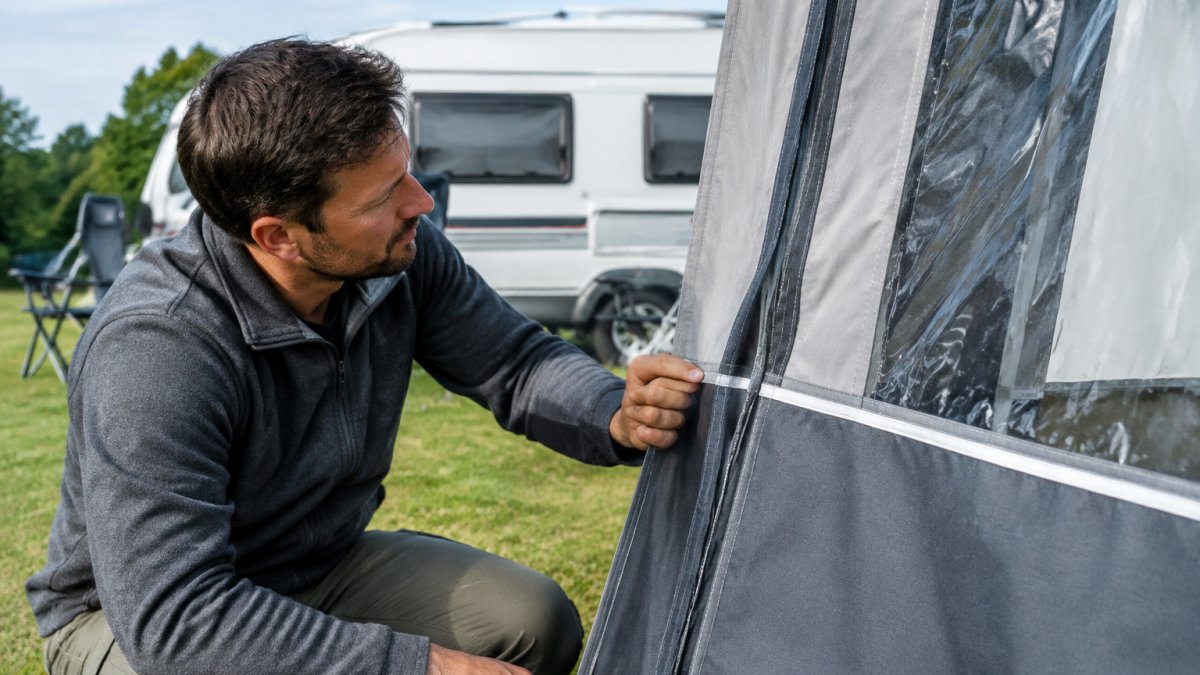
Plan some time for this and take your photos with you. First check the overall impression and then work your way to the details.
Check watertightness and water damage
The tent floor reveals a lot about the condition. Look for dark spots, moisture, tears, and holes. Press lightly on the floor. If it feels soft or clammy, there is often water damage.
A simple watertightness test helps: Spray the seams with water and check from the inside if drops come through. It is best to do this on a dry day so that you do not mistake moisture from the outside for real leaks.
Inspect seams, zippers, and windows
Pull the seams apart at several points and check if threads are coming loose. Loose seams at the corners and at the tension points are typical weak points.
Open and close every zipper several times. If it runs heavily, catches, or teeth are missing, the replacement is often expensive. The windows should also close clearly, undamaged, and tightly.
Poles and completeness: Correctly assess used awning poles
An awning is only as good as its poles. Check every pole for bends, cracks, and rust. Bent parts often cannot be connected cleanly anymore, and replacement can become expensive.
Also ask for a complete parts list and compare it with the scope of delivery. Missing pegs, tension straps, or pole sections are a common annoyance when buying used. Have this confirmed before payment.
Recognize typical defects: Mold, odors, discoloration, and accident damage
Mold often shows itself as black or greenish spots, especially in folds and at seams. A musty odor also indicates moisture that has settled in the fabric.
Discoloration from UV radiation is normal, but strong fading can indicate heavily stressed material. For accident damage, look for dents on the poles, torn seams, and bent frame parts. Ask the seller directly about previous damage and have it noted down.
Regarding mold: Keep your hands off it if it is deep in the fabric. Cleaning takes a lot of time and does not always help.
Price assessment and pros and cons: Buy used or new
The price of a used awning depends above all on age, condition, material, and the necessary repair needs. A well-preserved model with complete poles is worth significantly more than a tent with water damage. The prices depend on condition and scope; for current prices and offers, visit our website.
To better understand offer prices, a simple evaluation grid helps. Go through the following points and award points for each from 1 (poor) to 5 (very good):
- Age and material: PVC fabric is heavier, but more durable and easier to clean; polyester is lighter and dries faster, but fades faster. An older tent loses value, even if it was well cared for.
- Condition of the seams and zippers: Intact seams and easily running zippers are a plus. Loose seams or missing teeth reduce the price.
- Completeness of the poles: Missing pole sections or pegs are a common annoyance. Ask for a complete parts list and compare it with the scope of delivery. You can order missing parts from the manufacturer.
- Watertightness and floor: A soft or clammy floor indicates water damage. The costs for professional cleaning or repair depend on the size of the damage.
- Mold and odors: If mold is deep in the fabric, cleaning is often unsuccessful. You should avoid such tents or only buy them with a significant price reduction.
Compare several offers and subtract the estimated repair costs from the offer price to determine the actual value.
The pros and cons at a glance:
- Used: Lower price, often good quality, immediate availability
- Used: Hidden defects possible, less warranty, repair effort
- New: Warranty, known condition, current materials
- New: Higher purchase price, value loss on first use
For campers with a small budget and experience in checking, buying used is often worth it. Those with little time or little experience are usually better off with a new tent.
Watch out: Have the condition confirmed in writing and arrange an inspection in daylight. In private purchases, there is often no warranty. Pay only after handover and document defects with photos before signing the purchase contract.
Plan for repair: Repair caravan awning and buy safely
Small damages like a loose seam or a small tear can often be repaired yourself. Plan time and money for larger damages, especially with water damage to the floor. A secure transaction protects you additionally: Agree to the purchase in writing, have the condition documented, and pay only after handover.
If you are looking for accessories for your new awning, check out our awning carpet to protect the floor. For the fit, it is worth a look at the hooks for the surrounding keder rail on the caravan. Anyone who wants to keep the floor dry will find suitable protective tarpaulins with us.
If you carefully check a used awning, you avoid nasty surprises. Campidoo supports you with suitable camping accessories, from awning carpet to cleaners for your vehicle. Discover our assortment at Campidoo now.
Frequently asked questions
What should you look out for when buying a used caravan awning?
First check the condition of the fabric, the seams, and the tent floor, preferably after complete set-up. Then check the poles, zippers, and windows, and compare the caravan circumference with the insertion keder. Also pay attention to water damage, mold, and odors, as these defects are often expensive to repair. Ask about the completeness of the accessories and have the usage history explained.
How do I find out if an awning fits my caravan?
Measure the circumference of your caravan and compare it with the awning manufacturer's specification for the insertion rail. It is important that the awning is designed for your caravan model, as the rails and mounting points vary depending on the model. However, the circumference alone is not enough: additionally check the shape of the rail and the position of the mounting points before purchasing.
How do I check the condition of a used awning?
Fully set up the awning if the seller allows this. This will help you identify leaks, warped poles, and damage to the groundsheet. Check the seams and zippers for tears and loose areas. Look for discoloration and odors that may indicate moisture or mold.
Can you repair a used awning yourself?
Minor damage such as loose seams, individual holes in the fabric, or broken zippers can often be repaired yourself, for example with a repair kit or sewing thread. In the case of extensive water damage, damaged poles, or mold infestation, you should consult a specialist. You should factor the costs of repair and replacement parts into the price assessment before purchasing.